

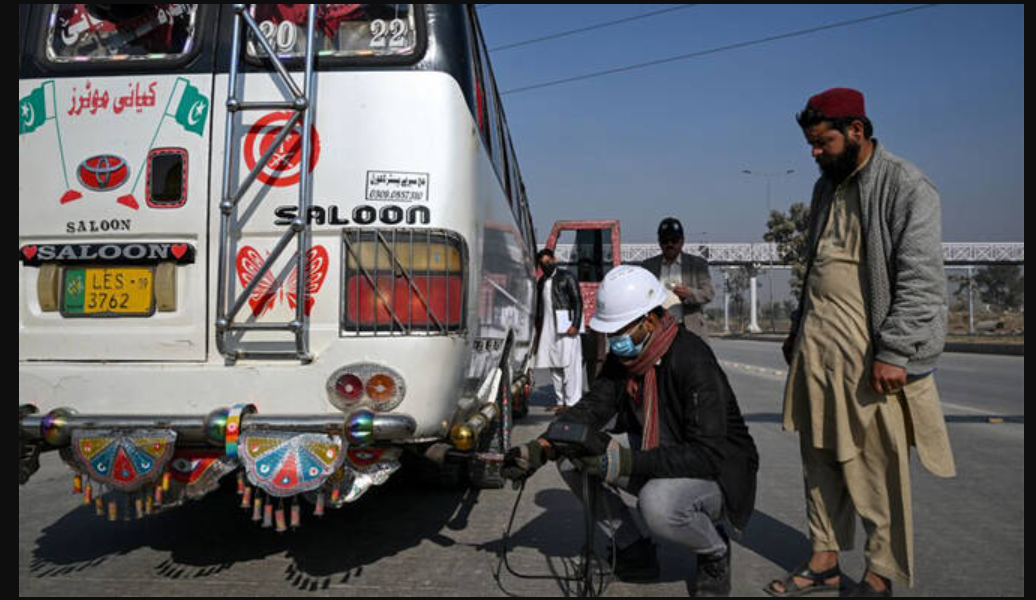

Islamabad authorities have intensified actions against vehicles contributing to worsening smog in the city.
Checkpoints were established this month to inspect emissions from trucks, cars, and other vehicles entering the capital.
Drivers failing to meet environmental standards face fines and impoundment of their vehicles.
Truck driver Muhammad Afzal expressed frustration after being fined Rs 1,000 for excessive smoke from his exhaust. He claimed his vehicle had recently been repaired, yet it still failed emissions testing.
Authorities warned that non-compliant vehicles will not be allowed to enter the city until the issue is corrected.
EPA Highlights Public Health Risks
Dr. Zaigham Abbas of the Pakistan Environmental Protection Agency (EPA) stated that violating emission standards endangers public health. He stressed that drivers had already been warned about strict enforcement.Technician Waleed Ahmed explained that older vehicles emit dangerous smoke when they exceed their life cycle.
He emphasized that emissions from outdated vehicles contribute significantly to respiratory and cardiovascular problems.
Smog Levels Rising in the Capital
Although Islamabad has not yet reached the extreme winter smog levels of Lahore or Karachi, the situation is worsening. In December alone, seven “very unhealthy” days were recorded for PM2.5 particles exceeding 150 micrograms per cubic meter.
Annual averages in Islamabad already surpass Lahore, far above the World Health Organization’s recommended safe level of five micrograms.
The city’s sprawling design, limited public transport, and reliance on private vehicles contribute heavily to pollution.
The Pakistan Air Quality Initiative reports that 53% of Islamabad’s PM2.5 pollution comes from its transport sector.
Experts describe the smog as a “self-inflicted crisis,” primarily caused by emissions from private vehicles.
Emission Testing Stations and Fines
EPA chief Nazia Zaib Ali announced the crackdown on December 7, with over 300 fines issued in the first week.
Additionally, 80 vehicles were impounded for failing to meet emission standards.
The city has begun setting up inspection stations where compliant vehicles receive a green sticker on the windshield.
Residents like Iftikhar Sarwar support the initiative, noting rising health problems from polluted air.
He stated that he now experiences allergies regularly and fears the same for his family.
However, some residents remain concerned about the effectiveness of the government measures.
Anthropologist Sulaman Ijaz said the worsening smog contrasts sharply with the clean environment he remembered two decades ago.
He stressed that clean air is a basic right for his daughter and all citizens.
Looking Ahead
Authorities continue to monitor vehicle emissions rigorously to prevent further deterioration of air quality.
Public cooperation and adherence to environmental standards remain essential to combat Islamabad’s growing smog crisis.
