

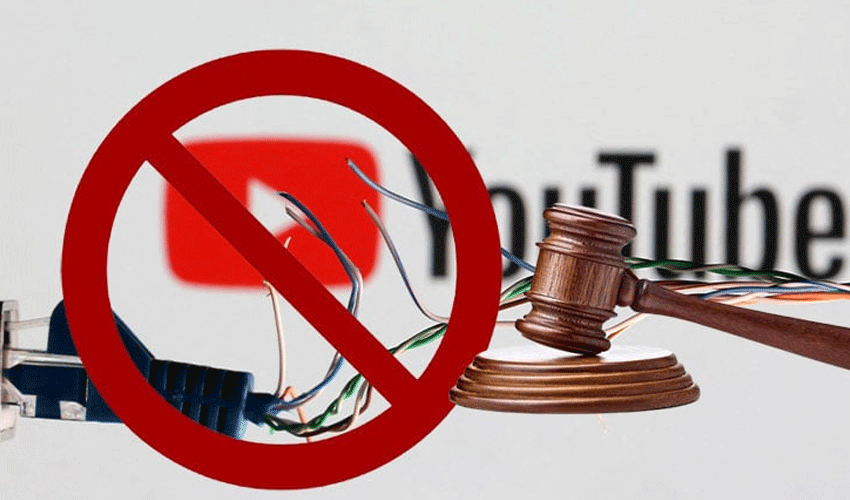

A district and sessions court in Islamabad on Thursday overturned a magistrate’s order that had blocked 11 YouTube channels, declaring the earlier ruling null and void.
The channels were part of a larger group of 27 platforms that Judicial Magistrate Abbas Shah had ordered blocked in June, citing allegations of spreading “anti-state” content. The ban had been requested by the National Cyber Crime Investigation Agency (NCCIA), which argued that the channels were disseminating material in violation of Pakistani law.
The Islamabad district and sessions court had been hearing appeals filed by 11 YouTubers challenging the closure of their channels. Judge Afzal Majoka reserved the verdict and ultimately ruled in favor of the petitioners, restoring access to the blocked platforms.
During the hearing, Judge Majoka criticized the NCCIA prosecutor, stating, “You have started taking over our work; I will never allow this,” and questioned the legal authority under which the channels were blocked. The judge further noted concerns about attempts to malign the judiciary through the controversial orders.
The initial ruling in June had relied on evidence presented by the NCCIA, which argued that the channels’ content constituted offenses under the Prevention of Electronic Crimes Act (Peca) and other penal laws of Pakistan.
At that time, the court expressed satisfaction with the investigation and allowed authorities to proceed with legal action under the applicable laws.
This development comes against the backdrop of the recently enacted Prevention of Electronic Crimes (Peca) (Amendment) Bill 2025, which was signed into law in January.
The amended legislation introduced new definitions, established regulatory and investigative bodies, and imposed stricter penalties for the dissemination of “false” or harmful information online.
With Thursday’s ruling, the Islamabad court has reinforced judicial oversight over regulatory actions targeting online platforms, emphasizing that enforcement agencies must operate within the bounds of the law. The decision restores access to the 11 YouTube channels while clarifying limits on the NCCIA’s authority in matters of content blocking and digital regulation.
