
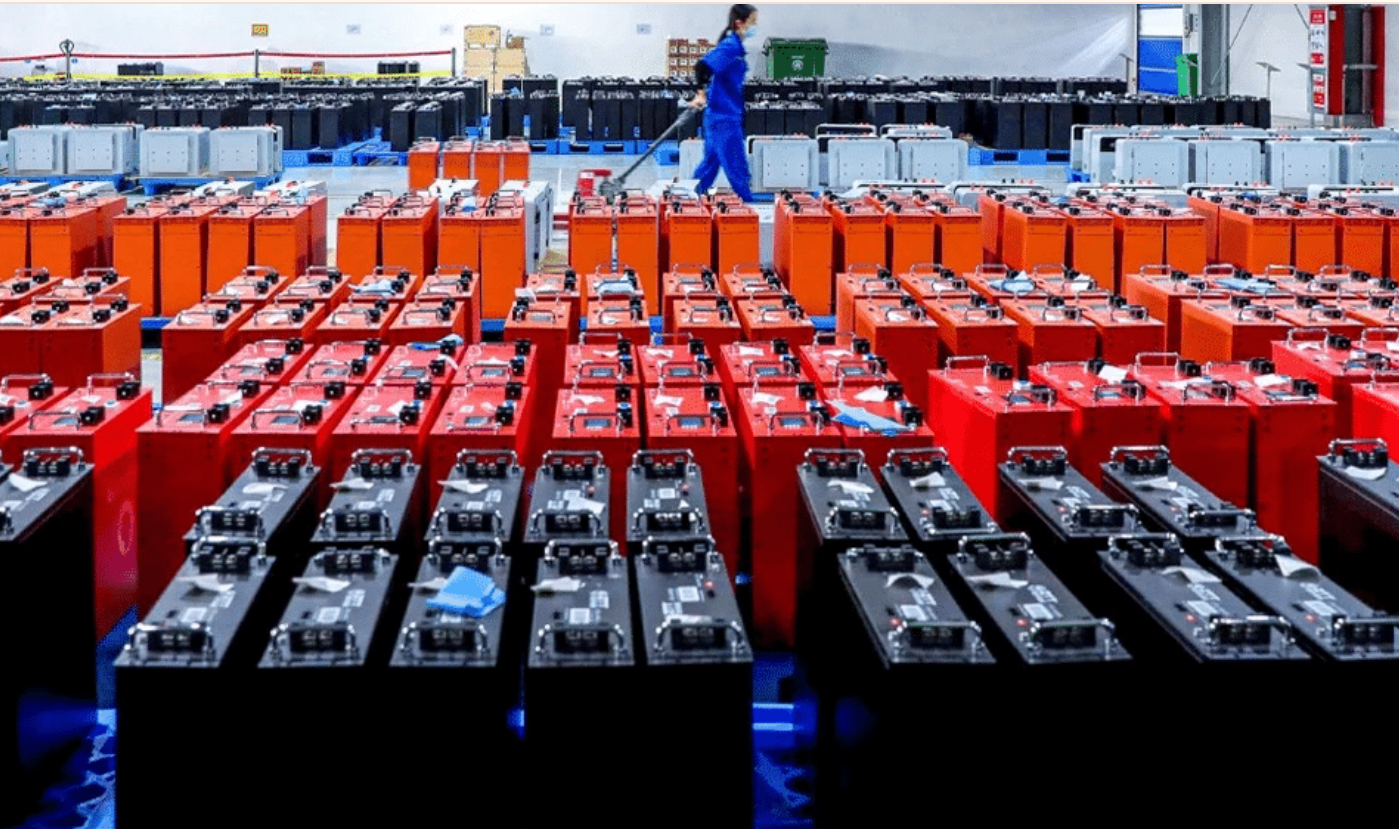

A Chinese company is moving forward with plans to establish a lithium battery manufacturing facility in Pakistan.
Dongjin Group will set up a dry battery plant in Allama Iqbal Industrial City, Faisalabad.
The project carries an investment value of $15 million. It is designed to meet rising demand for modern energy storage solutions.
Officials say the facility will support both electric vehicles and solar energy systems across Pakistan.
Strategic Location in Special Economic Zone
The battery plant will be built in a Special Economic Zone near Faisalabad.
This zone operates under the China-Pakistan Economic Corridor framework. It offers infrastructure and policy support for industrial growth.
Additionally, the project agreement has already been signed with the Punjab Board of Investment and Trade.
Authorities believe this investment will strengthen Pakistan’s manufacturing base in advanced technology sectors.
Rising Demand for Batteries Driving Investment
Demand for batteries is increasing rapidly in Pakistan.
Electric vehicles are becoming more common, while solar energy systems are expanding nationwide.
Because of this shift, companies are looking for local production opportunities.
The Dongjin Group decided to invest after observing strong market growth in these sectors.
The facility is expected to help reduce reliance on imported batteries.
Economic Impact and Job Creation
The project is expected to generate significant industrial activity in Faisalabad and nearby regions.
It will also create new employment opportunities across multiple sectors.
These include electronics, automotive components, packaging, chemicals, and engineering services.
Moreover, local industries may benefit from improved supply chains and technical collaboration.
Officials believe the project will encourage broader industrial development in the region.
Government Incentives and Investment Support
Under Pakistan’s Special Economic Zone policy, the company will receive several incentives.
These include a 10-year income tax holiday.
In addition, the project qualifies for a one-time exemption on customs duties and taxes for imported machinery.
Officials have assured continued support throughout the investment process.
They believe such incentives are key to attracting advanced manufacturing projects.
Industry Experts Highlight Strategic Importance
Experts in the automotive and energy sectors view the investment as highly significant.
They argue that Pakistan is gradually shifting toward local battery production.
This shift is important for energy security and industrial independence.
A former Chairman of the Engineering Development Board emphasized the global importance of batteries.
He explained that demand is rising due to electric vehicles, renewable energy systems, and power stability needs.
He also highlighted the role of Pakistan’s new Battery Manufacturing Policy 2026–31.
According to industry views, this policy could attract more private investment.
Reducing Dependence on Imports and Fossil Fuels
Experts believe local battery production could reduce Pakistan’s reliance on imported energy technologies.
It may also help lower dependence on expensive fossil fuel-based energy systems.
“The greater the battery production in Pakistan, the higher the chances of reducing dependence on expensive electricity and imported fossil fuels,” he said.
This perspective reflects growing interest in renewable energy and localized manufacturing.
Conclusion
The $15 million lithium battery plant in Faisalabad marks an important step for Pakistan’s industrial future.
With rising demand for electric vehicles and solar energy, the investment may strengthen both economic growth and energy security.

