
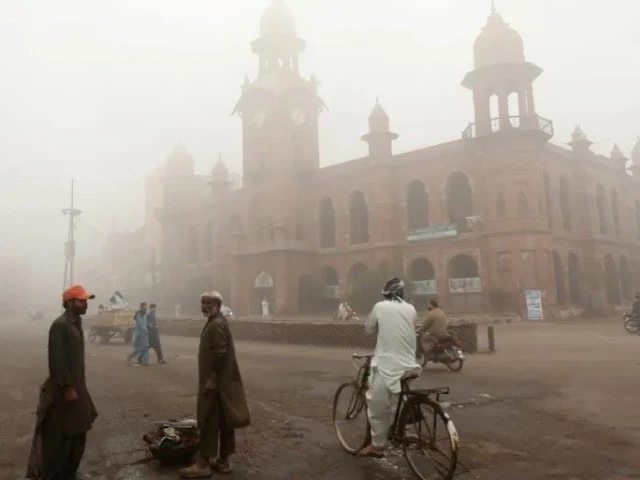

LAHORE: Lahore is once again struggling with dangerous air pollution as dense smog blankets the city. The overall Air Quality Index (AQI) reached 374 on Thursday, placing the Punjab capital among the world’s most polluted cities.
The worsening conditions have reduced visibility across several roads and raised concerns about public health. Residents are reporting increasing respiratory problems, eye irritation and throat infections.
Several Areas Record Extremely High Pollution
According to the Environmental Protection Agency (EPA), Multan Road recorded the city’s highest AQI at 500. Other areas also experienced hazardous air quality.
Shahdara recorded an AQI of 493, while Safari Park reached 408. Kahna Nau stood at 373, followed by Wahga Border at 363 and Gulberg III at 347.
Egerton Road recorded 291, while GT Road reached 282. Burki Road stood at 278, DHA Phase VI at 248 and Punjab University at 232.
These readings highlight how pollution continues to affect different parts of Lahore.
Smog Triggers Health Concerns
Hospitals and private clinics are reporting more patients with breathing difficulties, eye irritation and throat problems.
Residents have called for stronger action against vehicles releasing excessive smoke and the burning of crop residue. Both contribute to worsening air pollution across Punjab.
Health experts have advised people to avoid unnecessary outdoor activities. They particularly recommend avoiding jogging, brisk walking and strenuous exercise during early mornings and late nights.
Doctors have also advised residents to wear protective face masks when going outside. Drinking enough water can help keep airways moist.
Anyone experiencing persistent coughing, chest tightness or shortness of breath should seek medical attention.
No Rain Expected to Clear Lahore’s Smog
The Pakistan Meteorological Department has forecast dry weather across most parts of Punjab. No rainfall is expected to provide relief during the next 24 hours.
Fog and smog are likely to affect Lahore, Sialkot, Narowal, Sheikhupura, Kasur and Faisalabad. Jhang, Khanewal, Multan, Khanpur and Bahawalpur may also experience reduced visibility.
With no immediate rainfall expected, hazardous air quality remains a concern for residents across the province.
For the latest updates, visit and follow The Truth International website (www.thetruthinternational.com) and subscribe to the YouTube Channel.

