
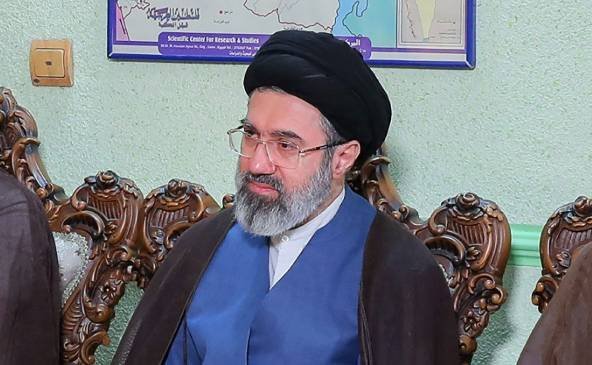

Iranian officials have stated that Mojtaba Khamenei is in “full health” following reported injuries sustained during a joint US–Israeli strike on a leadership compound.
The statement marks the first detailed update regarding his condition after the reported attack in late February. However, many details remain based on official accounts and have not been independently verified.
Official Claims About the Incident
According to remarks attributed to protocol director Mazaher Hosseini, Mojtaba Khamenei was injured during strikes targeting a leadership compound on February 28.
He reportedly described significant destruction at multiple sites during the incident.
He said several locations were “flattened,” including areas connected to senior leadership operations.
In addition, he referred to a location associated with the then-supreme leader, Ali Khamenei, within the compound context.
Reported Injuries During the Blast
Hosseini stated that Mojtaba Khamenei was near the residence area when a blast wave struck during movement toward the building.
As a result, he reportedly fell and sustained injuries to his kneecap and lower back.
He further claimed that the leader’s residence was also impacted during the strike.
According to the same account, his wife was killed in the bombardment, although this claim remains part of reported statements.
The official narrative also described minor head-related concerns, but these were said to be limited.
He added,
“The back injury improved during this period, and the kneecap injury will soon heal as well. He is in full health.”
He also clarified additional injury rumors, stating that reports of forehead damage were inaccurate. Instead, he mentioned a “small crack behind the ear” that had already been treated.
Leadership Transition and Current Position
Reports indicate that Mojtaba Khamenei was selected as Iran’s supreme leader on March 9 following the death of his father.
Since assuming the position, he has reportedly communicated primarily through written statements rather than public appearances.
This limited visibility has added to public speculation regarding his health and condition.
Rising Regional Tensions After February Strikes
The reported February 28 strike is said to have significantly escalated tensions in the region.
Following the incident, retaliatory actions and disruptions were reported across strategic maritime routes, including the Strait of Hormuz.
These developments increased regional instability and triggered wider diplomatic concerns.
Later, a ceasefire was reportedly reached on April 8 through mediation efforts involving Pakistan.
However, tensions did not fully ease afterward.
Continued Maritime and Security Concerns
Despite the ceasefire arrangement, reports suggest continued pressure on maritime movement in strategic waterways.
The United States is also reported to have imposed restrictions affecting naval traffic in the region following mid-April developments.
These actions have contributed to ongoing uncertainty in Gulf security dynamics.
As a result, regional actors remain alert to any further escalation or policy shifts.
Conclusion
Iranian officials claim that Mojtaba Khamenei is recovering well and remains in “full health” after reported injuries from a strike on a leadership compound.
While official statements describe recovery and stability, many elements of the incident remain based on reported accounts.
Meanwhile, the broader regional situation continues to reflect heightened tensions, fragile diplomacy, and ongoing security concerns across key strategic zones.

