
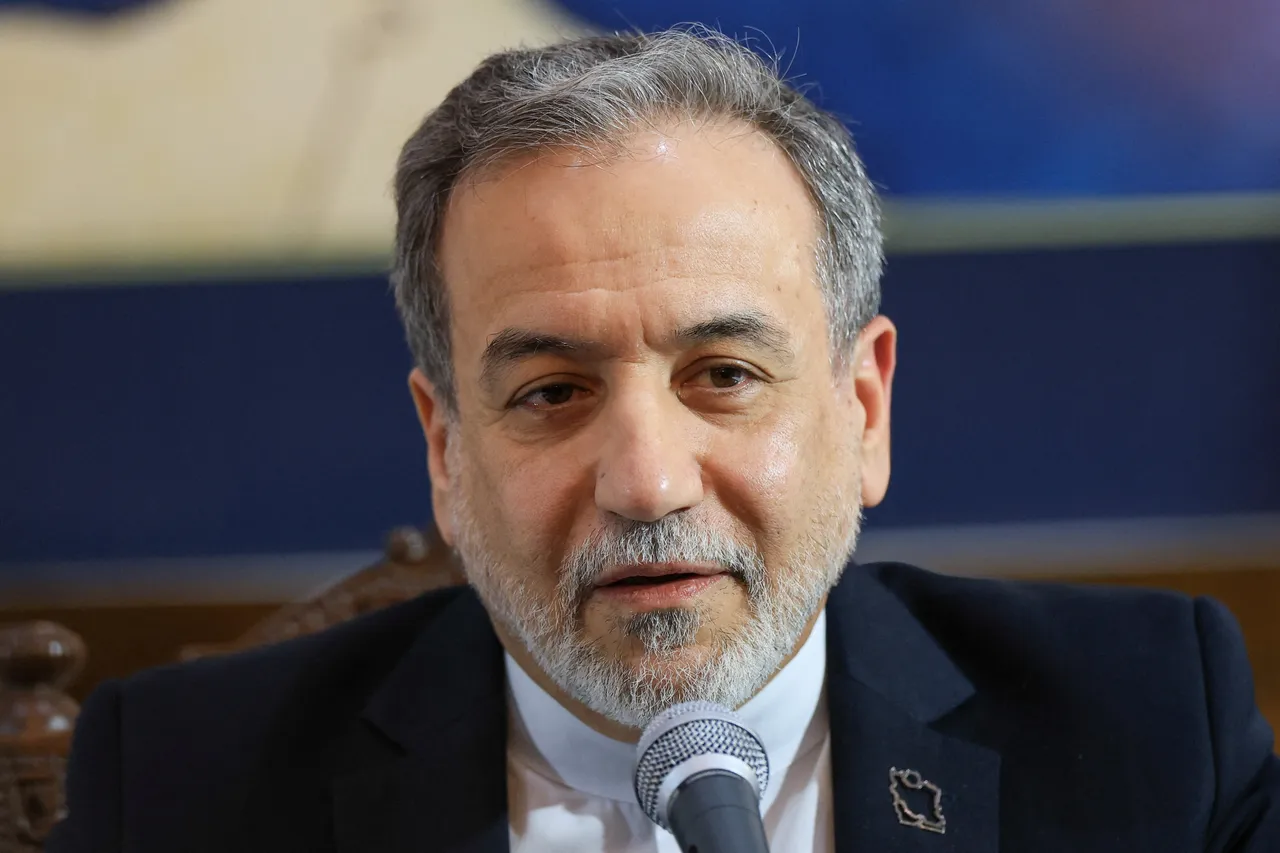

Iranian Foreign Minister Hits Back at Western Human Rights Criticism
Iranian Foreign Minister Abbas Araghchi has sharply criticised France and other Western governments, accusing them of hypocrisy over human rights and international law amid continuing tensions over Gaza and Iran.
Araghchi made the remarks on Thursday, August 13, after France joined a group of countries condemning Iran over executions of protesters and the use of the death penalty.
In a post on X, the Iranian foreign minister said countries such as France should stop presenting themselves as authorities on human rights and international law.
Araghchi described what he viewed as France’s position as “blatant and embarrassing” hypocrisy and argued that Paris had lost its claimed moral standing because of its policies towards Israel.
He specifically accused France of supporting what he described as Israel’s “genocide in Gaza” and aggression against Iran.
Those descriptions reflect Araghchi’s position and accusations. They should not be presented as an independent legal determination in reporting on his remarks.
His comments represent the latest diplomatic exchange between Tehran and European governments as disagreements deepen over human rights, executions, Israel, Gaza and the wider Middle East conflict.
France Joins International Condemnation of Iran Executions
Araghchi’s remarks came after the European Union and 26 countries issued a joint statement condemning Iran’s continuing executions of protesters.
French Foreign Minister Jean-Noël Barrot announced the coordinated statement on Wednesday.
The governments called on Iranian authorities to end the use of the death penalty, release people they consider arbitrarily detained and take meaningful measures to protect human rights.
The statement said capital punishment should not be used to suppress dissent or punish people for exercising rights including freedom of expression and peaceful assembly.
France was joined by countries including the United Kingdom, Canada, Germany, Australia, Denmark, Spain, New Zealand, the Netherlands, Portugal and Sweden, along with the European Union’s foreign policy leadership.
The countries urged Tehran to listen to demands from Iranian citizens and immediately stop executions linked to protests.
The statement significantly increased international pressure on Iran over its treatment of demonstrators and detainees.
Araghchi responded by turning the human rights criticism back on France and other Western governments.
His argument was that countries supporting Israel could not credibly criticise Tehran over international law and human rights while, in his view, failing to apply the same standards to Israeli actions.
Iran Rejects Western Human Rights Pressure
Iran has repeatedly rejected Western criticism of its domestic human rights record, frequently accusing European countries and the United States of applying double standards.
The latest dispute comes amid heightened international concern over Iran’s use of capital punishment following protests and arrests.
In April, UN High Commissioner for Human Rights Volker Türk said at least 21 people had been executed and more than 4,000 arrested on national-security-related charges since the latest regional war began.
Türk urged Iran to halt executions, establish a moratorium on capital punishment and release people considered arbitrarily detained. Iran has rejected similar criticism as politically motivated.
European governments have maintained that the right to peaceful assembly and freedom of expression must be protected and that the death penalty should not be used as a tool against political dissent.
The European Union has also repeatedly called on Iran to release people it considers unjustly detained and has condemned what it describes as the increasing use of executions to suppress internal opposition.
Tehran, however, argues that Western governments selectively invoke international law while failing to hold Israel to the same standards.
That disagreement has become increasingly central to Iran’s diplomatic messaging during the Gaza conflict and its wider confrontation with Israel.
France-Iran Tensions Extend Beyond Human Rights
Thursday’s comments were not Araghchi’s first public attack on France over the Middle East conflict.
In March, he criticised French President Emmanuel Macron over France’s response to the Israel-US conflict with Iran.
Araghchi accused Macron of failing to sufficiently condemn attacks on Iranian territory while expressing concern over Iranian retaliatory operations.
Despite the increasingly hostile rhetoric, diplomatic contact between Iran and France has continued.
Araghchi and French officials have remained involved in discussions surrounding regional security and the wider conflict, demonstrating that communication channels have not completely closed despite major political disagreements.
The latest dispute shows how questions surrounding Gaza and Israel have become closely intertwined with Western criticism of Iran’s domestic policies.
France and its European partners argue that Iran’s execution of protesters and detention practices are legitimate matters of international human rights concern.
Iran, in contrast, argues that Western support for Israel has undermined those countries’ credibility when they criticise Tehran.
For now, neither side appears willing to soften its position.
Araghchi’s latest remarks signal that Tehran is likely to continue responding to European human rights criticism by highlighting Western policy towards Israel and accusing its critics of applying different standards to allies and adversaries.

