

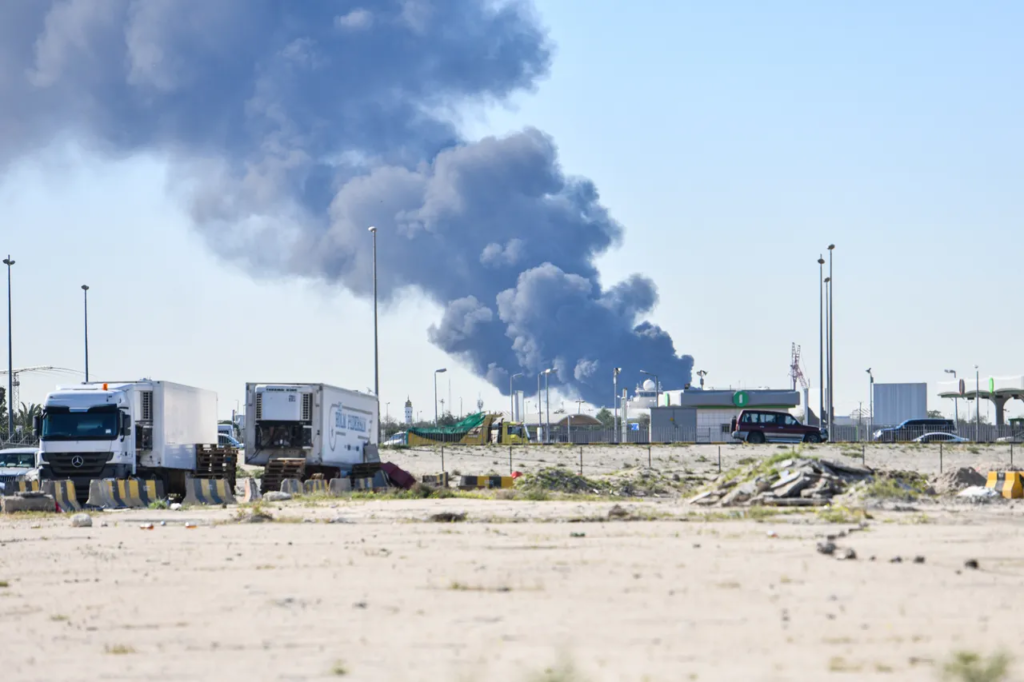
Kuwaiti officials woke up to chaos on Sunday after Iranian drones struck the heart of the capital. The attack targeted a major government ministries complex in Kuwait City late on Saturday, causing serious property damage. Thankfully, no one lost their life in that strike.
At the same time, two important power and water desalination plants came under fire. The blasts knocked two power generation units completely out of service and left behind heavy material damage. Kuwait’s military quickly announced that its air defence systems were actively responding to the incoming missiles and drones. Any loud explosions people heard, they explained, came from successful interceptions.
Separately, a fire broke out at the Shuwaikh oil sector complex, home to the oil ministry headquarters. Emergency crews rushed in to control the flames, and again, reports confirmed no injuries.
These strikes form part of Iran’s wider retaliation in the ongoing conflict. Since the United States and Israel began their joint military campaign against Iran on February 28, the death toll has climbed past 1,340. That tragic number even includes Iran’s former Supreme Leader Ali Khamenei.
Iran has pushed back hard, launching waves of drones and missiles not just at Israel but also toward bases in Jordan, Iraq, and several Gulf countries that host American troops. The latest hits on Kuwait add to the growing list of damaged infrastructure across the region, raising fresh fears about stability and daily life in the Gulf.
Kuwaiti authorities moved fast to manage the fallout. Many government employees worked from home on Sunday, with plans to return to offices on Monday under tighter safety steps. The attacks have already disrupted power, water, and oil operations, reminding everyone how quickly this war can affect ordinary people far from the main battle lines.

