
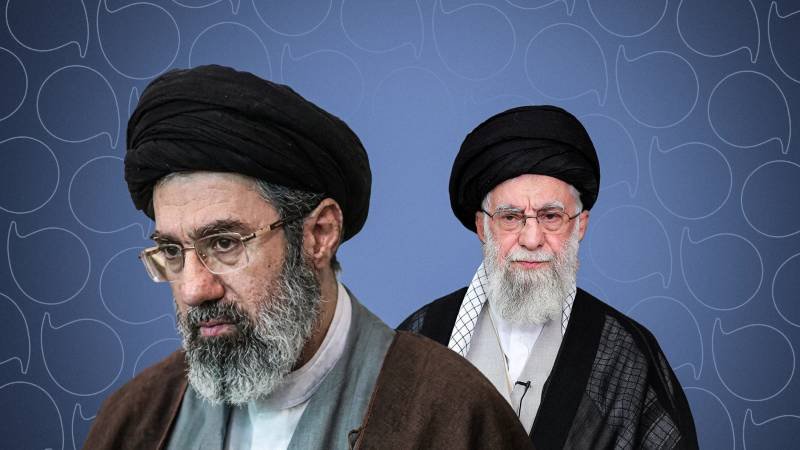

Tehran and Washington Exchange Strong Warnings After Ceasefire Struggles
Iran’s supreme leader Mojtaba Khamenei has vowed revenge following the killing of his father and predecessor in US-Israeli strikes. His statement came hours after US President Donald Trump warned against any attempt to target him.
Tensions between Iran and the United States increased after fresh exchanges of fire affected efforts to maintain a temporary ceasefire. The conflict began in late February after large-scale US-Israeli strikes against Iran.
Meanwhile, international mediators are working to restore diplomatic communication between both sides. A delegation from Qatar reportedly traveled to Iran to support mediation efforts and encourage further talks.
Iran Promises Retaliation After Leadership Change
Mojtaba Khamenei became Iran’s supreme leader after the death of his father, Ali Khamenei. However, he remained out of public view until his first official message following the funeral.
In his statement, he said, “Vengeance is the will of our nation and must inevitably be carried out,”. He added that the matter does not depend on his personal presence or other officials.
The Iranian leader also claimed that authorities had prepared a list of individuals for possible retaliation. His comments increased concerns about further escalation between Tehran and Washington.
Trump Issues Warning Against Any Assassination Attempt
Earlier, President Donald Trump warned Iran against any attempt to assassinate him. He stated that such an action would lead to a major US response.
Trump wrote, “1000 Missiles are Locked and Loaded and aimed at the Islamic Republic of Iran, with thousands of more to immediately follow, should the Iranian Government act on its threat, pronounced in many corners of the Globe, to assassinate, or attempt to assassinate, the sitting President of the United States of America, in this case, ME!”
He also said US forces were prepared to respond if Iran carried out any such action. The statement further increased tensions between the two countries.
Diplomacy Faces Challenges Over Strait of Hormuz
Despite rising threats, mediators continue efforts to bring both countries back to negotiations. Qatar has played an important role in encouraging dialogue between Tehran and Washington.
Iranian Foreign Minister Abbas Araghchi said Tehran had followed its commitments under the recent agreement. He stated, “Reality check: There can only be mutual compliance.”
However, the future of the Strait of Hormuz remains a major obstacle. Iran closed the key shipping route during the conflict after US-Israeli strikes. The waterway plays a crucial role in global oil and gas transportation.
Iran has demanded greater control over ship movements through the strait. It has also discussed charging fees for passage. However, Washington has rejected these demands.
Regional Leaders Push for Peace Efforts
Oman and Qatar have continued diplomatic efforts to reduce tensions. Iranian officials have held discussions with regional partners to address the situation.
Pakistan has also supported diplomatic efforts. Prime Minister Shehbaz Sharif urged Iranian leadership to protect what he called the “hard-earned peace” in the region.
However, Iran’s chief negotiator Mohammad Bagher Ghalibaf maintained a firm position. He said, “Ending the war is a priority for the countries of the world, but everyone must know that this confrontation will never end with Iran’s surrender.”
The ongoing dispute highlights the fragile situation between Iran and the United States. As diplomatic efforts continue, international observers remain concerned about further military escalation and its impact on regional stability.

