
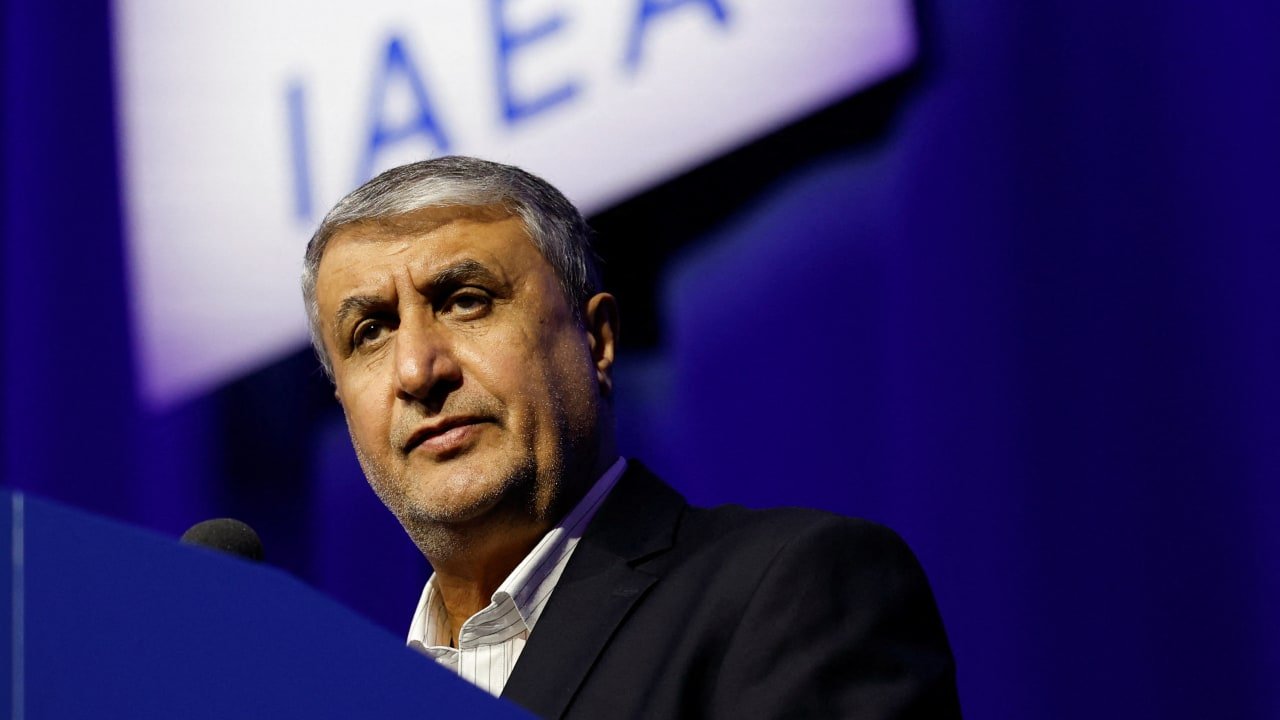

VIENNA: Austria reportedly blocked Iran’s top nuclear official Mohammad Eslami from attending the International Atomic Energy Agency’s General Conference in Vienna following pressure from the Trump administration, Bloomberg reported, citing an anonymous US official.
Eslami, Iran’s vice president for nuclear affairs and head of the Atomic Energy Organization of Iran, had been scheduled to address the UN nuclear watchdog’s annual gathering on Monday.
Iran’s Mehr News Agency reported on Saturday that Eslami had departed Tehran for the conference. However, Austria subsequently denied him entry, according to Bloomberg’s source.
The US official said Washington had pressed Austria to reject a UN-requested sanctions waiver that would have enabled Eslami to enter the country.
Lower-Level Iranian Official Could Address Conference
A lower-ranking Iranian representative could still speak later during the conference, although Eslami’s reported exclusion prevented one of Tehran’s most senior nuclear officials from addressing its opening.
Meanwhile, IAEA Director General Rafael Grossi recently said the agency had been “completely blind” regarding Iran’s nuclear programme since at least June 2025.
Grossi also reported satellite-detected construction activity at Pickaxe Mountain, while US President Donald Trump has warned Tehran against rebuilding sensitive nuclear infrastructure.
Washington Demands Full Iranian Cooperation With IAEA
US Energy Secretary Chris Wright is expected to use the conference to demand that Iran fully cooperate with the IAEA and provide inspectors with necessary access.
Moreover, Washington’s pressure follows an IAEA Board of Governors resolution that referred Iran to the UN Security Council over alleged breaches of its non-proliferation obligations.
According to excerpts of Wright’s prepared remarks obtained by Bloomberg, he will also urge the IAEA to prioritise nuclear safeguards, security and peaceful nuclear technology.
Wright is expected to argue that expanding nuclear energy should remain compatible with stringent safety, security and non-proliferation standards.

