
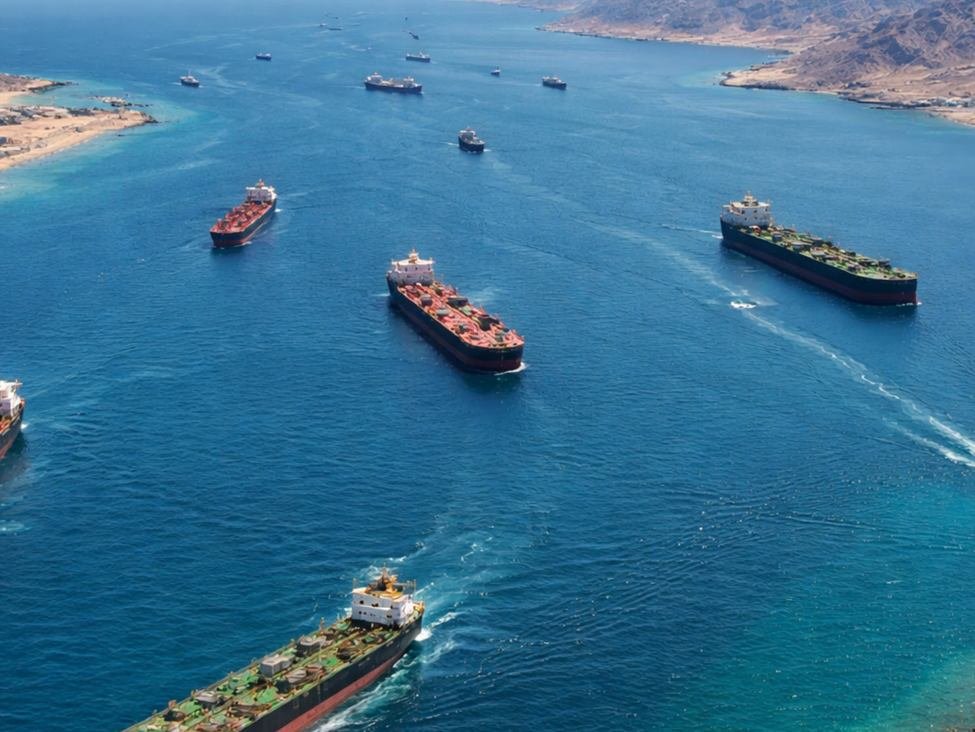

Iran has again declared the Strait of Hormuz closed to unauthorised maritime traffic, raising fresh concerns about shipping safety and global energy supplies. The Islamic Revolutionary Guard Corps (IRGC) Navy warned vessels against violating Iranian regulations or attempting unauthorised passage.
According to Iran’s state news agency IRNA, the force threatened ships relying on US protection while attempting to cross the strategic waterway. It warned that vessels breaking its rules would be “burned to ashes”.
The latest announcement comes amid reports of maritime incidents, possible naval mine hazards and continuing diplomatic efforts involving Washington and Tehran.
Iran Claims Super Tanker Hit a Naval Mine
The IRGC Navy claimed that a supertanker carrying more than two million barrels of crude oil caught fire on Saturday morning. It alleged that the vessel struck a naval mine while attempting to cross the strait through an unauthorised route. However, the claim could not be independently verified.
Meanwhile, reports described several other maritime incidents in the surrounding waters within approximately 24 hours. A tanker linked to the United Arab Emirates, identified as MT ST 3, reportedly caught fire following an explosion in the strait.
Two other tankers were allegedly attacked near the Saudi coast. Additionally, a container ship sank in the area on October 13, according to the report.
India’s Ministry of Ports, Shipping and Waterways confirmed that a tanker carrying 15 Indian crew members had been hit by a missile. All crew members were reported safe.
IRGC Questions Whether the Strait Remains Open
IRGC spokesperson Sardar Mohebi challenged claims that the Strait of Hormuz remained open to shipping. He argued that an operational waterway should accommodate approximately 125 vessels daily, carrying around 20 million barrels of oil.
Mohebi questioned whether such traffic was continuing under the current conditions. He also accused the United States of moving individual ships through the strait under cover of darkness before claiming the route remained open.
These competing accounts have created uncertainty about the waterway’s operational status and the risks facing commercial vessels.
Why the Strait of Hormuz Matters to Global Energy
The Strait of Hormuz serves as a critical corridor for international energy shipments, carrying roughly one-fifth of the world’s oil supply. Therefore, any prolonged disruption could affect shipping operations, oil prices and energy markets.
The International Maritime Organization (IMO) has issued an advisory warning that uncleared naval mines make navigation through the waterway unsafe. Consequently, mine-related risks could further complicate efforts to maintain commercial shipping.
A British maritime agency has also reported that some vessels targeted in the attacks remain reluctant to formally request assistance. According to the report, concerns about possible commercial penalties have contributed to that hesitation.
US-Iran Negotiations Continue Amid Uncertainty
Diplomatic efforts between the United States and Iran are reportedly continuing behind the scenes. Discussions focus on a possible ceasefire and reopening the strategic waterway.
However, US President Donald Trump has rejected Iran’s latest proposal, according to the report. This development has left the future of negotiations and the strait’s status uncertain.
With Iran maintaining its warning, reports of maritime attacks and concerns over naval mines continue to threaten shipping confidence. The situation also raises questions about the security of global energy supplies if commercial traffic remains disrupted.
For the latest updates, visit and follow The Truth International website (www.thetruthinternational.com) and subscribe to the YouTube Channel.

