

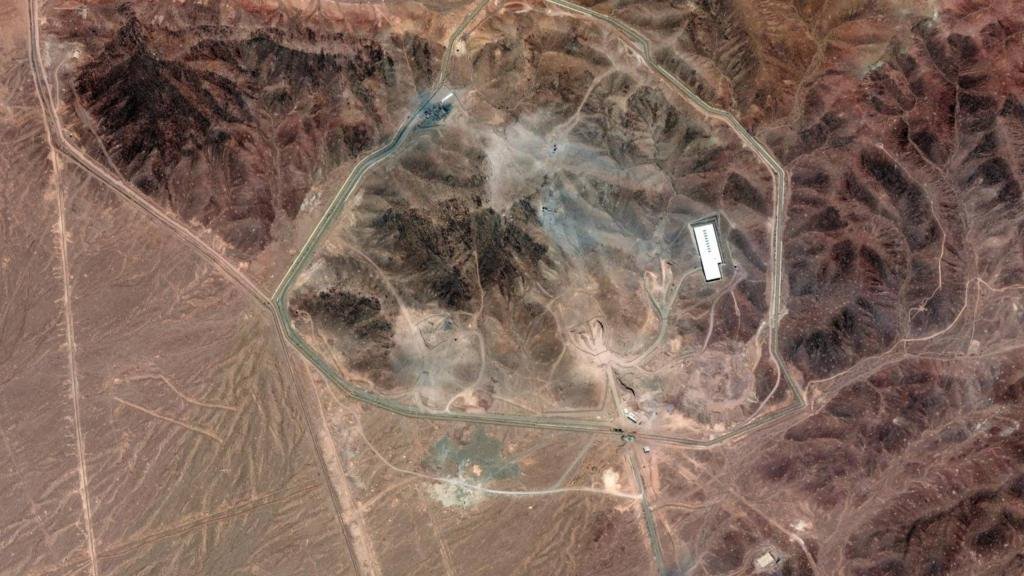

Nuclear Facilities
Iran’s Foreign Ministry spokesman, Esmaeil Baghaei, has firmly rejected claims that recent U.S. and Israeli military strikes completely destroyed the country’s nuclear infrastructure, while reaffirming Tehran’s unwavering commitment to its peaceful nuclear ambitions under international law.
In a detailed interview with Al Jazeera, Baghaei stated that although Iranian nuclear sites had sustained significant damage, the narrative of total destruction is exaggerated. He emphasized that Iran remains committed to its rights under the Nuclear Non-Proliferation Treaty (NPT), which allows all member states to pursue nuclear energy for peaceful purposes.
“Iran has every right under the NPT to use nuclear energy for peaceful purposes, and it will continue to preserve that right under any circumstances,” Baghaei asserted.
When pressed about the current condition of Iran’s uranium enrichment facilities and stockpiles, Baghaei did not deny the damage but downplayed its strategic implications. “Yes, our nuclear installations have been badly damaged. That’s for sure because they have come under repeated attacks,” he admitted. However, he stressed that the real issue should be the global community’s failure to condemn what he called the United States’ ‘unlawful aggression’.
“This was a serious blow to diplomacy, international law, and basic ethics,” he said. “It’s troubling that many are focusing on the extent of the strikes instead of condemning the aggression itself.”
Baghaei also confirmed that Iran’s parliament has passed new legislation limiting cooperation with the International Atomic Energy Agency (IAEA). While not terminating the relationship entirely, the move reflects Iran’s frustration with what it sees as international double standards. The law requires that any future cooperation must guarantee the safety of Iranian scientists and facilities and must not infringe on Iran’s sovereign rights under the NPT.
Meanwhile, Baghaei voiced skepticism over President Donald Trump’s recent remarks suggesting a possible diplomatic opening with Iran, accusing Washington of hypocrisy. “They talk about diplomacy while giving a green light to Israeli aggression. How can trust be rebuilt under such circumstances?” he asked. Still, he noted that Iran had maintained limited diplomatic engagement via intermediaries during the conflict, underscoring that diplomacy remains an option — though not at the expense of national security.
Baghaei also acknowledged that the recent ceasefire between Iran and Israel was brokered through Qatar, which had been approached by the United States to mediate.
Despite the devastation, he praised the resilience of the Iranian people and extended apologies to Qatar for any inconvenience caused by Iran’s missile strike on Al Udeid Air Base, near Doha — a U.S. military installation. “That strike was solely aimed at U.S. assets. It had nothing to do with Qatar, a country we deeply respect,” he clarified.
On the other side, U.S. Secretary of State Marco Rubio confirmed that the strikes had not entirely destroyed key nuclear facilities such as Fordow, Natanz, and Isfahan, but claimed they had significantly set back Iran’s nuclear ambitions.
Speaking to POLITICO at the NATO summit in the Netherlands, Rubio dismissed reports downplaying the damage, arguing they were incomplete and politically skewed.
“They’re much further away from developing a nuclear weapon than they were before,” Rubio said, while noting that Washington is not seeking regime change in Iran. “President Trump’s instincts are strong, and once he makes a decision, it’s our job to support that direction,” he concluded.
Despite varying assessments over the long-term impact of the strikes, both Iran and the United States appear committed to their strategic positions. While Tehran remains defiant and committed to nuclear sovereignty, Washington continues to signal a readiness to act decisively if it believes Iran is edging closer to weaponization.
