
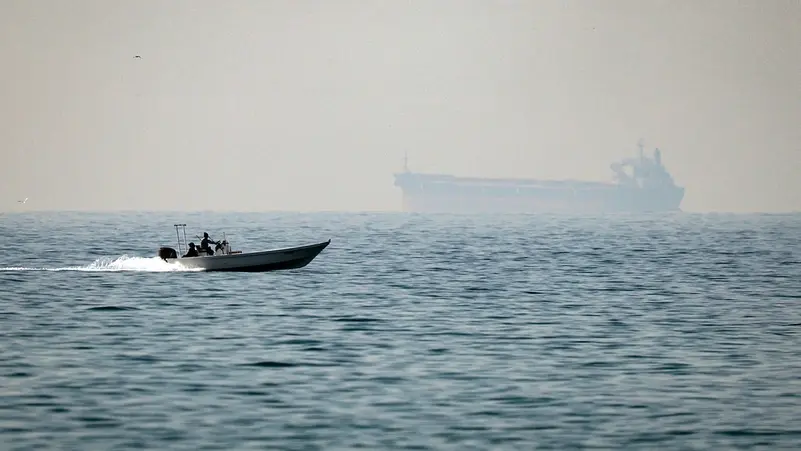

Tensions in the Middle East have intensified after Iran claimed it targeted a US oil tanker in the Arabian Gulf. Iranian state media reported that the vessel was struck by a missile on Thursday. The attack allegedly caused a fire on board the ship.
The incident was announced by Iran’s powerful military organization, the Islamic Revolutionary Guard Corps. According to statements broadcast on Iranian state television, the tanker was hit in the northern part of the Gulf.
The claim has not yet been independently confirmed by international authorities. However, the announcement has raised fresh concerns about the safety of global energy routes and maritime security in the region.
Iran Says Tanker Hit by Missile
Iranian state television reported that the oil tanker caught fire after the missile strike. Officials said the ship was burning after the attack occurred in waters near the northern Arabian Gulf.
The Islamic Revolutionary Guard Corps said the tanker was directly hit by a missile. The military group described the strike as part of its ongoing response to rising military tensions in the region.
Iranian authorities did not provide detailed information about the tanker’s ownership, cargo, or the condition of its crew. The reports also did not mention whether there were casualties.
Because the claim came from state media, international verification is still pending. Several global monitoring agencies are expected to review satellite data and shipping reports to confirm the incident.
If confirmed, the strike would represent a significant escalation in the conflict involving Iran and the United States.
Strategic Importance of the Strait of Hormuz
Alongside the announcement of the tanker strike, Iranian officials made another major claim. The Islamic Revolutionary Guard Corps said it currently has “full control” over the Strait of Hormuz.
The Strait of Hormuz is one of the most important shipping routes in the world. It connects the Persian Gulf with the Indian Ocean. Millions of barrels of oil and natural gas pass through this narrow waterway every day.
Energy shipments from major producers such as Saudi Arabia, Iraq, Kuwait, and the United Arab Emirates depend on this route. Because of this, any disruption in the strait can quickly affect global energy markets.
Security analysts often describe the strait as a critical choke point in international trade. Even small military incidents in this area can influence oil prices and global shipping operations.
Concerns Grow Over Energy Security
The reported attack highlights increasing risks to the energy industry in the Gulf region. Oil tankers and energy infrastructure have frequently been targeted during periods of regional conflict.
Shipping companies and energy markets closely monitor developments in the Arabian Gulf because the area supplies a large portion of the world’s oil exports.
Military analysts say further attacks on energy vessels could disrupt trade routes and increase insurance costs for shipping companies operating in the region.
The United States and several Western allies maintain naval patrols near the Strait of Hormuz to protect commercial vessels. These forces monitor maritime traffic and respond to potential threats against shipping.
So far, US officials have not confirmed Iran’s claim about the missile strike. However, security agencies are expected to investigate the report and assess the situation in the Gulf.
The situation remains highly sensitive. Any confirmed attack on an oil tanker could deepen the current crisis and increase tensions between global powers operating in the region.

