

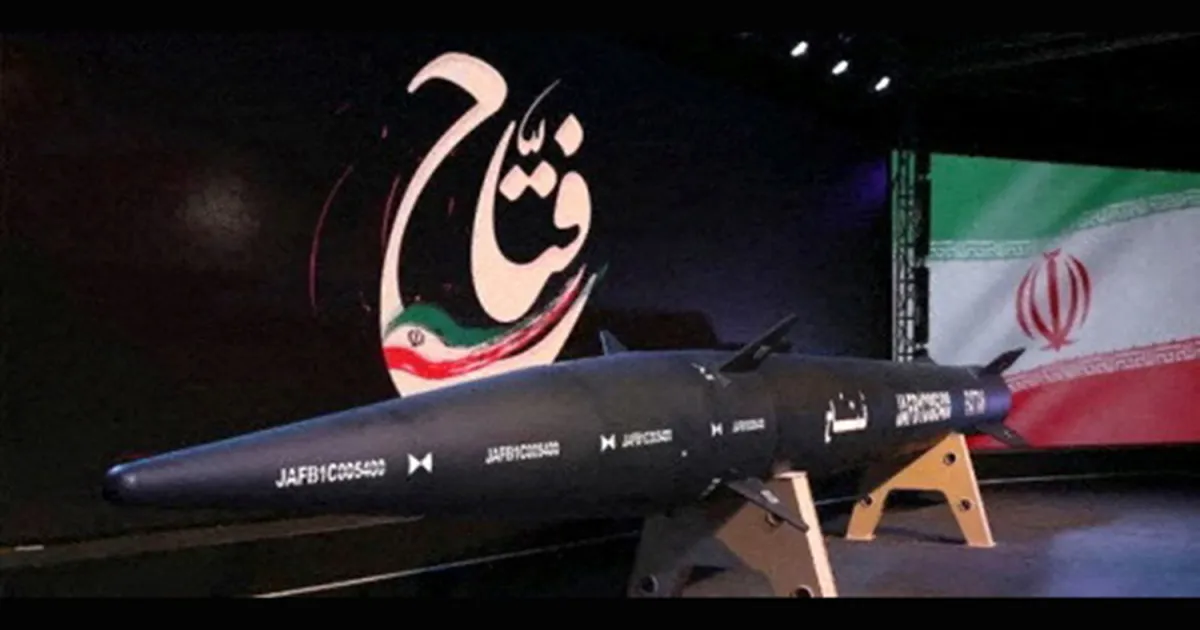

Iran’s deployment of its hypersonic Fattah-1 missile has escalated tensions in the ongoing conflict with Israel, drawing attention to a weapon engineered to bypass conventional missile defence systems.
What is the Fattah-1?
First revealed in 2023 and named by Iran’s Supreme Leader Ayatollah Ali Khamenei, the Fattah-1 is Iran’s inaugural hypersonic missile. Capable of reaching speeds of Mach 5 (five times the speed of sound), it features a manoeuvrable reentry vehicle, allowing it to alter its path during flight—making it difficult to intercept.
A Threat to Israel’s Defence Systems
The missile is powered by solid fuel, has a reported range of up to 1,400 kilometers, and utilizes a single-stage propulsion system. Its design is intended to evade interception by Israeli defence systems such as Iron Dome and Arrow. Iranian authorities have labelled it the “Israel-striker,” and during its unveiling in Tehran, a banner read, “400 seconds to Tel Aviv” in Hebrew.
First Confirmed Use in Combat
The Islamic Revolutionary Guard Corps (IRGC) confirmed on June 18 that the Fattah-1 had been used in the current conflict, marking its first publicly acknowledged operational deployment.
Fabian Hinz of the International Institute for Strategic Studies noted that the missile likely includes a glide-capable reentry vehicle, enhancing its ability to avoid detection and interception. Unlike traditional ballistic missiles with fixed trajectories, hypersonic weapons can change direction mid-flight, narrowing the window for defence systems to respond.
Strategic and Regional Implications
If proven effective, the Fattah-1 could force Israel to reevaluate its missile defence capabilities. It also illustrates Iran’s readiness to retaliate decisively against what it describes as Israeli aggression.
Worsening Conflict
Reports from Israel indicate a dwindling supply of interceptors, signaling vulnerability amid sustained attacks. The latest exchange between Iran and Israel has claimed over 200 lives and left hundreds injured on both sides. Iran’s military has pledged further retaliation, while U.S. officials are monitoring the situation closely, particularly after President Donald Trump demanded Iran’s “unconditional surrender.”
The emergence of the Fattah-1 marks a significant shift in the landscape of modern warfare, highlighting the increasing complexity of missile technology and its impact on regional security in the Middle East.
