
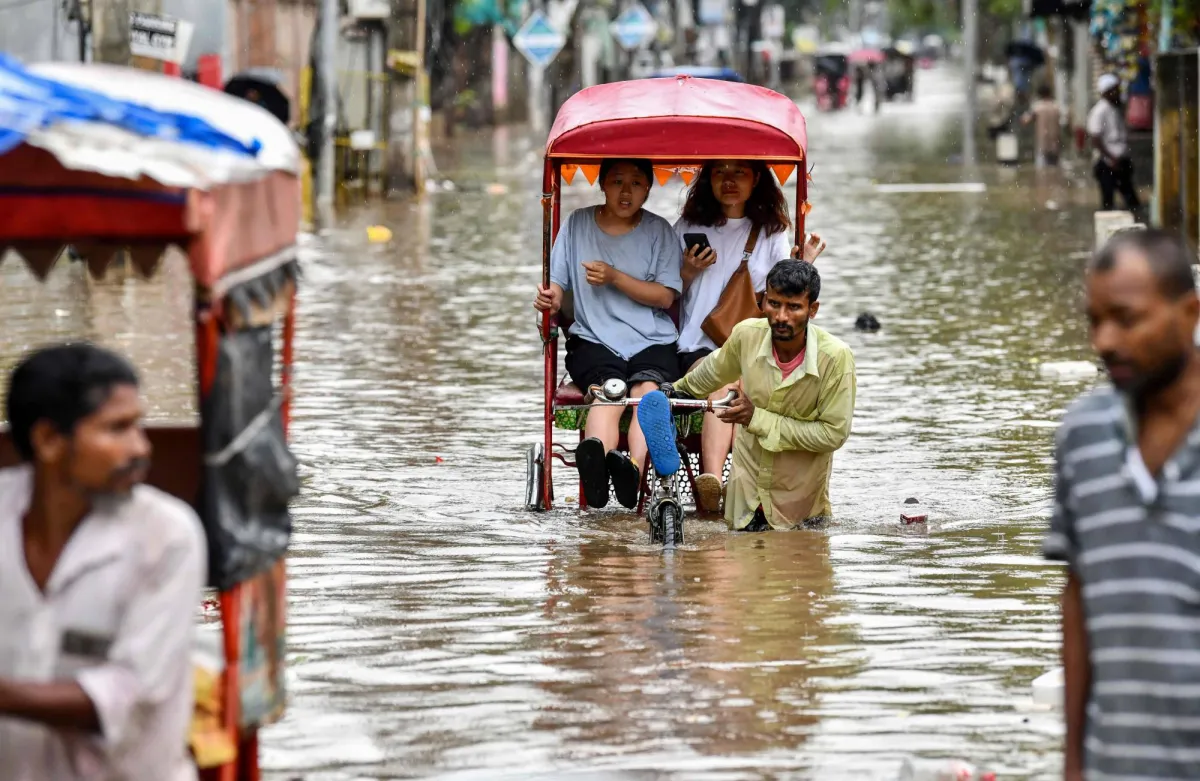

Assam Bears the Heaviest Losses
Floods, landslides and extreme rainfall have killed more than 100 people across India since July. Thousands of residents have also been forced to leave flooded homes as the annual monsoon intensifies.
Assam remains among the worst-affected states. At least 87 people have died in rain-related incidents, according to Chief Minister Himanta Biswa Sarma and official disaster figures.
Sivasagar district has suffered particularly severe destruction. Authorities reported around 47 deaths in the district, while several communities remained surrounded by floodwater.
Recent official figures showed that approximately 128,000 people were still affected across seven Assam districts. Floodwaters had begun receding in some locations, but many villages, homes and agricultural areas remained submerged.
Around 60,000 people across 160 villages were affected in Sivasagar alone. Residents in several communities moved to safer locations after water entered their homes and damaged personal belongings.
Local residents also participated in rescue operations. Villagers reportedly used small boats to evacuate more than 1,000 stranded people from several flooded settlements.
Relief and rehabilitation operations have continued across Assam. Camps and distribution centres have provided shelter, food and essential supplies to displaced families. Authorities are also assessing damage to crops, schools, homes and public infrastructure.
Sarma described the destruction as unprecedented for several affected communities. He appealed for public support and said financial compensation could not replace the lives lost in the disaster.
Kerala and Kashmir Report Deadly Rain Disasters
In Kerala, at least 15 people were reported dead and seven remained missing following several days of heavy rainfall, according to Chief Minister V. D. Satheesan.
Flooding affected low-lying areas, while landslides and overflowing rivers increased risks across the southern state. More than 300 relief camps were established to shelter over 10,000 displaced residents.
Schools were closed in several districts, examinations were postponed and emergency teams were deployed as authorities intensified evacuation and relief measures.
The India Meteorological Department issued further rainfall warnings for Kerala. Heavy rain was forecast for August 5 and August 8, with very heavy rainfall possible on August 6 and August 7.
In Indian-administered Jammu and Kashmir, intense cloudbursts, flash floods and landslides caused major destruction in remote mountain communities.
Reports placed the death toll between 28 and 31, depending on the reporting period and official source. Homes, roads, bridges, vehicles and livestock were swept away in several affected areas.
Some villages became difficult to reach after floodwater destroyed roads and communication networks. Rescue personnel, soldiers and local volunteers searched damaged areas and swollen rivers for missing residents.
Lightning also caused additional deaths in eastern India. Authorities reported fatalities in Bihar and Jharkhand, where farmers, cattle grazers and children were among those affected by thunderstorms.
Further Heavy Rain Raises New Flood Concerns
The India Meteorological Department warned that dangerous weather could continue across several regions.
Heavy rainfall was forecast in Assam and Meghalaya through August 11. Extremely heavy rain was also expected at isolated locations in Meghalaya on August 5.
Widespread rainfall was also forecast across parts of Jammu and Kashmir, Himachal Pradesh, Uttarakhand, Bihar, Jharkhand, Kerala and other vulnerable areas. Thunderstorms and lightning remained a major threat.
India’s monsoon season provides essential water for farming, reservoirs and drinking supplies. However, intense rainfall can quickly trigger floods, river overflows and landslides, particularly in mountainous and densely populated regions.
Climate researchers warn that rising temperatures are increasing the risk of short and intense rainfall events across the western Himalayas. Such downpours can produce deadly flash floods with little warning.
Experts have called for stronger early-warning systems, additional mountain weather stations, improved watershed protection and infrastructure designed for increasingly extreme weather conditions.
Relief teams remain active across affected states as authorities assess casualties and property damage. With further heavy rain forecast, officials have advised residents to follow weather warnings, avoid swollen rivers and move quickly when evacuation orders are issued.

