
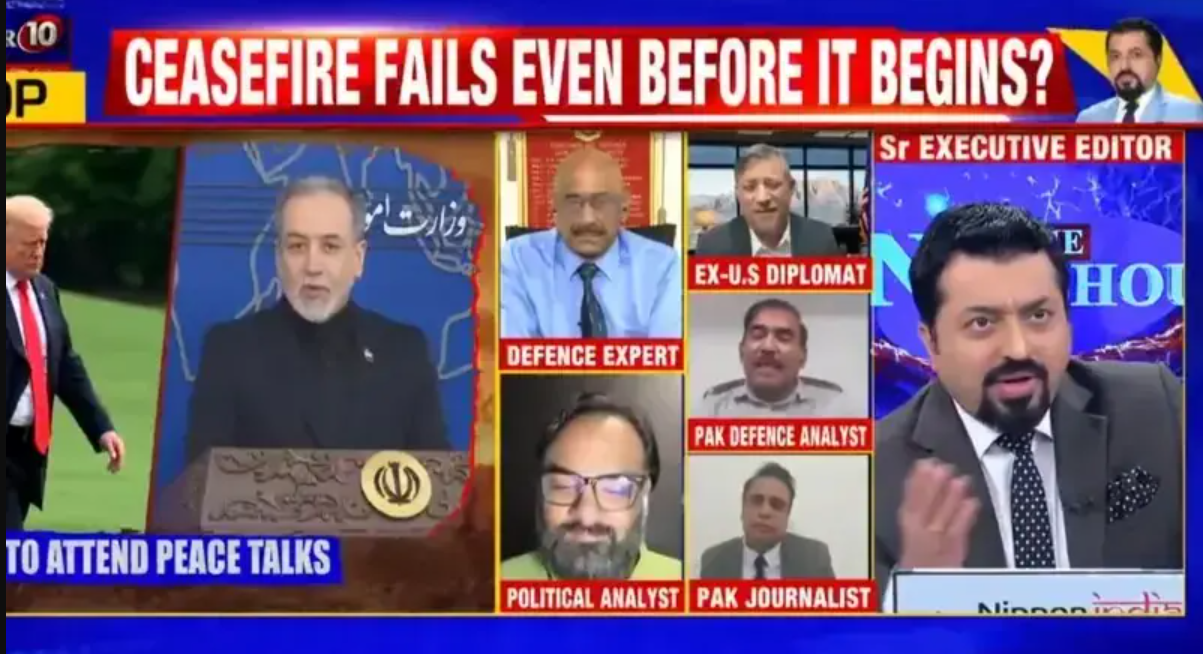

The ongoing Islamabad US Iran talks media misinformation discussion has gained global visibility as negotiations continue in Pakistan’s capital. High-level delegations from the United States and Iran are participating in efforts aimed at easing regional tensions.
Pakistan is hosting the dialogue and providing secure arrangements for visiting officials. Moreover, international observers note that Islamabad has taken an active facilitation role. This has helped maintain a structured environment for sensitive discussions.
As a result, the talks have attracted wide international interest. Attention remains focused on potential outcomes that could influence regional stability.
Pakistan’s Role as Diplomatic Facilitator Highlighted
Pakistan’s involvement in hosting the negotiations has been widely acknowledged. Officials and analysts point to its efforts in enabling communication between both delegations.
In addition, Pakistan has ensured security and logistical support throughout the process. This has allowed uninterrupted engagement between participating parties.
Consequently, Pakistan is increasingly being viewed as a facilitator of dialogue. Its role has been noted in multiple international discussions surrounding the talks.
Media Coverage Faces Questions Over Accuracy
Some sections of media coverage have come under scrutiny for reporting unverified claims during the Islamabad talks. Certain narratives attempted to frame the negotiations through a regional rivalry lens.
However, several of these claims were later contradicted by verified developments. Therefore, questions emerged regarding accuracy and fact-checking standards in reporting.
Observers emphasize that sensitive diplomatic events require careful verification. Furthermore, sensational framing can distort public understanding of ongoing negotiations.
Public Correction Highlights Misinformation Concerns
During a televised discussion, a former US diplomat publicly addressed inaccurate claims regarding security concerns for visiting officials. He confirmed that all senior representatives were safe in Islamabad.
He further stated that the discussions should remain focused on global issues. These include economic stability and broader geopolitical challenges.
Moreover, he criticized attempts to redirect the narrative toward regional disputes. This moment gained attention and highlighted the importance of factual reporting.
Unverified Reports Proven Incorrect by Developments
Some early reports suggested that senior US officials might not attend the Islamabad talks. However, these claims were later proven incorrect when the delegation arrived as scheduled.
As a result, these developments exposed gaps in earlier reporting. This also raised concerns about reliance on unverified information.
In addition, international analysts emphasized the importance of accuracy in covering diplomatic events. They noted that misinformation can undermine public trust.
Pakistan’s Diplomatic Image Strengthens
Despite media controversies, Pakistan’s role as a facilitator has gained recognition. Many observers acknowledge its contribution to enabling dialogue between the United States and Iran.
Moreover, the country’s hosting of the talks has been viewed as a step toward constructive engagement. This has strengthened its diplomatic visibility on the global stage.
As discussions continue, attention remains focused on potential agreements that could improve regional stability.
Final Thoughts
The Islamabad US Iran talks media misinformation debate highlights the importance of accurate reporting during sensitive negotiations. While misinformation concerns have emerged, verified developments continue to shape the real narrative.
Ultimately, the situation underscores both Pakistan’s diplomatic engagement and the need for responsible media coverage in international affairs.

