

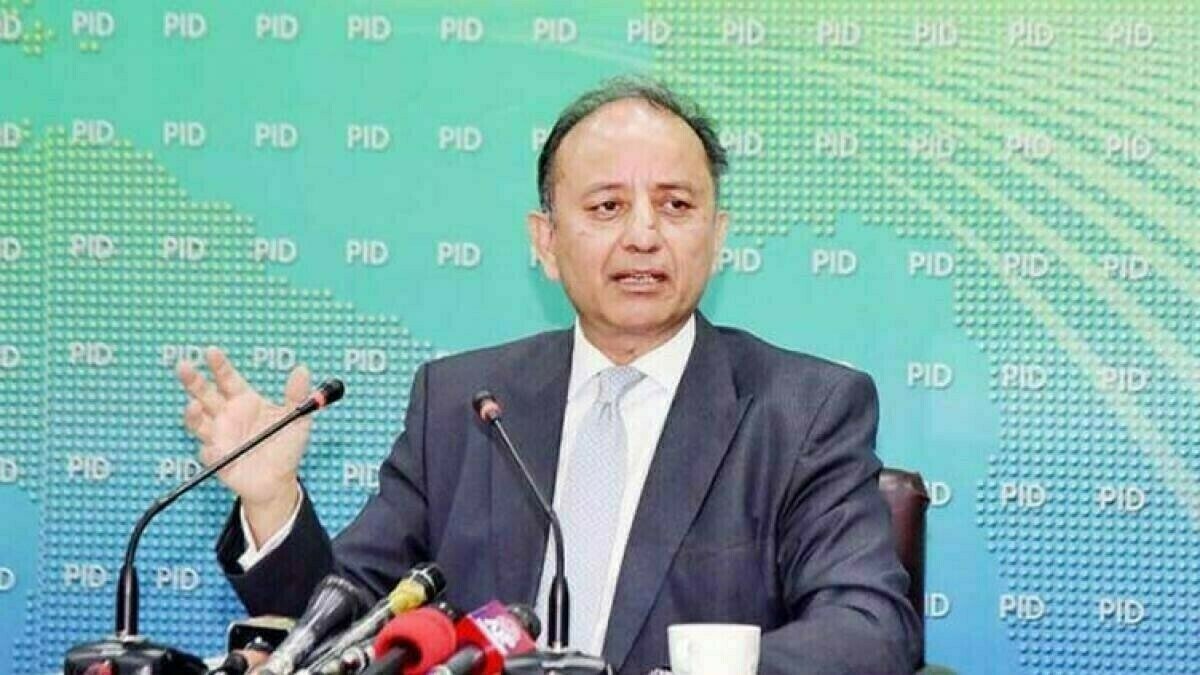

India is deliberately manipulating the flow of the Indus River system to destabilize Pakistan’s agricultural cycle and compromise its food security, Federal Minister for Climate Change and Environmental Coordination Musadik Malik has alleged.
In an interview with Bloomberg during his visit to London, Malik stated that New Delhi has adopted a strategy of intermittently holding and then suddenly releasing water into the river system. This, he explained, has severely affected Pakistan’s crop sowing by making water unavailable at crucial times.
“The deliberate disruption is clearly aimed at altering Pakistan’s crop patterns and threatening our food security,” Malik said. He noted that while no official estimates for agricultural losses have been calculated yet, the effects are already being felt in farming communities.
Malik criticized India’s unilateral suspension of the Indus Waters Treaty in the wake of the April 22 attack in Pahalgam, located in Indian Illegally Occupied Jammu and Kashmir (IIOJK). According to him, the move disregarded existing diplomatic protocols and escalated an already tense regional situation.
In early May, amid rising tensions, the Chenab River’s flow into Pakistan dropped to nearly 90% below normal levels, according to Muhammad Khalid Idrees Rana, spokesperson for the Indus River System Authority. The Times of India reported that India cited “flushing and desilting” activities at the Baglihar and Salal hydropower projects as part of its justification—an action that significantly disrupted water volumes crossing into Pakistan.
Malik acknowledged that while India has yet to significantly impact Pakistan due to the absence of major water storage infrastructure on its side, the construction of such dams would constitute a “declaration of war.” He emphasized that Pakistan views the building of storage dams by India as a red line and a major escalation.
He further revealed that Pakistan had responded to India’s repeated requests over the past year to revisit the terms of the Indus Waters Treaty—especially in light of growing water stress due to climate change and increasing populations in both countries. However, he pointed out that India failed to clarify which specific treaty provisions it wished to renegotiate.
Addressing the recent military flare-ups between the two nuclear-armed neighbors, Malik acknowledged the diplomatic role played by international actors in de-escalating the situation. “The ceasefire was made possible in large part thanks to efforts by the Trump administration, as well as key partners including the United Kingdom, Saudi Arabia, and the UAE,” he said.
The climate change minister is part of a delegation led by Pakistan Peoples Party Chairman Bilawal Bhutto Zardari. The team is currently engaged in a global diplomatic effort to present Pakistan’s version of recent events and to challenge what it calls India’s “false narrative.”
After meetings in Washington and London, the delegation is scheduled to continue its advocacy mission in Brussels.
