
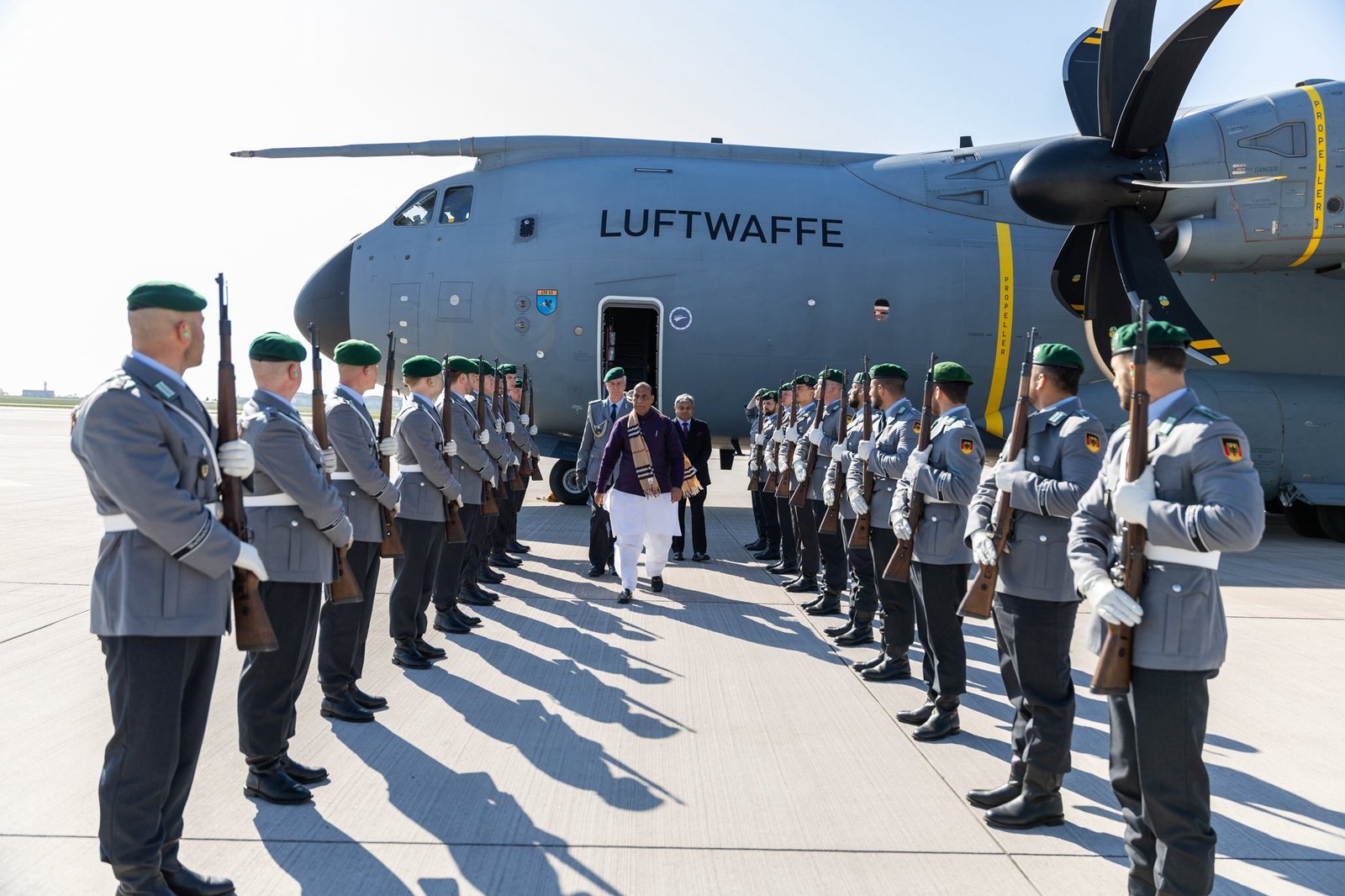

Berlin — India’s Defence Minister Rajnath Singh visited a submarine construction facility operated by Thyssenkrupp Marine Systems in Germany, where he reviewed advanced naval technologies and inspected production systems. The visit highlights expanding defence ties between the two countries, particularly in submarine development and maritime security.
Visit showcases submarine design and operational features
During the tour, Singh examined the Type 212-class conventional submarine, known for its stealth and advanced engineering. He attempted to board the vessel through its narrow hatch and briefly navigated the tight entry before successfully stepping inside. The moment underscored the compact design typical of modern submarines.
Meanwhile, officials guided Singh through key design and manufacturing processes, providing insights into underwater defence capabilities. As a result, the visit reinforced India’s focus on upgrading its naval fleet with advanced technologies. Defence experts note that such collaborations can accelerate knowledge transfer and technical expertise.
Submarine deal expected to strengthen strategic partnership
In addition, German Defence Minister Boris Pistorius expressed confidence that both sides will soon finalize an agreement for a major submarine project. He indicated that the deal, valued at approximately $8 billion, could be signed within months.
Furthermore, India has already approved key aspects of the agreement, including pricing frameworks, export regulations, and long-term support arrangements. The project involves collaboration between Mazagon Dock Shipbuilders Limited and Thyssenkrupp Marine Systems.
Under the plan, both countries aim to build six submarines in India, thereby boosting domestic manufacturing and strengthening industrial capacity. Consequently, the initiative aligns with India’s broader strategy to modernize its navy while promoting local defence production.
India and Germany advance submarine partnership as Rajnath Singh inspects facility, highlighting naval modernization and growing strategic defence cooperation efforts.

