

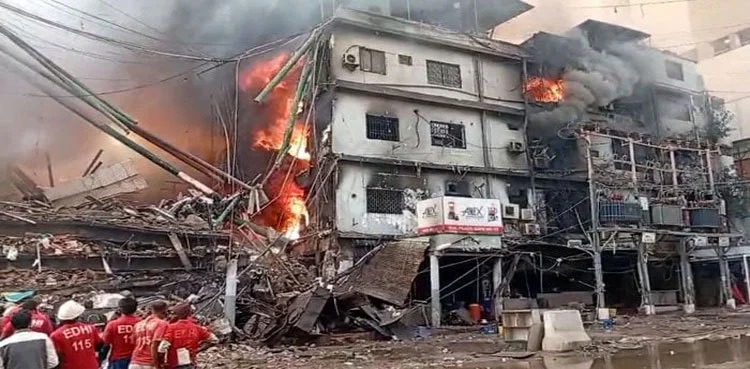

The Gul Plaza fire tragedy has triggered sharp criticism of governance failures in Sindh, reigniting debate over Karachi’s neglected safety systems. During a National Assembly session on Tuesday, Muttahida Qaumi Movement-Pakistan leader Dr Farooq Sattar blamed decades of inaction, apathy, and corruption for the deadly incident.
A massive fire broke out at Karachi’s Gul Plaza late Saturday night. At least 23 people lost their lives. Dozens remain unaccounted for. The incident shocked the city and raised serious questions about emergency preparedness and oversight.
Speaking in parliament, Dr Sattar said Karachi residents deserved clear answers from both provincial and federal authorities. He questioned where the city stood in government priorities. He also criticised the delayed arrival of senior officials at the fire site. According to him, the chief minister reached the scene nearly a day later. The mayor also arrived hours after the blaze erupted. He described these delays as a clear sign of official apathy.
Moreover, Sattar paid tribute to firefighter Furqan Ali, who lost his life while battling the inferno. He said such sacrifices exposed the lack of resources provided to emergency services. He stressed that Karachi’s firefighting capacity does not match its size or population.
Sattar argued that the city remains undercounted, underfunded, and underrepresented. He said development priorities have been misplaced. Instead of strengthening safety infrastructure, authorities focused on cosmetic projects. As a result, governance failures have accumulated over years.
He urged the government to take ownership of Karachi. He also called for national consensus to recognise the Gul Plaza fire as a collective tragedy. Additionally, he pushed for creating more administrative units. According to him, decentralisation would improve governance and service delivery.
The MQM leader emphasised stronger local governments. He said a single chief minister cannot manage a city as complex as Karachi. Therefore, administrative powers should shift to mayors, town chairmen, and union council leaders. He clarified that administrative division does not mean geographic division. Instead, it ensures fair distribution of justice and resources.
Defence Minister Khawaja Asif supported this view. He said managing Karachi under its current structure is unrealistic. He added that real empowerment requires functional local government systems. He noted that provincial control after the 18th Amendment weakened local authority. As a result, elected local bodies lack meaningful power.
However, Pakistan Peoples Party leader Shehla Raza rejected claims of negligence. She said ministers are not required to appear immediately at incident sites. Instead, effective response matters more. She detailed the emergency response timeline. Fire tenders were dispatched within minutes. Additional resources followed once the scale became clear. Traffic congestion caused delays, she acknowledged.
Raza also disputed claims about local government absence. She stated that Sindh operates functional local government systems. She urged critics to avoid politicising the tragedy.
The Gul Plaza fire has become more than a disaster. It has evolved into a symbol of Karachi’s long-standing governance crisis. The debate now centres on accountability, decentralisation, and public safety. The city awaits concrete action.
