

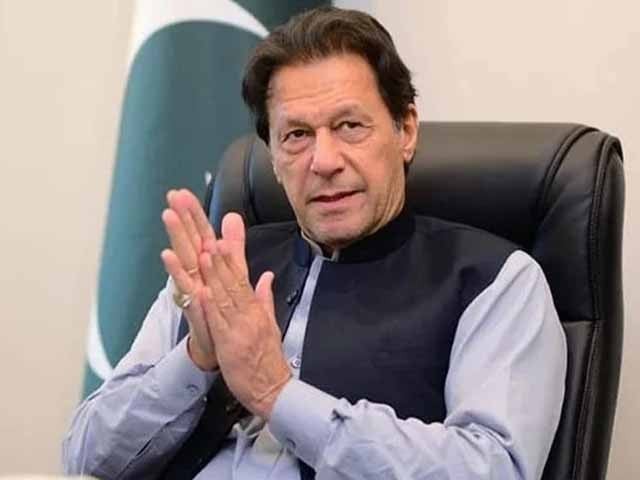

RAWALPINDI: Imran Khan, the former prime minister and founder of Pakistan Tehreek-e-Insaf (PTI), has expressed strong support for the lawyers’ movement protesting the “unconstitutional” appointment of judges, calling the 26th Amendment an “attack” on the judiciary.
Khan’s comments were relayed by his legal counsel, Faisal Chaudhry, outside Adiala Jail in Rawalpindi on Tuesday.
The remarks followed the Judicial Commission of Pakistan (JCP) approving the appointment of six new judges to the Supreme Court, a decision made amid a boycott by PTI lawmakers and two senior Supreme Court judges. The legal community had already condemned the transfer of three judges from Sindh, Balochistan, and Lahore to the Islamabad High Court (IHC), sparking further backlash from the bar associations.
PTI Senator Hamid Khan announced that the lawyer community would challenge the nominations of the new judges in the Supreme Court, pledging to continue the protest movement. Additionally, major bar councils, including the Islamabad Bar Council (IBC), Islamabad High Court Bar Association (IHCBA), and Islamabad District Bar Association (IDBA), revealed plans to launch a long march to oppose the 26th Amendment.
Following his meeting with Khan, Chaudhry told reporters that the PTI leader had directed his party to support the lawyers’ protest against what he termed the unconstitutional judicial appointments. Khan also emphasized that Pakistan was lacking rule of law and highlighted open letters he had sent to Chief of Army Staff (COAS) General Asim Munir.
Criticizing the establishment, Chaudhry added that instead of addressing terrorism, authorities were targeting PTI supporters. He also pointed out that Khan was being tried in a controlled environment and was being denied a fair trial. Chaudhry called for Khan’s trial to be held in an open court.
Meanwhile, with an IMF delegation visiting Pakistan, Chaudhry mentioned that PTI’s Opposition Leader, Omar Ayub, would present a dossier to the IMF containing details from the past two and a half years, covering political victimization, torture, and the martyrdom of PTI workers at the hands of law enforcement authorities.
