

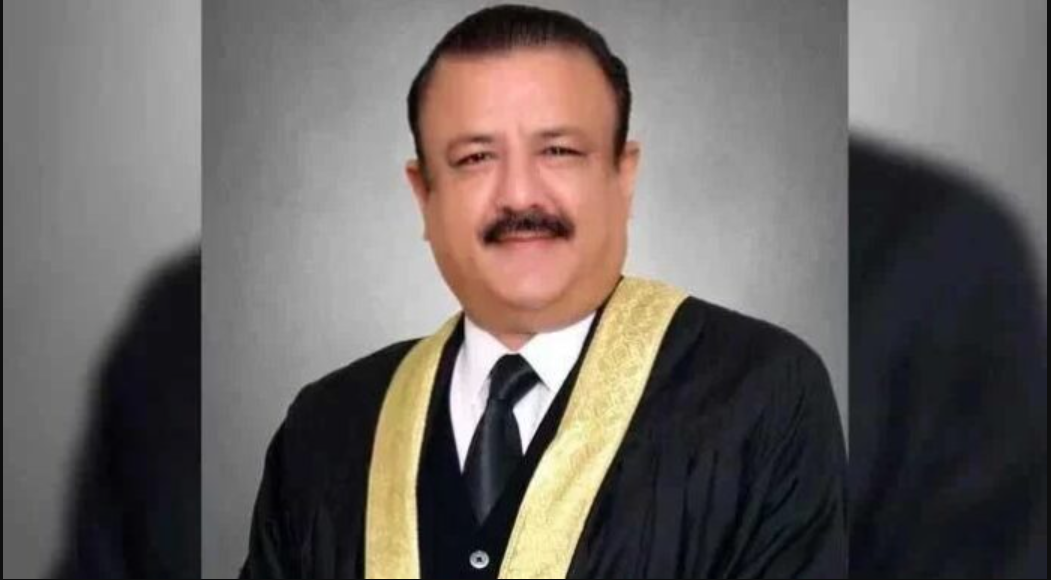

The Islamabad High Court has ruled that a petition questioning the legitimacy of Justice Tariq Mehmood Jahangiri’s law degree is maintainable. The court also asked the judge to submit a reply within three days. The petition seeks verification of his LLB degree and challenges his eligibility to hold judicial office.
The case began after a letter related to the judge’s law degree circulated online. Because of this, doubts arose about his academic record and examination history.
Key Arguments Presented in Court
A two-member bench, headed by Chief Justice Sardar Muhammad Sarfraz Dogar, issued the decision after reviewing arguments from all sides.
During the hearing, some lawyers argued that the matter should go to the Islamabad Bar Council. They stated that allegations relating to judges fall under Article 209, which covers the Supreme Judicial Council.
However, the chief justice noted that the case concerns eligibility, not misconduct. Therefore, according to him, a writ petition under Article 199 could apply. He further observed that a writ of quo warranto may be issued to question the authority of any officeholder.
Another lawyer highlighted that Justice Jahangiri holds multiple licences. Therefore, the qualification issue needed examination by a competent body. Some also reminded the court that an intra-court appeal relating to the judge is pending before the constitutional court.
HEC and Karachi University Reports Raise Concerns
The Higher Education Commission had previously submitted a detailed report to the court. It endorsed the findings of Karachi University regarding irregularities in the judge’s academic record. According to the documents, Justice Jahangiri was barred from appearing in exams for three years in 1988.
Despite this, he allegedly sat exams under a different name. Moreover, the inquiry found that two different enrolment numbers were linked to him. This contradicted university rules that allow only one enrolment number during a degree programme.
The inquiry committee also found that another student had already been registered under the enrolment number used for the LLB degree. Although the committee did not call the degree “bogus,” it declared the record invalid due to inconsistent identities and conflicting documents.
The university later cancelled the results and imposed a three-year ban.
Court Seeks Replies as Case Moves Ahead
During the latest hearing, the advocate general read the Karachi University report in court. A lawyer argued that a previous order had suspended the notification cancelling the judge’s degree. Yet the bench observed that the suspension did not amount to restoration.
After reviewing the submissions, the court declared the plea maintainable. Notices were issued to all respondents with instructions to file replies within three days.
Legal Journey So Far
The case has followed a long legal path. Earlier, the same bench temporarily barred Justice Jahangiri from performing judicial duties. This led to wider debate within the legal community. The Supreme Court later set aside that interim order. It ruled that a high court cannot stop a sitting judge from working while hearing a quo warranto petition.
The Supreme Court also directed the IHC to address all preliminary objections and proceed under the law.
With the petition now declared maintainable, the case is set to move into a decisive phase as judicial scrutiny intensifies.
