

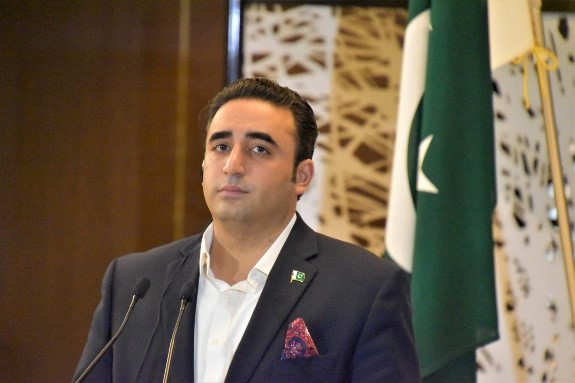

Bilawal Warns India of ‘Global Isolation’ Over Unilateral Actions Following Pahalgam Attack
HYDERABAD – As tensions escalate following India’s unilateral suspension of the Indus Waters Treaty in the wake of the Pahalgam attack, Pakistan Peoples Party (PPP) Chairman Bilawal Bhutto Zardari issued a firm warning to New Delhi, vowing that Pakistan will never relinquish its rightful claim to the Indus River.
Addressing a charged public rally in Sukkur on Friday, Bilawal condemned India’s provocations and accused Prime Minister Narendra Modi of politicizing shared resources for nationalist gains.
“Sindhu is ours and will remain ours,” Bilawal declared. He asserted that while Modi may claim cultural inheritance from the ancient Indus Valley civilisation, the true custodians of that legacy reside in Pakistan, where sites like Mohenjo Daro stand as living testimony.
Indus Waters Treaty in the Crosshairs
Bilawal denounced India’s withdrawal from the decades-old treaty as an illegal and reckless move. He said no single country has the authority to unilaterally revoke an internationally recognized agreement, especially one brokered with global oversight.
“Weaponising water in a climate-stressed world is not just irresponsible—it’s immoral,” he said, warning that such moves could destabilize regional peace and further endanger the environment.
He emphasized the historic, cultural, and existential bond between the people of Sindh and the Indus River, calling on all four provinces to unite in defense of Pakistan’s water rights. “Either water or your blood will flow in this river,” he warned, underlining the emotional and national stakes.
Domestic Victory: Consensus on Canal Construction
Bilawal also announced a major political breakthrough: the federal government has agreed not to build any new canals on the Indus River without full consensus among all provinces through the Council of Common Interests (CCI).
“In a democracy, unilateral decisions don’t work,” he said, lauding PPP supporters for pressuring Islamabad to respect provincial rights. He shared that Prime Minister Shahbaz Sharif had personally assured him that future water projects would follow the principles laid out in the 1991 Water Apportionment Accord and the 2018 National Water Policy.
The next CCI meeting, scheduled for May 2, will address Sindh’s concerns over the issuance of water availability certificates by the Indus River System Authority (IRSA)—a key point of contention in recent years.
Political Unity in the Face of External Threats
Despite political differences between the PPP and the ruling Pakistan Muslim League-Nawaz (PML-N), Bilawal expressed solidarity with the federal government in responding to India’s actions.
“We condemn the terrorist attack in India, but reject Modi’s baseless attempts to blame Pakistan,” he said. “India is using terrorism as a cover to divert attention from its own failures and to justify violations of international treaties.”
Bilawal called for a united national front, saying, “We will send a message to the world: Pakistan will not allow any robbery of the Sindhu.”
PPP Welcomes Federal Shift on Water Policy
Earlier, PPP central spokesperson Shazia Marri hailed the joint press conference between Bilawal and PM Sharif as a landmark moment in interprovincial cooperation. She praised Bilawal’s “principled and courageous leadership” for securing consensus on the controversial canal issue.
“This isn’t just a PPP win—it’s a win for all federating units and for the people of Pakistan,” she said.
Marri emphasized that water is a shared national resource, and decisions regarding its use must be made through collective consultation and constitutional mechanisms. She welcomed the creation of a joint federal-provincial committee to draft a long-term water and agriculture policy, rooted in the 1991 and 2018 frameworks.
She also strongly condemned India’s decision to suspend the Indus Waters Treaty, calling it a “cruel and illegal act.”
“No country can unilaterally suspend a treaty of this nature,” Marri said. “Chairman Bilawal will continue to raise his voice at all international forums in defense of Pakistan’s rights over the Indus waters.”
She reaffirmed the PPP’s commitment to protecting provincial rights and national sovereignty: “The prosperity of each province strengthens the federation. And the protection of the Indus is not just a political matter—it’s a national duty.”
