

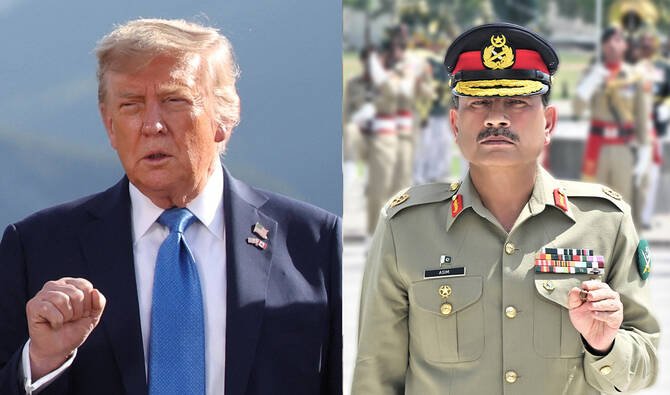

US President Donald Trump’s extended White House meeting with Pakistan’s Chief of Army Staff (COAS) Field Marshal Syed Asim Munir — including a formal lunch and Oval Office visit — has been described as unprecedented in both timing and diplomatic significance.
The two-hour engagement, which was initially planned for just one hour, included Trump’s full cabinet and took place without a parallel civilian delegation from Pakistan, marking the first such meeting in Pakistan’s history at this level. This rare high-level encounter is being hailed as a milestone moment for Pakistan-US relations and a new chapter in military diplomacy.
Sources familiar with the backchannel diplomacy revealed that the groundwork began nearly three weeks prior. A senior Pakistani intelligence officer of major-general rank visited Washington, engaging with key figures in the Trump administration. However, the meeting gained momentum through the direct involvement of Trump’s Middle East envoy, Steve Witkoff. Witkoff’s support was reportedly secured through the influence of a prominent Pakistani businessman based in the Middle East, who also maintains close ties with Gulf royalty.
Several rounds of back-and-forth discussions took place before the meeting was finalized, with final confirmation coming approximately 36 hours before the official announcement.
Field Marshal Munir was in the UAE on invitation from CENTCOM before traveling to Washington. Though initially scheduled to meet with Pentagon and CENTCOM officials, the itinerary shifted dramatically just before his arrival, underscoring the fluid nature of the diplomatic breakthrough.
Efforts also aimed to counter lobbying by Pakistan Tehreek-e-Insaf (PTI) supporters in the U.S. who had sought to influence American lawmakers regarding the arrest of Imran Khan.
This White House visit is also seen as a culmination of evolving strategic alignment between Pakistan and the Trump administration — particularly in areas of counterterrorism, trade, and emerging technologies such as cryptocurrency and rare earth minerals.
Earlier in the year, a Texas-based Trump associate had advocated stronger U.S.-Pakistan ties, praising Pakistan’s sacrifices in the global fight against terrorism. His Islamabad visit, and meetings with Pakistani leadership, including Prime Minister Shehbaz Sharif, helped dispel concerns surrounding Trump’s stance on Imran Khan.
The Trump-Munir discussions reportedly covered strategic partnerships in sectors such as mineral extraction, oil and gas, data centers, real estate, and export enhancement. “This marks the beginning of a new era in Pakistan’s foreign policy — one that emphasizes economic diplomacy,” said a source close to the discussions.
President Trump expressed admiration for Munir’s leadership, calling him a visionary and a valuable ally. He also acknowledged Pakistan’s efforts in de-escalating recent hostilities with India and commended Indian Prime Minister Narendra Modi for restraint.
“This could have turned into a nuclear war. Two very smart people chose peace,” Trump told reporters.
In comparison, previous army chiefs such as Generals Pervez Musharraf, Raheel Sharif, and Qamar Javed Bajwa engaged in defense-related visits but never had this level of exclusive political access to the U.S. president. Field Marshal Munir’s solo military-level engagement — without a civilian entourage — breaks with precedent and signifies a deepening of strategic trust between the two nations.
