
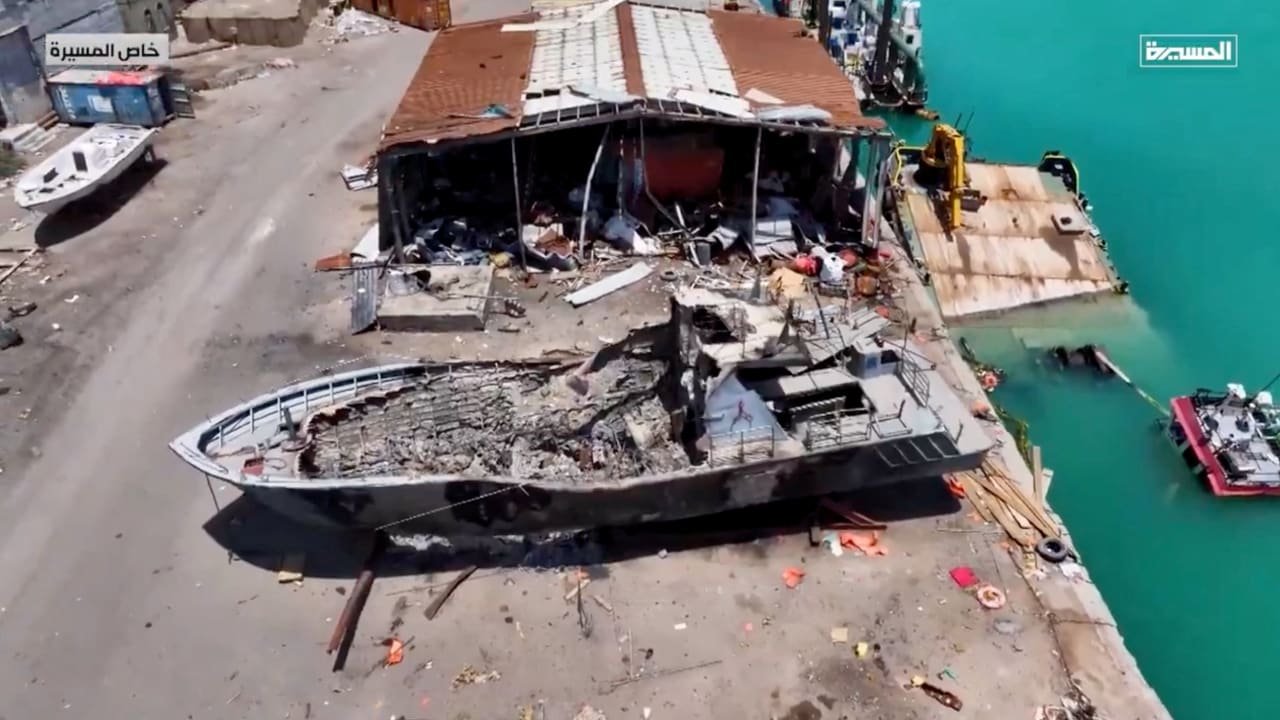

Mocha:At 5 a.m. on Thursday, September 10, 2026, Ali Al-Ahdal, a fisherman in his sixties from the Al-Amoudi neighborhood of Mocha, woke to the sound of successive explosions and gunfire. Within hours, government forces and the National Resistance had withdrawn south toward Dhubab District, while vehicles carrying fighters from Ansar Allah (the Houthis) poured into the city center. It may be pointed out that as fall out of the Yemeni civil; an offshoot of the Arab Spring 2011-12 and the subsequent ouster of former Yemeni military dictator Ali Mohammad Saleh; the KSA support for a government in exile of its choice has been the bone of contention between the KSA and Houthi rebels supported by the Iranians.
“I woke up to find that the city had fallen within hours, without any warning or prior indication. They gave us no chance to flee. The exits were immediately sealed off, and the sea, which had been the lifeline of our lives, became an open combat zone,” Al-Ahdal said.
What happened in Mocha that morning was not an isolated incident in a protracted war. It marked the starting point of a broader shift: Yemen’s transition from a “civil conflict with regional repercussions” into a direct front in the wider confrontation between Tehran and Washington, which has been raging since February 28, 2026, when the United States and Israel launched strikes on Iranian targets.
The Houthis subsequently captured Jabal al-Nar and Khalid bin Al-Walid Camp before taking Hays and Khokha. A government military officer attributed the withdrawal to intense missile attacks and loss of air cover, describing it as a tactical decision to protect troops and civilians.
Meanwhile, a Houthi commander said coordinated drone and ground operations enabled the advance and claimed the movement had secured Yemeni sovereignty over Bab al-Mandab.
Government forces later launched counterattacks near Mocha and western Taiz.
Bab al-Mandab Emerges as Critical Regional Flashpoint
The fighting has heightened concerns over Bab al-Mandab as the broader Iran-US confrontation increases pressure on regional shipping and energy routes.
Furthermore, the International Organization for Migration recorded around 76,000 displaced people from Taiz and Hodeidah since September 3.
The UN envoy to Yemen warned that expanding hostilities threatened prospects for a political settlement.

