
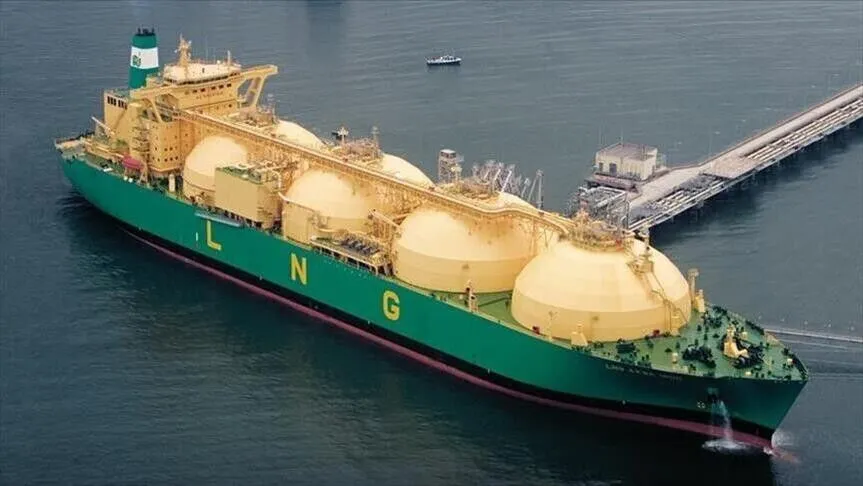

LNG Shipping Stops Through Strategic Waterway
Liquefied natural gas shipments through the Strait of Hormuz appear to have stopped completely.
Tanker-tracking data showed no LNG carriers passed through the strategic waterway during the previous three days.
Oil tanker traffic also declined sharply as military tensions increased across the Gulf.
The Strait of Hormuz is one of the world’s most important energy shipping routes.
Major oil and LNG exporters use the narrow passage to supply customers across Asia and Europe.
Any prolonged disruption could create serious shortages and push global energy prices higher.
Data from LSEG showed that at least four tankers entered the strait since Friday.
However, none of them were LNG carriers.
Three vessels were believed to be carrying refined oil products.
The fourth vessel was identified as a very large crude carrier.
The figures suggest that LNG exports are facing greater disruption than oil shipments.
Analysts Warn Gas Markets Face Greater Risk
ING analysts Warren Patterson and Ewa Manthey said the conflict could hurt gas markets more severely than oil markets.
They pointed to shipping patterns following the previous ceasefire arrangement between the United States and Iran.
Oil vessel traffic recovered relatively quickly after that agreement.
However, LNG shipments returned at a much slower pace.
The analysts warned that the same pattern could emerge after the latest escalation.
Even if diplomatic efforts produce another settlement, LNG exports may take longer to recover.
That delay could leave global gas markets exposed before the winter heating season.
Europe may face the greatest risk because it depends heavily on imported natural gas.
European countries increased LNG purchases after reducing their reliance on pipeline supplies from Russia.
A prolonged disruption in Gulf exports could increase competition between European and Asian buyers.
This could force importers to pay higher prices for limited supplies.
Asian LNG Prices Surge on Supply Fears
Asian LNG prices have already risen sharply because of the shipping disruption.
The regional benchmark increased by approximately 25 percent during the previous four weeks.
Prices reached their highest level since March.
On an annual basis, the Japan-Korea Marker reportedly increased by more than 60 percent.
The benchmark is widely used to measure spot LNG prices in Northeast Asia.
During the week ending July 16, Asian LNG prices climbed by another 10 percent.
Spot prices reached approximately $20.20 per million British thermal units on July 16.
Traders linked the increase directly to the worsening security situation in the Gulf.
Qatar had been increasing LNG production in anticipation of a lasting political settlement.
However, renewed fighting has raised doubts about whether those additional supplies can reach international markets.
Qatar is one of the world’s largest LNG exporters.
Most of its shipments must pass through the Strait of Hormuz.
If the route remains blocked, higher production alone will not resolve global supply concerns.
Energy traders are now closely monitoring tanker movements, diplomatic developments and military activity.
Further escalation could increase freight costs, insurance charges and delivery delays.
It could also affect electricity prices, industrial production and household heating costs in importing countries.
The duration of the disruption will determine the wider economic impact.
A rapid political settlement could gradually restore traffic.
However, analysts warn that LNG shipping may recover more slowly than oil exports, leaving markets vulnerable for an extended period.

