

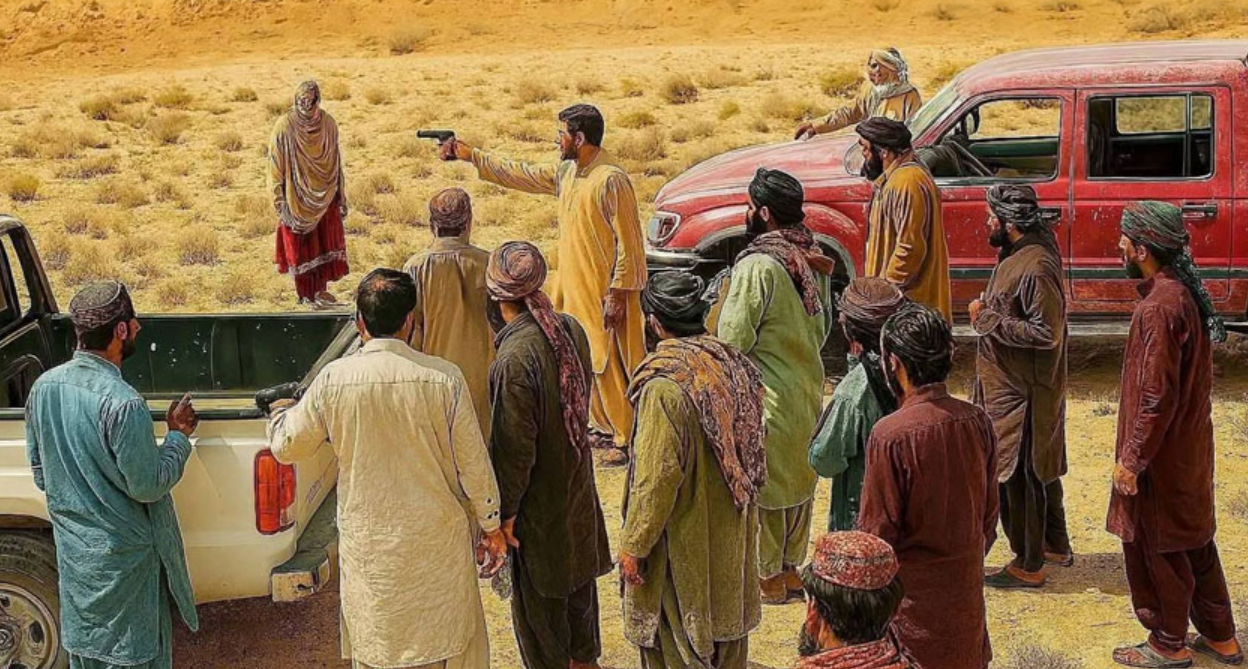

Two suspects involved in the Sanjidi double murder case have been placed on a 10-day physical remand by an anti-terrorism court in Quetta, as authorities continue their probe into what is being widely seen as a case of tribal justice. The accused, Sardar Sherbaz Satakzai and Bashir Ahmed, were presented under tight security before Judge Muhammad Mubeen of ATC-I, who approved their remand to the Serious Crime Investigation Wing (SCIW). The court’s decision aims to provide investigators with more time to collect evidence and interrogate the suspects in connection to the brutal killings.
The double murder, which took place in Quetta’s Sanjidi area, involved the deaths of Bano and a man named Ihsanullah. The crime has sparked outrage and drawn attention to the persistent issue of honor killings and the perceived misuse of tribal justice to justify extrajudicial violence.
Victim’s Mother Justifies Honour Killing as Tribal Justice
In a startling twist, Bano’s mother, Gul Jan, released a video statement defending the murders and framing them as an act of tribal justice rooted in Baloch customs. She declared the killings were carried out to restore family honor, claiming that her daughter and Ihsanullah had disgraced their tribe. “We killed them and did so rightfully, according to Baloch tradition,” she stated, asserting that her family acted independently and without the involvement of local tribal elders or a jirga.
Gul Jan alleged that Ihsanullah had eloped with her daughter and lived with her in Duki for nearly a month before returning. Afterward, she claimed he began taunting her sons, sharing videos on TikTok displaying bullets and issuing threats. According to her, he mocked the family and even defaced images of her sons while making threats, actions which she said intensified tensions and led to the family taking extreme measures.
She also absolved Sardar Sherbaz Satakzai of any direct involvement in the murders, despite his being the central accused in the tribal justice case. Gul Jan maintained that the killings were carried out as a private family decision and were not sanctioned by any formal tribal mechanism.
The video has added a controversial dimension to the case, raising concerns about how traditional customs and tribal justice are being used to rationalize violence, especially against women. Human rights advocates and legal experts are urging stricter enforcement of the law and highlighting the dangers of allowing cultural norms to override legal due process.
Authorities continue their investigation, while both suspects remain in custody under physical remand. The case has once again brought into focus the urgent need to challenge harmful traditional practices disguised as tribal justice in Balochistan.
