
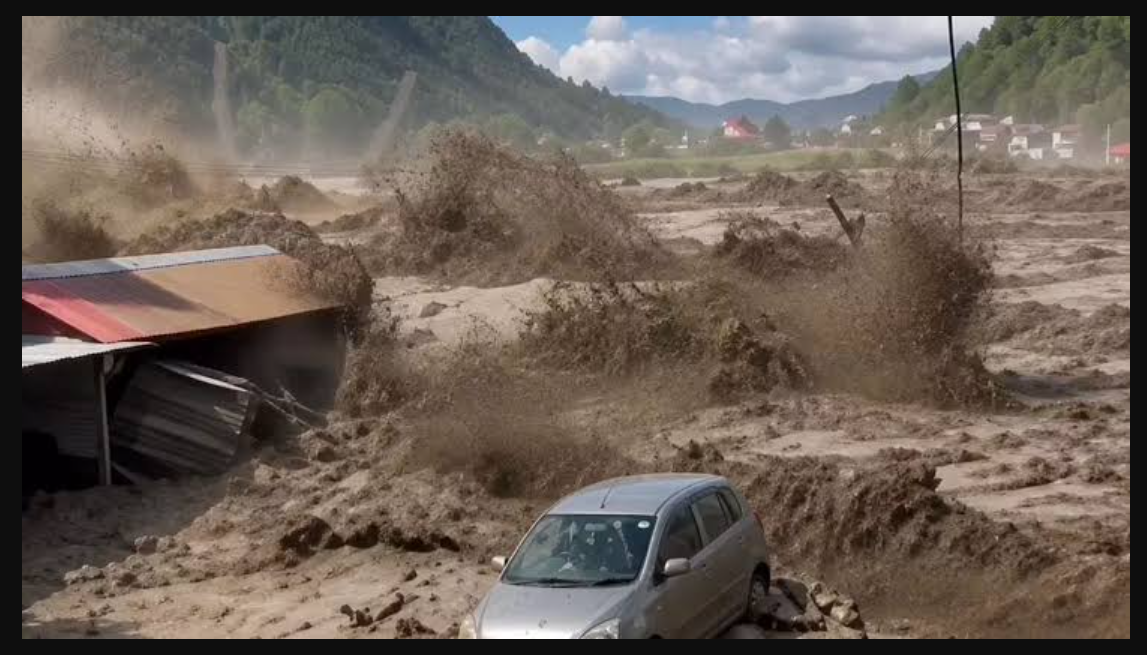

Fresh flood risks are emerging in the Himalayas as Nepal and China warn that two lakes could burst near their border.
The warning comes as both countries continue dealing with a catastrophic flood that struck the region earlier this week.
Search and rescue teams remain active across debris-covered valleys and hillsides. Meanwhile, nearly 1,000 people remain missing after Wednesday’s disaster.
The flooding hit border areas of Nepal and China’s Tibet region. At least 362 people have died in the disaster so far.
Both countries have linked the flooding to a glacier collapse. The collapse sent rocks, ice, mud and debris into mountain river systems.
Nepal Warns of Rising Lake
Nepal’s disaster authority issued a warning on Thursday about a lake formed by debris blocking a river near the flood-hit area.
The authority said the lake continues to rise and could potentially burst. Therefore, officials urged residents and rescue teams to remain alert.
“Residents of the lower banks… passengers, rescuers engaged in rescue operations, and all concerned are requested to exercise special caution and stay in safe places away from the river banks and risky areas,” the authority said.
The warning covers people living near lower riverbanks as well as passengers and rescuers working in the affected areas.
Following the alert, some rescue workers began moving towards higher ground. They sought to reduce their exposure to potentially dangerous areas near the river.
China Warns of Another Potential Breach
China has also warned about a growing flood threat on its side of the border.
Officials said around 3 million cubic meters of water could enter an already dammed lake over the next three days. That volume equals roughly 1,200 Olympic swimming pools.
Consequently, officials have warned of a high risk that the lake could breach its barrier. Peak water flow is expected around September 1.
Aerial footage captured by a Chinese rescue team showed the formation of a barrier lake. The footage showed large amounts of brown water collecting in a basin without a visible outlet.
The rising water had already submerged bushes and trees. It also appeared to be pressing against a barrier made from debris and stones.
More Rain Could Increase the Danger
Forecast rainfall over the coming week could further increase the flood threat, according to Chinese state media citing the country’s water resources ministry.
“The volume of water is continuing to increase, and so is the risk,” Zhu Jinfeng, a researcher at the water resources ministry’s hydrology department, told state broadcaster CCTV.
The additional rainfall could increase pressure on the lake and its debris barrier. As a result, authorities are closely monitoring the situation.
In Nepal, rescue teams have responded to the warning by moving away from exposed areas. Pawan Koirala was among those who moved his team towards safer ground.
Koirala said his team of 13 moved away from the riverbed after receiving the warning.
“We are here for rescue and don’t want to be near the danger zone,” he said.
Rescue Efforts Continue After Deadly Flood
The new warnings come as rescue and search operations continue across the disaster-hit Himalayan region.
The earlier flood caused widespread destruction across valleys and hillsides near the Nepal-China border. Debris from the glacier collapse entered river systems and swept through affected areas.
With hundreds confirmed dead and nearly 1,000 people still missing, rescue teams continue searching through the debris.
However, the rising lakes have created another challenge for rescuers and communities already affected by the disaster. Authorities on both sides are now monitoring water levels and potential breaches closely.
The immediate concern remains the safety of people living and working near vulnerable river channels. Therefore, officials are urging residents and rescue workers to remain away from dangerous riverbanks and other exposed areas.

