
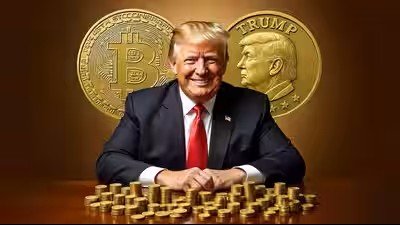

Pakistan’s growing links with a cryptocurrency company connected to US President Donald Trump’s family have sparked fresh questions. The biggest concern is whether the government has invested public money in the business.
The debate centers on World Liberty Financial, a cryptocurrency company linked to Trump and his family. Pakistan signed an agreement with an affiliated firm in January 2026 to explore digital payment services.
However, the agreement does not confirm that Pakistan purchased shares or invested government funds in the company. Available public information shows that the arrangement focused on possible cooperation rather than a direct financial investment.
Pakistan’s Ministry of Finance signed the agreement with SC Financial Technologies on January 14, 2026. The company has links to World Liberty Financial and its digital currency, USD1.
Finance Minister Muhammad Aurangzeb signed the memorandum of understanding with Zach Witkoff, chief executive of SC Financial Technologies.
Prime Minister Shehbaz Sharif and senior Pakistani officials attended the signing ceremony in Islamabad. Field Marshal Asim Munir and Deputy Prime Minister Ishaq Dar were also present.
The high-level meeting attracted attention because of World Liberty Financial’s connections to the Trump family.
Zach Witkoff is also the son of Steve Witkoff, a senior US presidential envoy. His business role has added another political dimension to the agreement.
The deal aims to explore the use of USD1, a cryptocurrency designed to maintain a value of one US dollar.
Unlike Bitcoin, which can experience sharp price changes, stablecoins aim to maintain a steady value. Companies often use these digital currencies for payments and international transactions.
Pakistan wants to examine whether such technology could improve cross-border payments and make international money transfers more efficient.
The country receives billions of dollars in remittances from overseas Pakistanis each year. Faster digital payment systems could help reduce costs and improve access to financial services.
However, the agreement does not mean Pakistan has officially adopted USD1 as a payment method.
Officials described the arrangement as a non-binding agreement. It allows both sides to discuss technical matters and study possible financial applications.
The government has not announced a confirmed investment amount or any purchase of World Liberty Financial shares.
Reports published in July 2026 also found that Pakistan had not launched a USD1 pilot project. Officials had issued no licenses and reported no known transactions involving the stablecoin.
Despite the limited progress, the agreement has attracted growing political attention.
World Liberty Financial has become a major source of business income for the Trump family. The company earns revenue from its cryptocurrency operations, including token sales and services linked to digital assets.
Recent financial disclosures have raised questions about how the family’s private business interests overlap with US government policy.
Critics argue that foreign governments could use commercial relationships with Trump-linked businesses to improve political access.
Supporters of the administration reject claims of wrongdoing and maintain that its business arrangements do not create improper political influence.
Pakistan’s agreement has entered this wider debate because it involves a company connected to the US president’s family.
Some analysts believe the relationship may have helped Pakistan strengthen its ties with Washington.
The agreement came during a period of improving diplomatic relations between Pakistan and the United States.
However, closer diplomatic contact does not prove that Pakistan made a financial investment or received political benefits in exchange for business cooperation.
The distinction between an investment and a partnership remains important.
An investment would involve committing money or purchasing financial assets. A memorandum of understanding can simply establish a framework for future discussions.
Pakistan’s agreement falls into the second category, according to the publicly available details.
The government has also emphasized that any future digital payment projects must follow national financial regulations.
Finance Minister Muhammad Aurangzeb has said Pakistan wants to explore modern financial technology while protecting economic stability and national interests.
Pakistan has taken several steps to develop its cryptocurrency sector. These include efforts to create a regulatory framework and examine new digital payment services.
The Pakistan Virtual Assets Regulatory Authority has also worked to establish oversight of cryptocurrency businesses and related services.
These developments could eventually create opportunities for international financial technology companies.
However, any future use of USD1 would require further regulatory decisions and technical arrangements.
Questions about transparency remain, particularly because the agreement involves a business linked to a sitting US president’s family.
The arrangement has also drawn attention to the potential financial benefits that World Liberty Financial could receive if countries begin using its digital currency.
For now, there is no verified public evidence that Pakistan has purchased an ownership stake in World Liberty Financial or directly invested government funds in the company.
The confirmed development is a cooperation agreement to explore digital payments.
As Pakistan expands its cryptocurrency plans, the government may face further questions about its international partnerships.
The central issue is whether these agreements will deliver measurable benefits for Pakistan’s economy and financial system.
Until officials announce a financial commitment or a working payment project, claims that Pakistan has invested public money in Trump’s cryptocurrency company remain unproven.

