
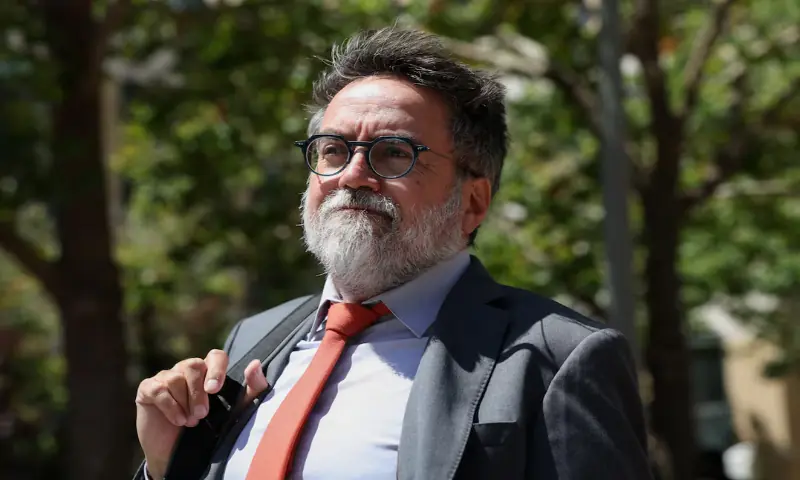

A former Meta engineering director has accused CEO Mark Zuckerberg of placing growth and user engagement ahead of child safety. Arturo Bejar made the allegations while testifying in a major legal case involving Facebook and Instagram.
Bejar gave his testimony during the second day of proceedings in an Oakland, California, federal court. A coalition of U.S. states has accused Meta of exposing young users to serious risks through its platforms.
States Challenge Meta Over Child Safety
California, Colorado, Kentucky and New Jersey are leading the case against Meta. Twenty-five additional states have also joined the legal action.
The states allege that Meta designed Facebook and Instagram to keep young users engaged. They claim this approach contributed to anxiety, depression and even suicide among some young people.
The coalition has also accused Meta of misleading consumers about platform safety. Additionally, the states allege that Meta improperly collected and used personal information from children under 13.
The trial began on Tuesday and could continue for around six weeks. Jurors are expected to issue an advisory verdict, while U.S. District Judge Yvonne Gonzalez Rogers will determine Meta’s liability.
If the company is found liable, the judge will also decide potential civil penalties and changes to its platforms.
Bejar Says Zuckerberg Could Drive Major Changes
Bejar told the court that Zuckerberg remained closely involved in major decisions at Meta. He described the company’s management structure as highly centralised.
According to Bejar, product changes could happen quickly when Zuckerberg personally made an issue a priority.
“If Mark makes something a priority, mountains move in months,” Bejar said.
Bejar also challenged Zuckerberg’s previous response to allegations raised by whistleblower Frances Haugen. In 2021, Haugen accused Meta of knowing about safety risks affecting children while failing to adequately address them.
Zuckerberg had rejected those allegations and said Meta regularly used research to improve its products. Bejar said he contacted Zuckerberg after those comments to raise his own concerns.
“It’s so false, every part of it,” Bejar said. “You just cannot trust Mark Zuckerberg with kids.”
Bejar Describes Daughter’s Experience on Instagram
Bejar also discussed his teenage daughter’s experience on Instagram during testimony. His comments came during cross-examination by Meta’s lawyer Brian Stekloff.
Bejar acknowledged that he did not initially know what kind of harm his daughter could experience after helping her create an Instagram account.
His daughter wanted to create a community where women could discuss cars. However, she later encountered misogynistic comments, including offensive remarks about her body.
“She got a good following, at the price of harm.”
Bejar said he monitored how the experience affected his daughter emotionally. By 2021, she was 16 when he contacted Zuckerberg about concerns surrounding her safety.
Meta Has Hundreds of Safety Employees
During cross-examination, Bejar also acknowledged that Meta employs hundreds of workers focused on safety. He said some of these employees were highly qualified.
However, he argued that the company’s broader priorities could limit the impact of safety measures. Bejar also clarified that he did not work directly with Zuckerberg during his second period at Meta.
He worked at Meta from 2009 to 2015. Later, he worked as an independent contractor between 2019 and 2021, examining the wellbeing of teenage Instagram users.
Bejar Claims Profit Took Priority Over Safety
Earlier in his testimony, Bejar told lawyers representing the states that Meta prioritised engagement and profits over safety.
He criticised a feature designed to encourage users to take breaks from the platforms. Meta has highlighted the tool as part of its defence against claims that its services encourage excessive use.
Bejar described the feature as “designed to fail.” He argued that users can easily ignore its reminders because the break option is not enabled by default.
He also claimed that Meta knew many parents lacked enough time to understand how their children used its products.
According to Bejar, Meta had technology capable of identifying potentially underage users. However, he alleged that the company avoided aggressively identifying children under 13 because doing so could affect long-term revenue.
Researcher’s Testimony Focuses on Addictive Design
After Bejar completed his testimony, jurors heard recorded evidence from Meta researcher Elena Davis. Her work examined concerns surrounding the potentially addictive nature of social media.
Davis read from a report suggesting that Facebook could become less habit-forming. The report also proposed providing users with support when they wanted to reduce their platform use.
The testimony adds another perspective to the states’ broader argument. They are seeking to establish whether Meta understood potential risks and had practical ways to reduce them.
Meta Faces Thousands of Similar Claims
The case forms part of a much larger legal battle over social media’s impact on children. Meta faces thousands of lawsuits involving allegations that its platforms have harmed young users.
Bejar has already appeared as a key witness against the company in four trials. One major case brought by New Mexico resulted in $942 million in damages and penalties.
That case also produced an order requiring Meta to make changes to its platforms in the state.
The latest proceedings could therefore have significant consequences for Meta and its approach to child safety. The court’s eventual decision may also influence how technology companies address safety concerns involving young users.

