

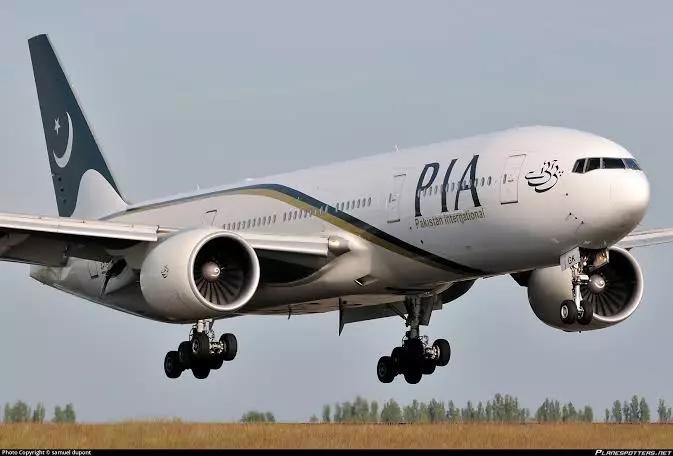

The government has announced a detailed plan to privatise Pakistan International Airlines. The move aims to revive the struggling national carrier. Officials say the focus is not just selling the airline. The goal is long-term recovery and stability.
The plan was shared with the Senate Standing Committee on Privatisation. Senior officials explained how the process will work. They also highlighted steps taken to remove past hurdles. Lawmakers were told that PIA’s future depends on fresh investment and better management.
75% Stake Sale with Reinvestment Promise
Prime Minister’s Adviser on Privatisation Muhammad Ali told the committee that the government plans to auction a 75% stake in PIA. He stressed that most of the money raised will go back into the airline. According to him, 92.5% of the bidding proceeds will be reinvested.
This reinvestment is meant to support PIA’s turnaround. It will help improve operations and financial health. Ali said the airline has suffered for years due to losses and mismanagement. This step is designed to change that.
However, he added that reinvestment alone will not be enough. Even after privatisation, PIA will need about Rs80 billion in additional financing. This money will help stabilise operations and support growth plans. It will also assist in covering short-term needs.
Ali informed senators that PIA currently operates only 18 aircraft. This limits its ability to compete. Fresh funds will be required to induct new planes. He said the reference price for the auction has not been finalised yet.
Scope of Privatisation and Investor Confidence
Officials clarified that only PIA’s core aviation business is being privatised. Other valuable assets will stay with the government. The Roosevelt Hotel in New York is one such asset. It will not be sold. Instead, it will be developed through a joint venture.
Privatisation Commission Secretary Usman Bajwa shared more details. He said the government could sell up to 100% of PIA shares. This will depend on investor interest and approvals. He noted that several major issues from past attempts have now been resolved.
One key issue was Rs33 billion in liabilities. Earlier, investors were expected to take on this burden. That requirement has been removed. Tax-related problems, including sales tax matters, have also been settled.
Bajwa said PIA’s outlook has improved recently. The reopening of routes to Britain and Europe has helped. These routes are important for revenue. Talks with investors are now in the final stage. Officials expect them to conclude soon.
Power Sector Privatisation Plans Also Shared
The committee also discussed power sector reforms. Officials from the Power Division briefed senators on upcoming plans. They said the Guddu and Nandipur power plants are ready for privatisation. Guddu runs on indigenous gas supply.
A ministerial committee has been formed to resolve remaining issues. A financial adviser will soon present final proposals for Nandipur. Lawmakers were told that Iesco, Fesco, and Gepco will be privatised in the first phase. Bidding is expected by mid-next year.
Not all power companies will be sold. Hesco and Sepco will be offered under long-term concession agreements. Private operators will manage them. Profits will depend on reducing losses and improving services.
