
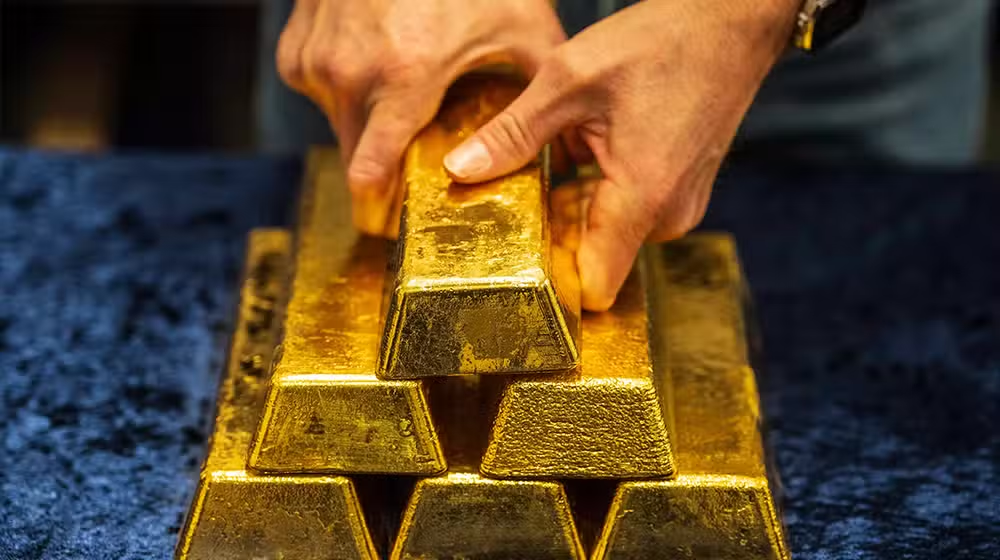

Gold prices in Pakistan have fallen sharply, bringing fresh relief to jewellery buyers and investors. The precious metal has dropped below Rs. 400,000 per tola following a major decline in international bullion markets.
The latest downturn has attracted attention ahead of Black Friday, with buyers closely monitoring prices for further reductions.
According to figures reported by the All-Pakistan Gems and Jewellers Sarafa Association (APGJSA), 24-karat gold fell by Rs. 3,700 per tola on Thursday, November 19, reaching Rs. 395,236.
The price of 10 grams of 24-karat gold also declined by Rs. 3,172 to Rs. 338,851.
The latest decline follows several weeks of volatility in the domestic gold market. Prices have fallen considerably from their earlier record highs, offering some financial relief to customers planning major purchases.
Gold had reached a record Rs. 572,862 per tola on January 29, 2026. Compared with that peak, the November 19 rate represents a decline of Rs. 177,626, or approximately 31 percent.
The substantial decrease has renewed interest among jewellery buyers, particularly families preparing for weddings and other celebrations.
The downward movement is closely linked to developments in international markets.
Global gold prices have suffered significant losses as investors respond to changing economic conditions, currency movements and interest rate expectations.
International bullion prices reportedly dropped by more than $300 per ounce within two days, adding pressure to Pakistan’s domestic market.
Silver prices have also experienced a sharp decline.
The price of silver in Pakistan stood near Rs. 5,005 per tola in the latest reported market figures.
The fall in precious metal prices could benefit consumers who postponed purchases when gold became unusually expensive.
However, market experts caution that falling prices do not necessarily mean gold has reached its lowest point.
The precious metal remains sensitive to international economic developments, investor confidence and movements in major currencies.
For Pakistani buyers, exchange rate fluctuations also influence domestic gold prices.
A stronger Pakistani rupee can reduce the local currency cost of internationally traded gold, while a weaker rupee may increase it.
Jewellery buyers should also remember that retail prices include making charges and other costs. These expenses can vary between sellers and may reduce the savings associated with falling bullion rates.
Meanwhile, investors who purchased gold near its previous record levels could face significant losses if they sell at current prices.
Those considering fresh investments must assess the possibility of further market volatility.
Although the latest decline has made gold more affordable, there is no guarantee that prices will continue falling.

