

Major central banks across developed economies are moving towards tighter monetary policy as rising energy prices and renewed Middle East tensions intensify concerns over inflation.
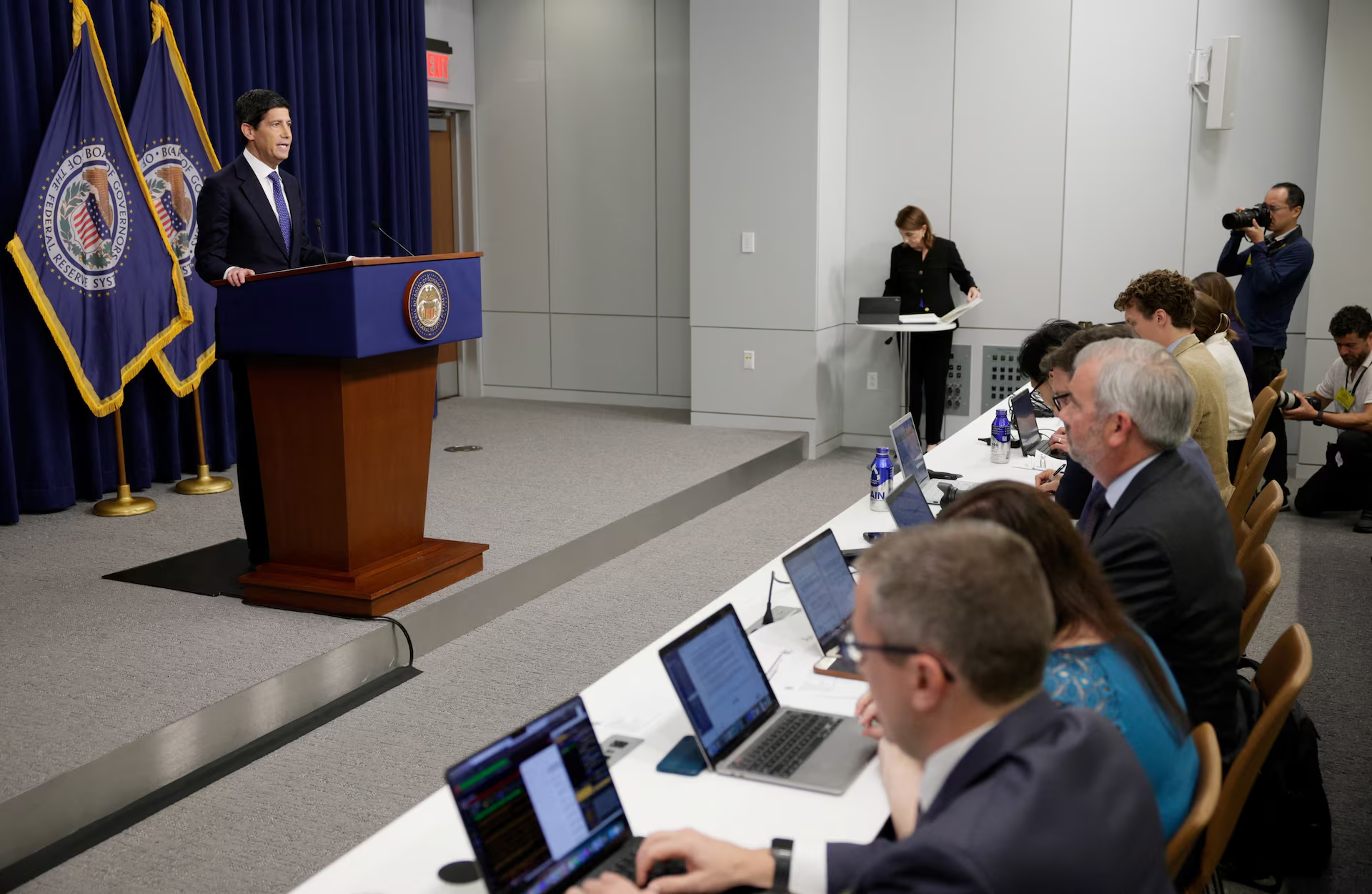
The US Federal Reserve raised interest rates on Wednesday and signalled further tightening. However, traders continue to price in more increases than policymakers currently project, according to Reuters.
Economists said financial markets may be overestimating future rate rises as investors assess the potential economic impact of the energy shock, particularly following Houthi advances along Yemen’s Red Sea coastline.
Fed, Australia and Britain Keep Focus on Inflation
The Reserve Bank of Australia has raised rates three times this year to 4.35%, reversing last year’s cuts. Moreover, markets broadly expect another increase after stronger-than-expected July inflation.
Norway’s policy rate stands at 4.25%, although softer inflation suggests its tightening cycle may be approaching its later stages.
Meanwhile, the Bank of England kept rates unchanged at 3.75% on Thursday. Three policymakers supported an increase, while Governor Andrew Bailey warned that a prolonged Middle East conflict could require tighter policy.
The Federal Reserve also raised rates and projected one additional increase in 2026 before holding them steady in 2027. Nevertheless, traders are pricing in a more aggressive path.
Japan, Euro Zone Also Move Towards Tighter Policy
New Zealand recently lifted rates to 2.75%, while the European Central Bank has raised rates twice this year as energy costs increase.
Furthermore, markets expect another Canadian rate increase despite signs of labour-market weakness.
Japan’s central bank is expected to raise its policy rate to 1.25%, while Sweden could tighten later this year.
Switzerland remains the exception, with markets expecting its central bank to maintain its key interest rate at 0% into 2027.

