
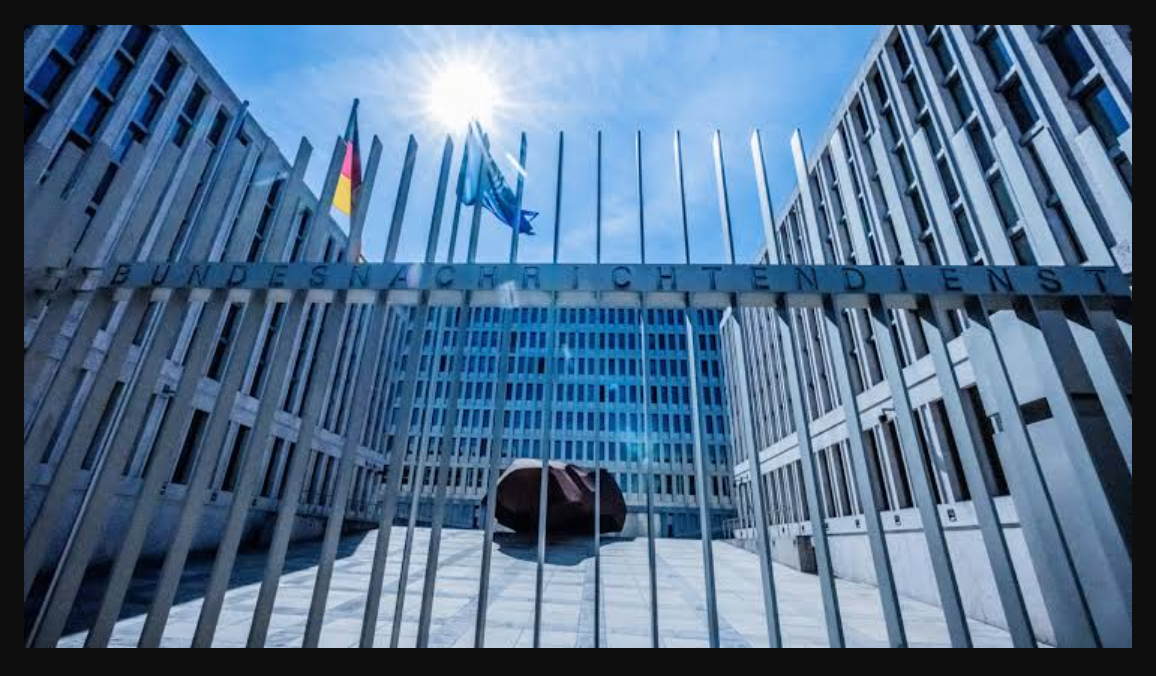

Germany has approved a major intelligence overhaul, giving its foreign spy agency expanded powers to conduct covert operations abroad. The legislation, passed by parliament on Friday, allows the Federal Intelligence Service (BND) to undertake activities previously beyond its traditional mandate.
These powers include sabotage and cyberattacks against foreign targets. The decision comes as Berlin faces growing security concerns over Russia and other foreign threats. However, the reforms have also triggered serious concerns about privacy, government surveillance and democratic oversight.
Why Is Germany Reforming Its Intelligence Agencies?
Germany’s security concerns have intensified since Russia launched its full-scale invasion of Ukraine in 2022. Authorities have repeatedly raised alarms about suspected Russian-backed sabotage, cyberattacks and disinformation campaigns.
Additionally, drone sightings near military installations have heightened security concerns. Espionage activities involving other countries, including China and Iran, have also attracted attention.
Meanwhile, Germany faces continuing threats from foreign militant organisations and domestic extremist groups. For years, Berlin has depended heavily on intelligence shared by allies, particularly the United States, to prevent major security threats.
However, the country’s existing intelligence framework also faces legal challenges. Germany’s highest court ruled that current surveillance laws lack sufficient oversight. Consequently, lawmakers must revise the legal framework before the end of the year. Otherwise, several important intelligence powers could expire.
What New Powers Will Germany’s Foreign Spies Receive?
Under the new legislation, the BND will receive significantly broader operational authority outside Germany. Its agents will be permitted to conduct covert operations, including cyberattacks and certain sabotage activities against foreign targets.
However, targeted assassinations will remain strictly prohibited.
“In the future, the BND will possess partial paramilitary powers. It can be aptly compared to MI6,” intelligence agency expert Luca Manns told AFP, referring to the British spy agency.
He explained that the expanded mandate would cover several operations previously outside the agency’s responsibilities.
“While it may not include a ‘license to kill,’ it effectively encompasses almost everything else -— sabotage, destruction, and the like. This represents a drastic shift in its mandate,” said Manns, the director of the Intelligence Services Research Center at the University of Cologne.
Furthermore, the BND will gain wider authority to intercept foreign communications. The legislation also allows longer retention of metadata and greater use of artificial intelligence.
These changes will help intelligence officers analyse enormous amounts of information. Interior Minister Alexander Dobrindt described the overhaul as the beginning of “a new era” for Germany’s intelligence services.
How Will Germany’s Domestic Intelligence Agency Change?
The reforms will also strengthen the Federal Office for the Protection of the Constitution (BfV). This domestic intelligence agency monitors extremism, espionage and militant organisations within Germany.
Under the legislation, the BfV can use automated data analysis and biometric facial recognition. It will also receive permission to retain certain information longer than existing privacy rules normally allow.
However, its new operational powers remain more limited than those granted to the BND. The domestic agency will be permitted to hack computer systems in response to cyberattacks.
Additionally, its agents can interfere with criminals’ digital tools to prevent further attacks.
“If one were to summarise the operational powers, it primarily concerns the disabling of weapons and ‘hack-backs’,” Manns said.
Both intelligence agencies will also receive limited authority to enter private homes or business premises secretly. They can conduct searches or surveillance under specific circumstances.
An earlier proposal allowing the BfV to spread false information generated considerable criticism. However, lawmakers amended the legislation to prevent activities that could damage someone’s personal or professional reputation.
Why Are Germany’s Intelligence Reforms Controversial?
Germany’s history makes any expansion of intelligence powers particularly sensitive. The country continues to confront the legacy of Nazi Germany’s Gestapo and communist East Germany’s Stasi secret police.
Consequently, many Germans remain deeply concerned about government surveillance and individual privacy. Historically, intelligence agencies have mainly collected information and prepared reports.
Meanwhile, police authorities have handled arrests and searches. The new legislation therefore represents a significant change in the traditional separation between intelligence gathering and law enforcement.
Opposition parties, civil liberties organisations and privacy advocates have questioned whether the expanded powers go too far.
The Greens have generally supported the overhaul but remain concerned about effective oversight. They also fear the changes could weaken the separation between intelligence agencies and police.
Meanwhile, the far-left Die Linke has warned that the BfV’s expanded capabilities could target political opponents.
The far-right Alternative for Germany has also criticised the changes. The party, which has repeatedly faced domestic intelligence surveillance, warned that the agency could become a “Stasi 2.0”.
However, Dobrindt has defended the legislation, insisting that stronger intelligence powers will protect Germany’s democracy.
He argued that the agencies would operate under unprecedented supervision, drawing a distinction between modern intelligence services and their historical predecessors.
Dobrindt said the agencies would function under the “strictest oversight mechanisms ever”. He also emphasised that historical secret police organisations operated without comparable restrictions.
“the Stasi and the Gestapo, they knew no oversight”.
Germany’s intelligence overhaul therefore marks a major shift in how the country approaches national security. However, the debate over expanded surveillance powers and democratic safeguards is far from settled.
For the latest updates, visit and follow The Truth International website (www.thetruthinternational.com) and subscribe to the YouTube Channel.

