
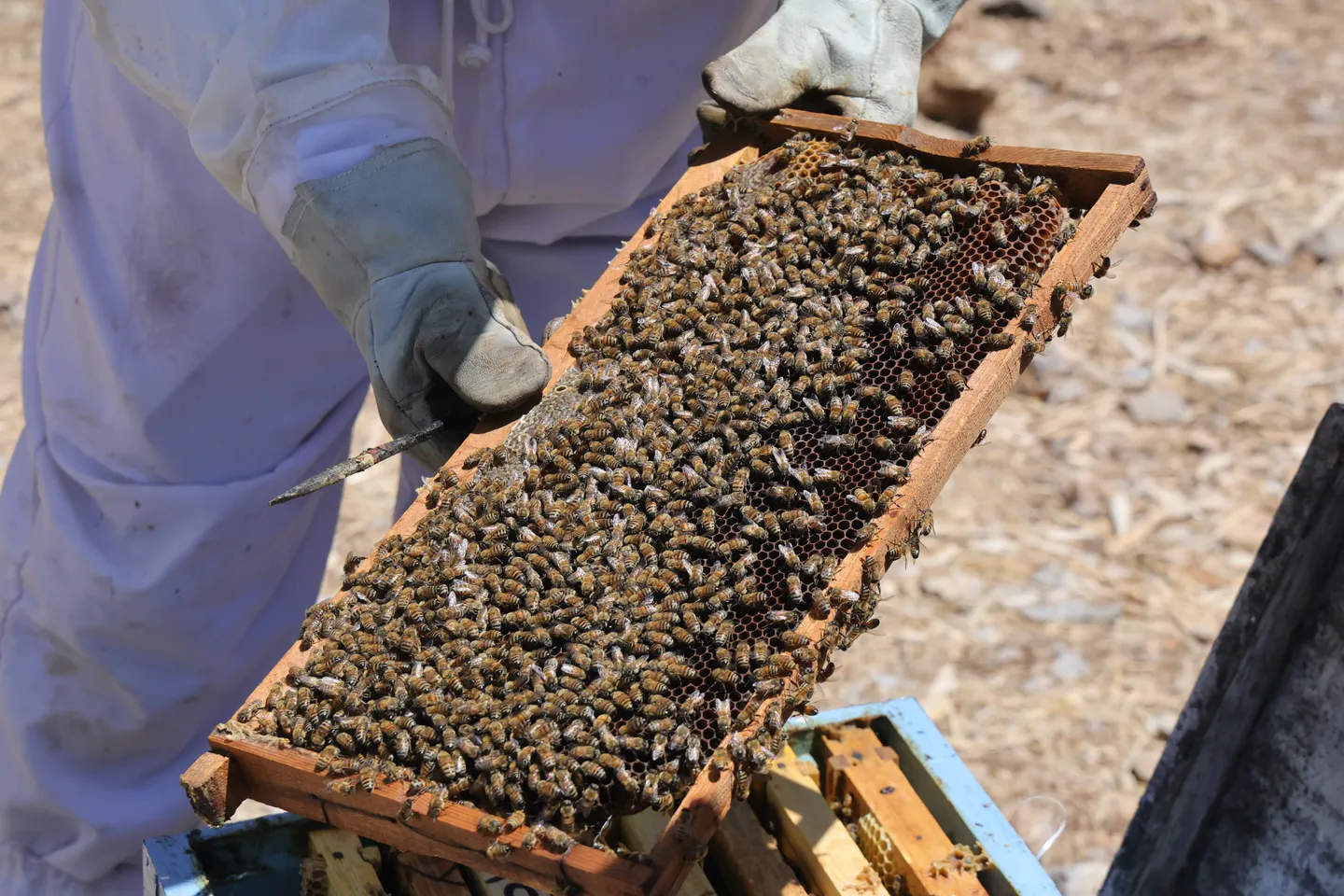

Industry begins slow recovery as destroyed farmland and severe equipment shortages force producers to find unconventional solutions
GAZA CITY: Palestinian beekeepers in Gaza are adopting unconventional methods to rebuild an industry devastated by Israeli attacks, with some moving their hives onto rooftops because security conditions prevent access to agricultural land.
Displaced beekeeper Ibrahim al-Dabba has restarted production on the roof of a damaged apartment building in Gaza City’s Tel al-Hawa neighbourhood. Al-Dabba, who heads the Gaza Beekeepers Cooperative, said the sector supported about 10,000 people before the war.
Around 1,000 beekeepers previously operated across Gaza, divided roughly equally between large and small producers. However, Israeli attacks destroyed much of the territory’s agricultural infrastructure and brought honey production close to a halt.
Beekeepers Launch Recovery Effort
Following the ceasefire, producers began rebuilding despite limited assistance and shortages of essential materials.
According to al-Dabba, Gaza had fewer than 500 surviving beehives immediately after the war. However, a recovery programme developed by the cooperative has increased that number to approximately 3,000, while more than 100 beekeepers have resumed work.
Al-Dabba himself restarted with only three hives but has since expanded his operation to more than 35.
Nevertheless, restrictions on supplies continue to hamper recovery. Beekeepers face shortages of wooden hives, frames, wax foundation sheets, medicines and other treatment materials.
Rooftop Hives Offer New Hope
Meanwhile, many agricultural areas remain inaccessible because of their proximity to border zones. Consequently, beekeepers have moved some operations into urban areas.
Al-Dabba said outdoor wooden hives also face risks of theft and destruction, while wood has become increasingly valuable amid shortages.
Despite the difficulties of maintaining rooftop colonies, the bees have successfully adapted to their new environment.
Al-Dabba said seeing the colonies survive had renewed hope among Gaza’s displaced beekeepers.
The cooperative now aims to expand production further, preserve remaining colonies and help more families return to an occupation that provided livelihoods across Gaza before the conflict.

