

Call for Fuel Price Deregulation Gains Attention
Awaam Pakistan President Shahid Khaqan Abbasi has called on the government to deregulate petroleum prices. He said the current system is not working properly. According to him, the state is unable to manage fuel pricing effectively. Market-based pricing, he suggested, could bring better balance and transparency.
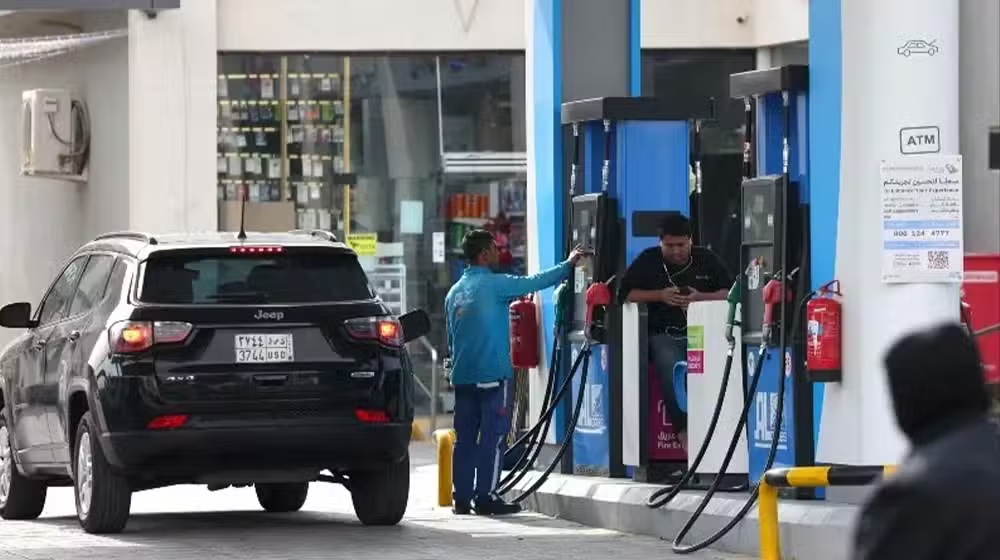
The recent conflict involving the US, Israel, and Iran has pushed global oil prices higher. As a result, Pakistan has seen record increases in fuel rates. Petrol prices jumped from Rs266.17 to Rs378 per litre. Meanwhile, high-speed diesel climbed from Rs280.86 to Rs520.35. These sharp increases have added pressure on daily life and business costs.
Abbasi also pointed out frequent policy changes. He explained that shifting decisions create confusion in the market. Stable and clear policies, he stressed, are necessary for economic growth.
Electric Vehicles Highlighted as Future Solution
The former prime minister emphasized the need to promote electric vehicles. He gave special focus to electric motorcycles. Incentives, he said, are important to encourage people to switch. Without support, adoption will remain slow across the country.
He referred to China as an example of success. China introduced strong policies that boosted EV usage. Pakistan, he added, can follow a similar path to reduce fuel dependency.
In addition, Abbasi linked this idea to the country’s solar energy growth. He noted that solar adoption increased without major government control. This shows that people respond well to practical and affordable solutions.
Concerns Over Spending and Economic Decisions
Abbasi raised concerns about government spending plans. He questioned whether relief funds would reach the public. Corruption, he claimed, could limit the benefits. He suggested that only a small share of funds may actually help citizens.
He also criticized short-term relief measures. Free public transport in some provinces, he said, is not a lasting solution. Long-term planning is more important for economic stability.
Prime Minister Shehbaz Sharif recently reduced the petrol levy by Rs80 per litre. This step lowered the final price to Rs378. Even after this change, many people remain concerned about rising costs.
Opposition parties such as Pakistan Tehreek-e-Insaf and Jamaat-i-Islami have strongly reacted to the situation. Some groups have warned about possible protests if fuel prices continue to rise.
Abbasi concluded that Pakistan needs consistent policies. He believes deregulation and EV promotion can reduce economic pressure. These steps, he said, are necessary for long-term stability.

