
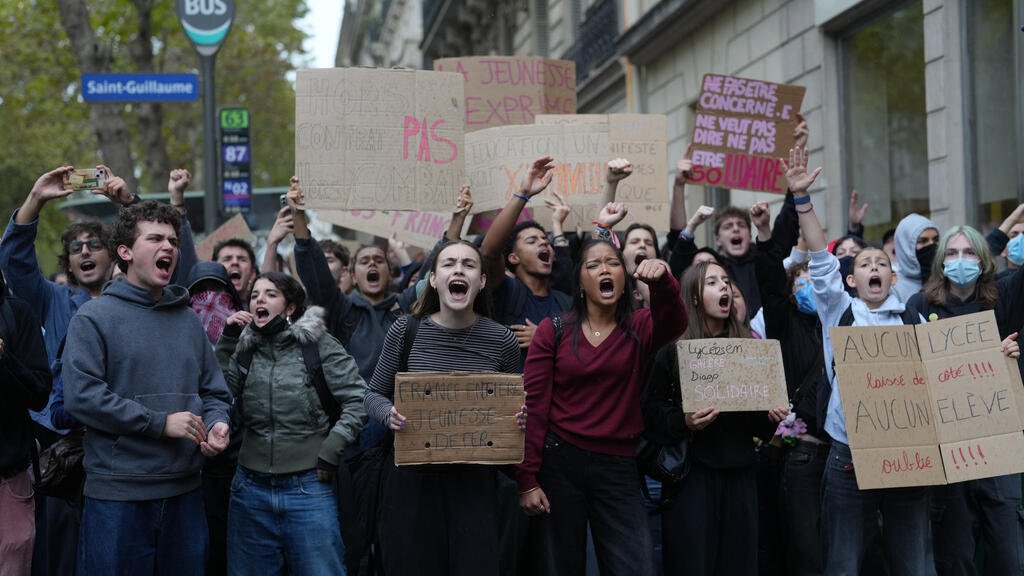

France is preparing for another wave of nationwide protests as growing anger over police powers, children’s rights, and rising living costs fuels public unrest.
Demonstrators are expected to gather across France on Saturday, November 14, 2026. The protests mark the fifth consecutive weekend of demonstrations against government policies.
High school students, trade unions, Yellow Vest activists, and children’s rights campaigners are joining the movement. The largest gathering is scheduled to begin in Paris at 1 p.m. local time.
The latest protests focus on a controversial bill that would give police officers a legal presumption of self-defense when using their weapons.
The French National Assembly has approved the proposal, which now awaits consideration by the Senate.
Supporters, including Marine Le Pen’s National Rally party, argue that the law would protect officers from unfair accusations.
However, critics warn that the legislation could weaken police accountability. Some activists have described the proposal as a “license to kill.”
Lawyers have also raised concerns about alleged police violence during recent demonstrations. They reported serious injuries involving protesters’ hands, feet, and eyes.
Meanwhile, children’s rights groups are demanding stronger protection against abuse and violence.
Economic concerns remain another major cause of public anger.
Around 146,000 people participated in demonstrations across France last Saturday, according to official figures.
A separate nationwide strike attracted more than 500,000 participants last week.
Trade unions have rejected the government’s proposed 0.6 percent minimum wage increase, calling it insufficient to address rising living expenses.
Union leaders have announced another strike for Tuesday as pressure on the government continues.
The unrest comes ahead of France’s 2027 presidential election, increasing political pressure on the government.
With protests continuing across the country, authorities face growing demands to address public safety, police accountability, and economic hardship.

