

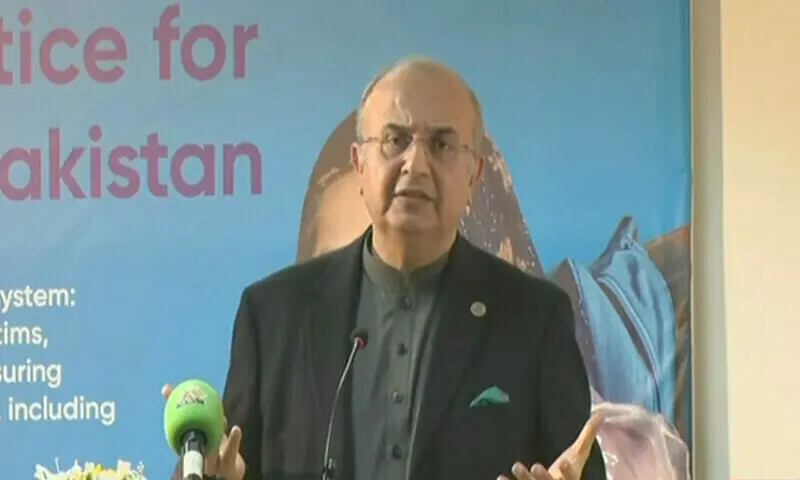
Justice Mansoor Ali Shah spoke at the second national conference on ADR in Lahore on Saturday. He told lawyers and participants that the future of justice in Pakistan lies in mediation and negotiation rather than long court battles.
He pointed out the biggest problem in our courts: endless delays. A case can drag on for 17 years before it reaches the Supreme Court. Even if the court finally acquits someone, nobody asks who will answer for the years of suffering the convict and his family endured.
Justice Shah made it clear that ADR does not weaken the judiciary. Instead, it helps people settle disputes through natural dialogue and mutual understanding. He admitted that arbitration faces many legal hurdles in Pakistan, which makes it hard to use effectively.
He drew examples from other countries. In China, people avoid court cases because litigation damages relationships. They prefer reconciliation, and even under Mao Zedong, millions of disputes were settled through local committees. Justice Shah noted that mediation is mandatory in China, just as it is now in Turkey, the United States, Italy, and India before parties can go to regular courts.
He reminded everyone that Islam also strongly encourages compromise and reconciliation. The Holy Prophet (peace be upon him) resolved many conflicts through peaceful settlements.
Legal education in Pakistan still focuses too much on fighting cases instead of finding common ground, he said. Although laws for ADR already exist, their implementation remains very weak. The country needs to build a real culture of reconciliation where both sides feel satisfied.
After the conference, Justice Shah spoke informally with reporters. He expressed serious concern over the 26th and 27th constitutional amendments. These changes shifted the power to appoint judges heavily toward the executive. He also questioned the creation of the Federal Constitutional Court without clear rules for selecting its judges.
He warned that a court’s real strength comes from public trust. Without that trust, even the strongest court becomes ineffective.
Justice Shah and Justice Athar Minallah had resigned from the Supreme Court after the 27th amendment was passed in November 2025. When asked about a possible 28th amendment, he said he had no information.

