

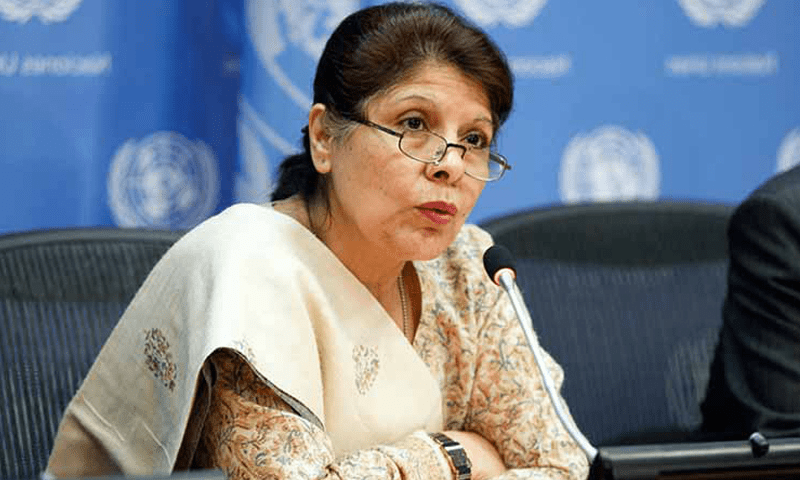

Dr Shamshad Akhtar, former State Bank of Pakistan governor and ex-caretaker finance minister, passed away on Saturday after suffering a cardiac arrest. Her death marks the end of an era in Pakistan’s economic and financial policymaking, as she was among the country’s most accomplished economists and reformers. President Asif Ali Zardari expressed deep sorrow, while paying tribute to her lifelong services to economic governance and institutional strengthening. He also conveyed condolences to her family and prayed for her elevated ranks.
Dr Akhtar holds a unique place in Pakistan’s history as the first woman to lead the State Bank of Pakistan. She assumed office on January 2, 2006, and served a full three-year term. She was the 14th governor since the central bank’s establishment in 1948. During her tenure, she brought international expertise, policy discipline, and reform-oriented thinking to Pakistan’s financial system. Her leadership focused on strengthening monetary policy frameworks, improving banking oversight, and reinforcing institutional credibility.
Before leading the central bank, Dr Akhtar built an extensive international career at the Asian Development Bank. She served as Director General of the Southeast Asia Department from January 2004. Earlier, she worked as Deputy Director General and Director of the Governance, Finance, and Trade Division. She joined the ADB in 1990 and steadily rose through senior ranks, reflecting her technical depth and leadership ability. By 1998, she became a manager after serving as senior and principal financial sector specialist.
Moreover, she represented the ADB at major global forums, including the Bank for International Settlements and the International Organisation of Securities Commissions. She also acted as the ADB’s Coordinator for the APEC Finance Ministers Group between 1998 and 2001. During this period, she served on internal committees related to reorganisation, oversight, and appeals. Consequently, she developed deep expertise in Southeast Asia, Central Asia, and China’s financial systems.
Earlier in her career, Dr Akhtar worked for nearly a decade at the World Bank’s resident mission in Pakistan. There, she contributed to macroeconomic analysis, monetary policy assessment, and banking sector evaluations. She also briefly served in planning roles within both the federal and Sindh governments. Her work addressed fiscal policy, industrial reforms, agricultural restructuring, and foreign investment frameworks. As a result, she played a key role in shaping policy debates during critical reform phases.
Her research contributions covered Pakistan’s taxation system, fiscal federalism, poverty measurement, and foreign direct investment trends. She also analyzed banking sector performance and financial market diversification. Additionally, she actively supported reforms of regulatory institutions, including restructuring efforts within the Securities and Exchange Commission and the Insurance Commission. She worked closely with stock exchanges and advised central banks on financial market development.
Dr Akhtar’s expertise extended to legal and regulatory reforms in banking and finance. She also promoted long-term funding mechanisms through bond market development. Her policy work combined academic rigor with practical implementation. Therefore, she earned respect across public institutions and private financial circles alike.
Born in Hyderabad, Dr Akhtar received her early education in Karachi and Islamabad. She earned a BA in Economics from the University of Punjab in 1974. She later completed an MSc in Economics from Quaid-e-Azam University. Subsequently, she obtained an MA in Development Economics from the University of Sussex in 1977. She completed her PhD in Economics from Paisley College of Technology in 1980.
Furthermore, she was a Fulbright post-doctoral fellow and served as a visiting fellow at Harvard University in 1987. Throughout her career, she presented research at international conferences and policy forums. Her research interests included monetary policy, fiscal management, banking regulation, capital markets, and global financial architecture. Her intellectual legacy continues to influence economic thinking in Pakistan.
Dr Shamshad Akhtar’s passing leaves a profound void in Pakistan’s policy landscape. However, her contributions to economic governance, institutional reform, and global financial engagement will remain enduring benchmarks for future policymakers.
