


ISLAMABAD: With just one day remaining until the government’s deadline for illegal immigrants to depart Pakistan, the Foreign Office (FO) asserted on Monday that the decision to expel such individuals aligns with the country’s domestic laws and is in compliance with applicable international norms and principles.
This statement was issued in response to the Office of the United Nations High Commissioner for Human Rights (OHCHR), which had urged the Pakistani government to “suspend forcible returns of Afghan nationals before it is too late to avoid a human rights catastrophe.”
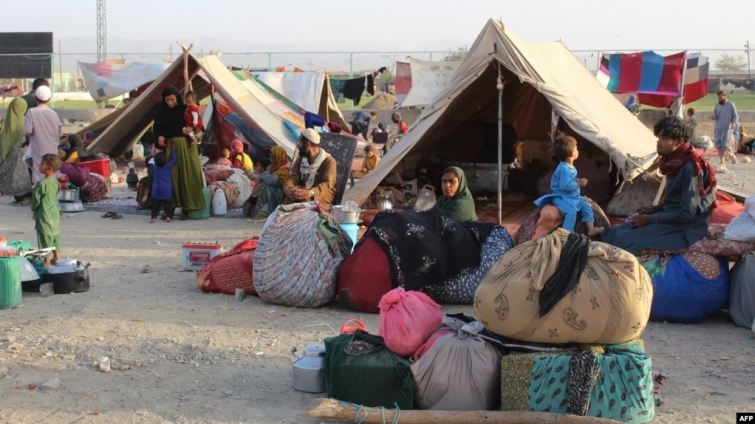
Although the government’s decision had garnered criticism from Afghanistan, Pakistan emphasized that it was not targeting any specific ethnic group.
“We call on them to continue providing protection to those in need and ensure that any future returns are safe, dignified, and voluntary, and fully consistent with international law,” said OHCHR spokesperson Ravina Shamdasani in a statement from Geneva on Friday.
“We believe many of those facing deportation will be at grave risk of human rights violations if returned to Afghanistan, including arbitrary arrest and detention, torture, cruel and other inhuman treatment,” the spokesperson noted.
“We are extremely alarmed by Pakistan’s announcement that it plans to deport ‘undocumented’ foreign nationals remaining in the country after Nov 1, a measure that will disproportionately impact more than 1.4 million undocumented Afghans who remain in Pakistan,” she added.
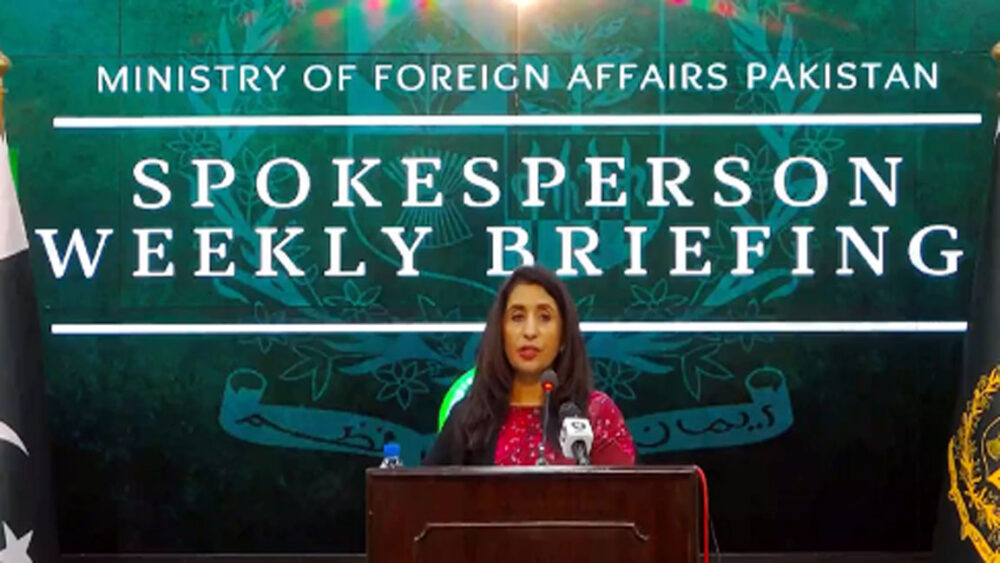
In a statement released today, FO spokesperson Mumtaz Zahra Baloch stated that Pakistan had taken note of the press statement issued by OHCHR.
The statement clarified that the planned repatriation applied to “all illegal foreigners residing in Pakistan, irrespective of their nationality and country of origin.”
“The decision is in exercise of Pakistan’s sovereign domestic laws and compliant with applicable international norms and principles,” Baloch asserted.
The FO spokesperson further stated that all foreign nationals legally residing or registered in Pakistan were “beyond the purview of this plan.”
“The government of Pakistan takes its commitments towards protection and safety needs of those in vulnerable situations with utmost seriousness. Our record of the last forty years in hosting millions of our Afghan brothers and sisters speaks for itself,” she concluded.
Baloch also urged the international community to intensify efforts to address “protracted refugee situations through advancing durable solutions as a matter of priority.”
“Pakistan will continue to work with our international partners to this end,” Baloch added.
Deadline and repatriation plan Earlier this month, the government issued an ultimatum to all undocumented immigrants, including Afghan nationals, instructing them to leave Pakistan by October 31. Failure to comply would result in imprisonment and deportation to their respective countries.
This decision was made in an apex committee meeting chaired by caretaker Prime Minister Anwaarul Haq Kakar and attended by Chief of Army Staff General Asim Munir, among others. The committee also decided that movement across the border would require passports and visas, while electronic Afghan identity cards (e-tazkiras) would be accepted only until October 31.
Last week, caretaker Interior Minister Sarfraz Bugti announced that foreign nationals living in the country without identity documents would be housed in “holding centers” before deportation to their respective countries.
During a press conference in the federal capital, the caretaker minister outlined a plan to expel refugees, emphasizing that these undocumented immigrants, particularly women, children, and the elderly, would be treated with respect and provided with meals and medical facilities. He also mentioned that after November 1, there would be no compromise on the issue of expelling illegal immigrants.
Bugti clarified that individuals being expelled from the country would only be allowed to carry their local currency, up to Rs50,000 per family. Afghan families could carry up to 50,000 Afghan Afghanis. Funds exceeding these amounts could only be transferred through official banking channels. “All modalities are being finalized in this regard,” he stated.
The minister reiterated that he was referring to individuals living in Pakistan without valid travel documents and emphasized that the expulsion of illegal immigrants would occur in phases, with those lacking valid documents being repatriated in the first phase.
