

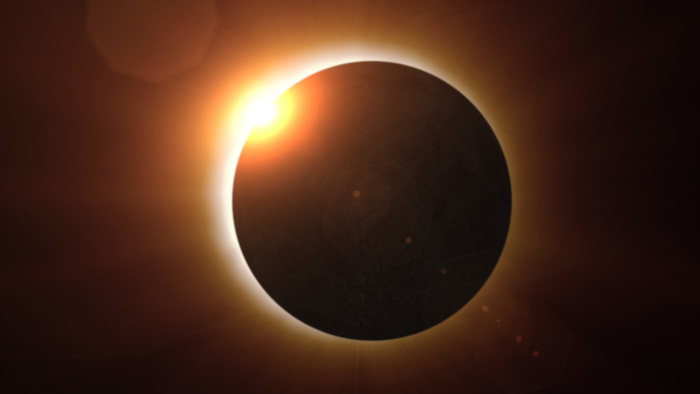

The first solar eclipse of 2026 is happening today, Tuesday, but residents of Pakistan will unfortunately miss this celestial event. According to the Pakistan Meteorological Department (PMD), the eclipse will not be observable within the country’s borders.
The PMD reported that the eclipse is scheduled to begin at 2:56 PM Pakistan Standard Time (PST). It will reach its maximum coverage at 5:12 PM PST and conclude by 7:28 PM PST. However, due to its geographic path, the phenomenon will only be visible in certain regions outside Pakistan.
Where the Eclipse Will Be Visible
This year’s solar eclipse will primarily be seen in parts of Africa and South America. Additionally, observers over the Atlantic, Pacific, and Indian Oceans will be able to witness a partial eclipse. The department explained that the famous “Ring of Fire” effect, characteristic of an annular solar eclipse, will only be visible in Antarctica.
During an annular eclipse, the moon covers the center of the sun but leaves a bright ring of sunlight visible around its edges. According to Space.com, in the remote regions of Antarctica, the moon will obscure up to 96% of the sun for just over two minutes, creating a spectacular visual for those few able to observe it.
Partial eclipses will also be noticeable in southern Africa and the southern tip of South America. The phenomenon is particularly rare because the full annular effect can only be seen from a very limited area on Earth, making it inaccessible to the majority of the global population.
Observing the Eclipse Safely
The PMD has reminded enthusiasts that the solar event will not be visible in Pakistan, but astronomy lovers worldwide can follow the eclipse through live broadcasts or online streaming platforms. Observing a solar eclipse directly without proper eye protection can cause serious damage, so the department emphasizes using certified eclipse glasses or indirect viewing methods.
This year, Pakistan will experience two solar and two lunar eclipses. While today’s annular solar eclipse cannot be seen locally, upcoming eclipses may offer opportunities for observation within the country. The PMD encourages citizens to stay informed about dates and timings for these future events.
Astronomers say such eclipses offer a valuable opportunity for scientific observation and public engagement. Live streams from Antarctica and other visible regions will allow millions of people worldwide to witness the rare “Ring of Fire” effect without traveling to extreme locations.
As the solar eclipse unfolds across distant continents and oceans today, enthusiasts are reminded to safely enjoy one of nature’s most spectacular astronomical displays.
