

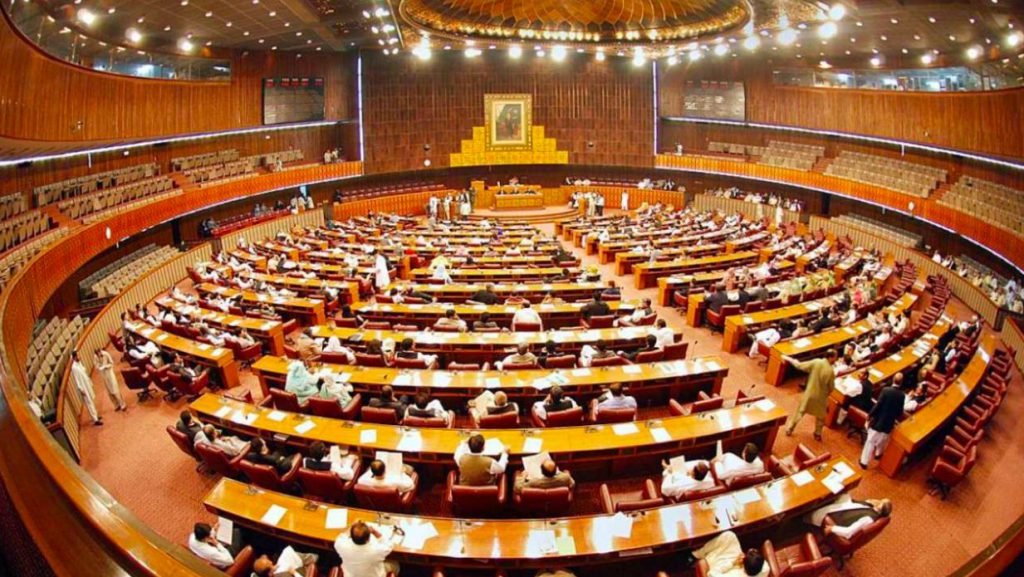

ISLAMABAD: Finance Minister Shaukat Tarin is presenting mini-budget in Senate today (Jan 4, 2022). President of Pakistan Dr Arif Alvi has summoned the Senate session today to facilitate the government to present in the upper house the finance supplementary bill (mini-budget).
The government had already tabled the mini-budget bill in the National Assembly last week to meet upfront condition of the International Monetary Fund (IMF) to qualify for the resumption of suspended package.
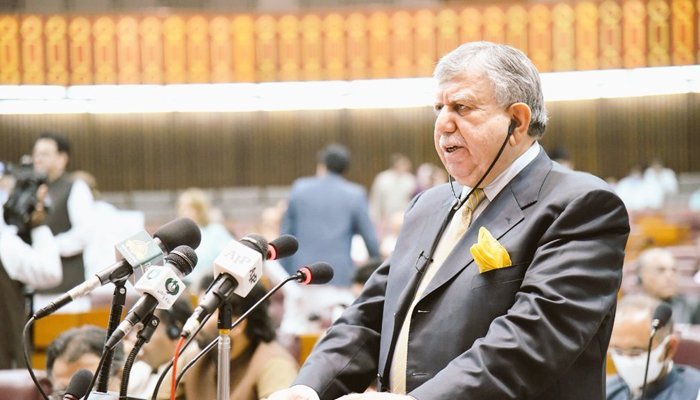
The agenda of the Senate Secretariat showed that Finance Minister Shaukat Tarin will “present before the Senate a copy of the money bill, the Finance (Supplementary) Bill, 2021, and move that the Senate may make recommendations, to parliament on the bill under Article 73 of the Constitution”.
The approval of the finance (supplementary) bill seeking changes in certain laws are related to taxes and the State Bank of Pakistan (Amendment) Bill 2021 which are being deemed necessary to ensure that Pakistan’s sixth review of the $6 billion Extended Fund Facility gets a go-head from the IMF’s Executive Board. IMF board is scheduled to meet on January 12 to take a decision on the disbursement of about $1bn tranche to Pakistan.
The Senate had been prorogued on December 29, only a day before presentation of the two bills in the National Assembly. Interestingly, the government had also prorogued the National Assembly session only a day after the presentation of the bills, surprising everyone, including some treasury members, as there was an impression that the IMF had set January 12 deadline for Pakistan to get the two laws passed. Later, however, Minister for Information Fawad Chaudhry stated that the government had already approached the IMF, asking it to defer Pakistan’s review.
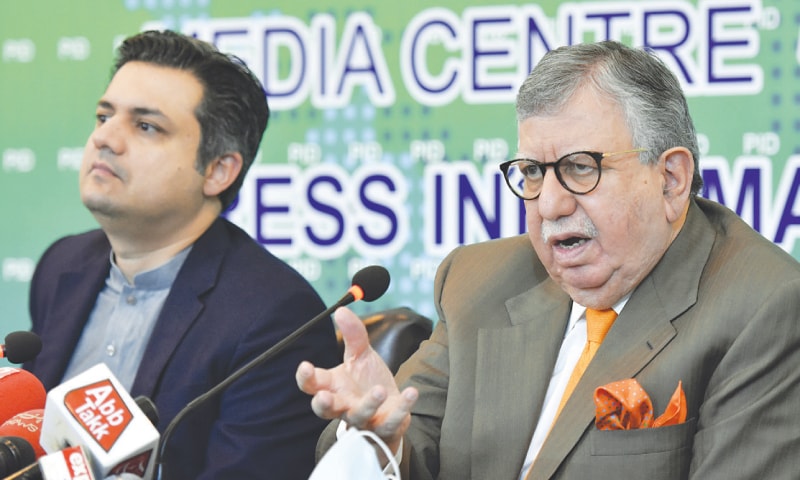
Speaking to reporters at the launching ceremony of Parliamentarians Tax Directory on Monday, Mr Tarin said he would be laying the finance (supplementary) bill before the Senate on Tuesday to fulfil the key constitutional requirement, adding that Pakistan’s review was still on the agenda of the IMF board’s meeting scheduled to be held on January 12.
Mr Tarin said the Senate could finalise its recommendations in four days and then the bill could be passed by the National Assembly. He, however, said there was no problem for the IMF if the approval of the bill was delayed for a few days.
The information minister had earlier expressed the hope that the finance bill would be passed by the assembly in the middle of January.
Article 73 of the Constitution deals with the “procedure with respect to money bills”, which are only required to be passed by the National Assembly, the lower house of parliament. However, Article 73(1) states: “Notwithstanding anything contained in Article 70, a money bill shall originate in the National Assembly: provided that simultaneously when a money bill, including the finance bill containing the annual budget statement, is presented in the National Assembly, a copy thereof shall be transmitted to the Senate which may, within fourteen days, make recommendations thereon to the National Assembly.”
These recommendations, however, are not binding for the National Assembly and it can approve a money bill, even without considering it.
