


‘Critical’ Fuel Loss
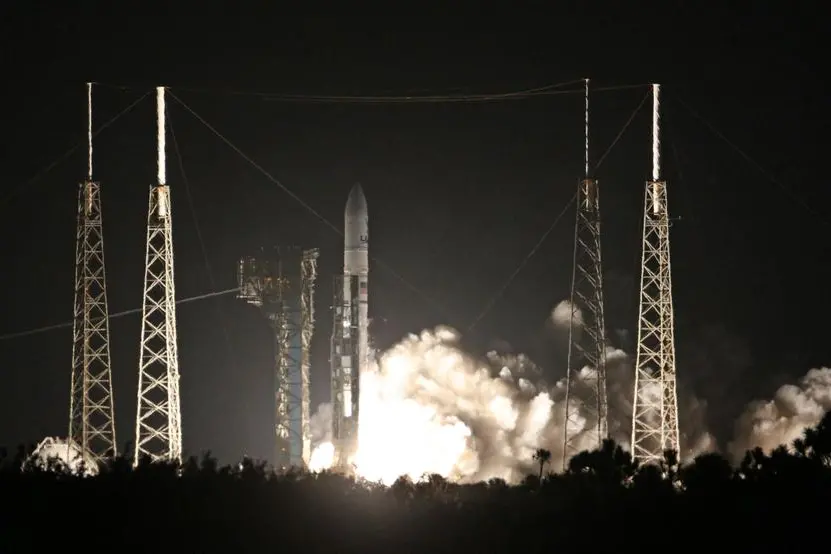
On Monday, a historic private mission aimed at landing a robot on the Moon faced a significant setback due to a critical loss of fuel. The Peregrine Lunar Lander, mounted atop United Launch Alliance’s new Vulcan rocket, successfully launched from Cape Canaveral Space Force Station in Florida.
However, technical issues arose a few hours later, starting with the spacecraft’s inability to orient its solar panel towards the Sun, resulting in a malfunction in its propulsion system.
Despite improvised attempts to address the power issue, Astrobotic, the company behind the mission, reported a critical loss of propellant, leaving the spacecraft with approximately 40 hours of fuel before entering an uncontrollable tumble. Engineers are working to bring Peregrine as close to lunar distance as possible, with the company considering the possibility of a crash landing.
Earlier, an image revealed extensive damage to the spacecraft’s outer layer, attributed to the propulsion system anomaly. Peregrine was initially intended to orbit the Moon for several weeks before landing in the Sinus Viscositatis region on February 23.
The United States, under the Commercial Lunar Payload Services (CLPS) program, has been leveraging the commercial sector to stimulate lunar exploration. Astrobotic’s setback may lead to criticism of this strategy, but NASA Administrator Bill Nelson praised the success of ULA’s Vulcan rocket and reiterated NASA’s commitment to expanding cosmic exploration with commercial partners.
NASA had invested over $100 million in Astrobotic for the mission, emphasizing the importance of private companies in advancing lunar exploration. The failure underscores the challenges of controlled lunar landings, with roughly half of all attempts historically unsuccessful. NASA continues to pursue private partnerships, with other contracted companies, such as Intuitive Machines, planning lunar missions in the near future.
Despite setbacks, the space agency aims to use these missions to gather crucial data about the lunar environment, supporting the Artemis program’s goal of returning astronauts to the Moon later this decade and paving the way for future Mars missions. The Peregrine mission carried not only scientific instruments for NASA but also private cargo, including a physical Bitcoin, cremated remains, and DNA, including that of notable figures like Gene Roddenberry and Arthur C. Clarke. The Navajo Nation, the largest Indigenous tribe in the U.S., had raised objections to sending human remains to the Moon, considering it a desecration of sacred space, but their concerns were not heeded.
