

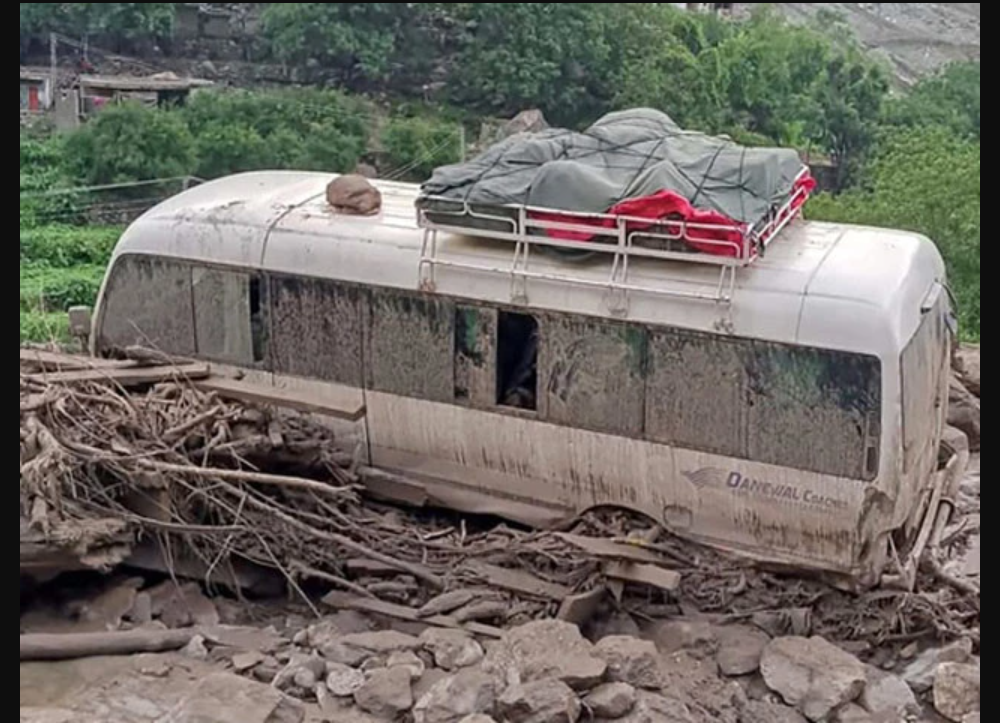

A state of emergency has been declared in 37 locations across Gilgit-Baltistan (G-B) after devastating flash floods swept through the region, claiming at least 10 lives mostly tourists and leaving more than a dozen people missing. The floods have caused severe destruction, with damages estimated at Rs20 billion.
According to a formal notification issued by the Home Department, several areas in Gilgit-Baltistan have been designated as disaster zones due to the extensive impact of monsoon-triggered floods. These include 12 locations in Diamer, nine in Gilgit, five in Ghizer, four each in Skardu and Shigar, two in Ghanche, and one each in Nagar and Kharmang.
The notification outlined the scale of the disaster, citing the loss of human lives, livestock, homes, infrastructure, and crops. It further invoked the provisions of the National Calamities (Prevention and Relief) Act of 1958 to enable urgent relief and recovery operations.
Specific areas identified as severely affected include Parri Bangla, Jutal, Danyor, Sultanabad, Bagrote, Sharote, Shikyote, Skarkoi, and Hasan Colony in Gilgit; Harchi village in Nagar; Biarchi, Thoi, Nazbar, Silpi, and Khanchay in Ghizer; and Kondus and Haldi in the Mashabrum sub-division of Ghanche.
Other flood-impacted areas listed are Khinner, Botogah, Buner Nallah, Goner Farm, Tatto Raikot, Gushay Darel, Thak Babusar, Charat, Jhottee, Niat Valley, Thore Parika, and Shatin Nullah in Diamer; Burgay and Rgiayul in Skardu; Qaimabad, Arincho, and Chutron in Shigar; and Torghon Valley in Kharmang.
Emergency measures have been put in place to speed up rescue and relief operations. So far, 10 individuals have been confirmed dead, while four others have sustained injuries and are receiving medical attention. Search and rescue teams continue to look for 10 to 15 missing tourists.
The floods also washed away 22 vehicles. In response, the regional government has initiated immediate rehabilitation projects using its own funds. A total of Rs440 million has been allocated for the restoration of essential infrastructure, including water supply, electricity, and roads.
Relief supplies such as tents, blankets, food, and kitchen kits are being distributed among the displaced population. Authorities have begun rebuilding over 500 homes that were destroyed by the floods. While rehabilitation efforts are underway, officials acknowledge the immense challenges ahead.
The regional administration has also appealed to national authorities for additional support, expressing hope that assistance will be provided to those affected by this natural calamity.
