

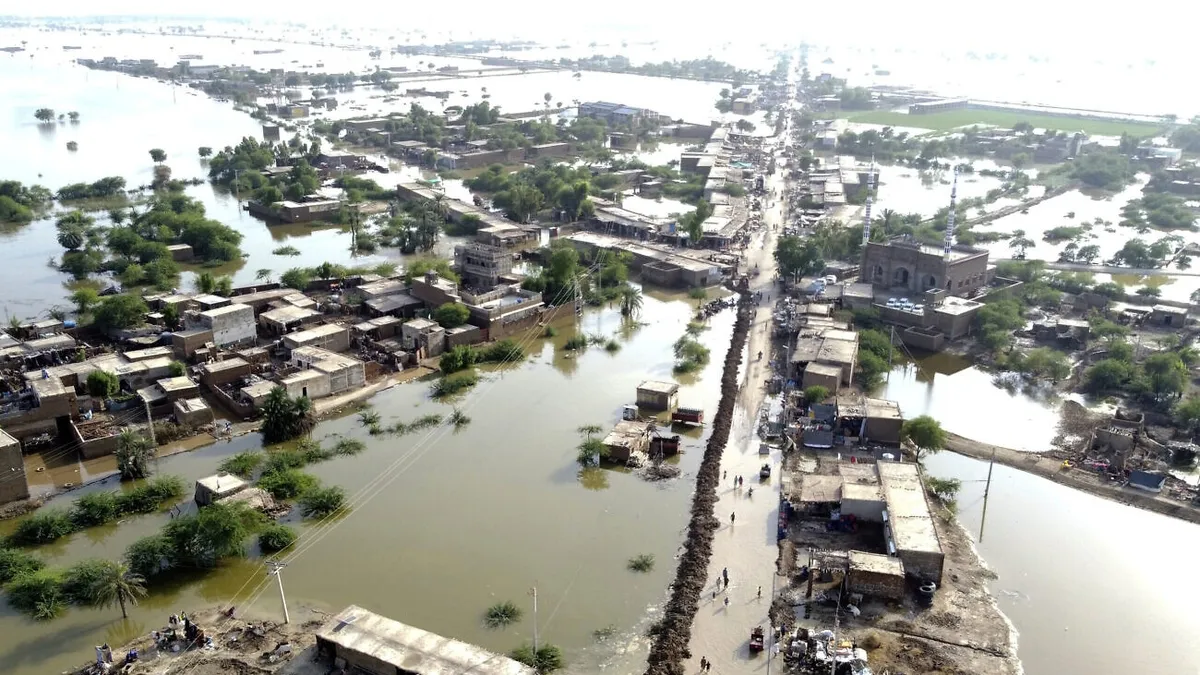

Several parts of Balochistan experienced heavy rainfall on Tuesday, raising concerns about potential flooding, particularly in Gwadar. Disturbing visuals depicted extensive areas submerged in water as residents struggled to salvage their belongings and relocate to safer grounds.
The impact of the rains is evident, with at least seven houses destroyed, and major highways rendered impassable, disrupting normal traffic flow. Senator Kauda Bakhsh from Balochistan has urged the declaration of Gwadar as a calamity-hit region, emphasizing the city’s inundation.
Contrary to some reports, Gwadar’s Deputy Commissioner stated that the rainfall in the city has temporarily ceased, and essential road connections to Karachi and Turbat remain intact. However, he acknowledged the impact on internal roads within Gwadar, with numerous houses sustaining partial damage from the relentless rains.

Expressing concern over the situation, Pakistan Peoples Party Chairman Bilawal Bhutto Zardari called for concerted efforts from the city’s administration and PPP workers to provide relief to Gwadar’s affected residents.
The country still grapples with the aftermath of the catastrophic floods in 2022, which submerged one-third of Pakistan, affecting 33 million people and leaving 5.4 million reliant on contaminated water. Balochistan was among the worst-hit regions during that calamity.
Caretaker Chief Minister Mir Ali Mardan Khan Domki expressed grief over the damages caused by the recent flooding in Gwadar. Rescue efforts face challenges due to submerged important roads, but necessary machinery has been deployed, and operations are in progress.
Domki emphasized that the restoration of road connectivity is a top priority for the government and is being pursued without delay through joint efforts by the district administration and the Provincial Disaster Management Authority.
