
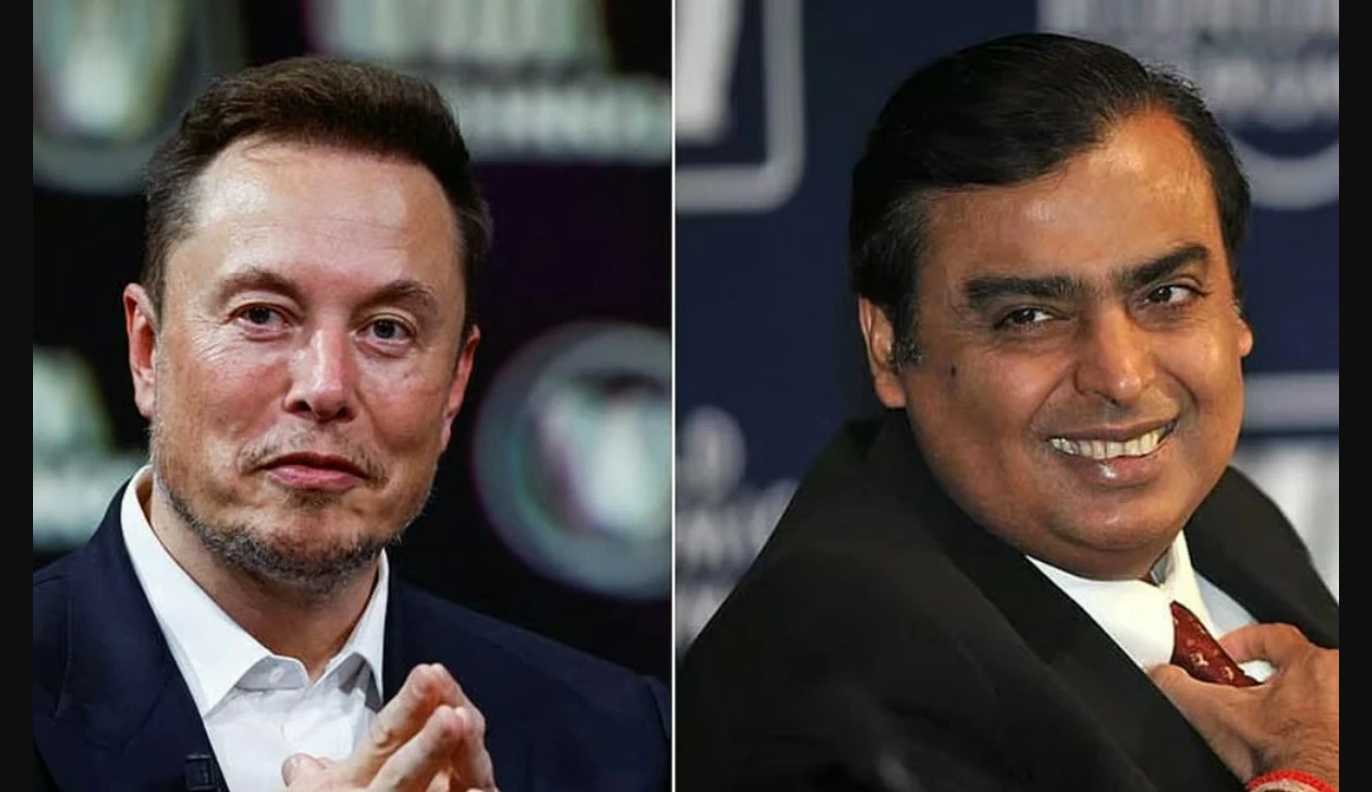

Elon Musk has intensified his public clash with Mukesh Ambani over Starlink’s delayed launch in India. The SpaceX chief has accused powerful business interests of protecting their market dominance, using sarcasm to challenge the Reliance Industries chairman.
In a series of posts on X on Friday and Saturday, Musk questioned Ambani’s influence over India’s telecommunications sector. He also urged the billionaire industrialist to allow Starlink to compete in the country’s satellite internet market.
“Please accept my humble apologies for not realising that you are the real boss of India,” Musk wrote. He also accused Ambani of “monopolistic exploitation” and questioned whether he would permit Starlink to enter the market.
The remarks have intensified a dispute involving two of the world’s most prominent business figures. At its centre are Starlink’s entry into India, competition in telecommunications and the regulatory requirements governing satellite internet services.
Why Is Elon Musk Targeting Mukesh Ambani?
Musk’s criticism centres on the delays facing Starlink’s proposed launch in India. He has alleged that powerful commercial interests are attempting to preserve their dominance in the country’s telecommunications market.
According to Musk, Starlink has spent five years complying with Indian government requirements but still awaits permission to begin operations. He argues that the delays are preventing the satellite internet service from entering a potentially important market.
Meanwhile, Musk shared media reports concerning political donations by companies linked to Reliance. He also circulated reports alleging that a Reliance-funded firm helped strengthen the ruling Bharatiya Janata Party’s (BJP) social media campaigns.
These reports appeared alongside his criticism of the Starlink approval process. However, Reliance has not publicly responded to his allegations.
What Has the Indian Government Said About Starlink?
India’s government has rejected claims that its approval process discriminates against Starlink. Officials have maintained that satellite communications providers must satisfy the applicable security requirements before launching services.
Communications Minister Jyotiraditya Scindia said Starlink, Reliance Jio’s satellite venture Jio Satcom and Bharti-backed Eutelsat OneWeb had received satellite communications licences.
However, receiving a licence does not remove the requirement to meet security conditions before commercial operations begin. The government is also finalising its approach to satellite spectrum pricing.
Consequently, Starlink’s launch depends on the remaining regulatory requirements, rather than licensing alone. The spectrum pricing framework also remains an important part of the wider satellite communications landscape.
How Could Starlink Change Internet Access in India?
Musk has argued that Starlink could extend internet connectivity to underserved parts of India. He believes satellite internet could help children access educational opportunities and enable small businesses to reach international markets.
Moreover, Musk has highlighted the potential role of satellite connectivity during natural disasters. He has argued that Starlink could help save lives when conventional communication networks stop working.
These potential benefits form part of his case for allowing the service to enter the Indian market. Nevertheless, Starlink must still satisfy the requirements governing its launch and operations.
Starlink and Reliance Jio Face a Market Showdown
The dispute places Musk’s satellite internet business against Reliance Jio, one of India’s dominant telecommunications operators. Both companies have interests in India’s expanding connectivity market, although they approach it through different technologies and services.
Interestingly, the two sides had previously signed an agreement to sell Starlink equipment through Reliance stores. However, their relationship has become more complicated as Starlink seeks access to the Indian market.
The current disagreement highlights the tension between commercial cooperation and competition. While the earlier arrangement created a potential retail partnership, the launch dispute has brought their differing interests into sharper focus.
Why Is Satellite Spectrum Policy Part of the Dispute?
Musk and Ambani have disagreed over satellite spectrum policy before. In 2024, reports said Ambani called for satellite spectrum to be allocated through an auction, while Musk opposed that approach.
India eventually decided to allocate satellite spectrum administratively. The issue remains significant because spectrum allocation shapes how satellite communications providers access the resources needed to deliver services.
Therefore, the latest confrontation reflects a broader disagreement over competition and regulation. It also highlights the importance of government decisions in determining how satellite internet companies enter major markets.
What Happens Next in the Starlink-Ambani Feud?
Musk’s “Prime Minister Ambani” remark has brought fresh attention to Starlink’s delayed entry into India. However, the immediate regulatory questions remain focused on security requirements and satellite spectrum pricing.
At the same time, the dispute has exposed competing interests in one of the world’s major telecommunications markets. Starlink is seeking permission to expand its satellite internet services, while Reliance Jio remains a powerful player in India’s connectivity sector.
Whether the two business leaders can move beyond their public disagreement remains unclear. For now, Starlink’s proposed Indian launch continues to sit at the intersection of regulation, competition and the ambitions of two influential technology and business figures.
For the latest updates, visit and follow The Truth International website (www.thetruthinternational.com) and subscribe to the YouTube Channel.

