
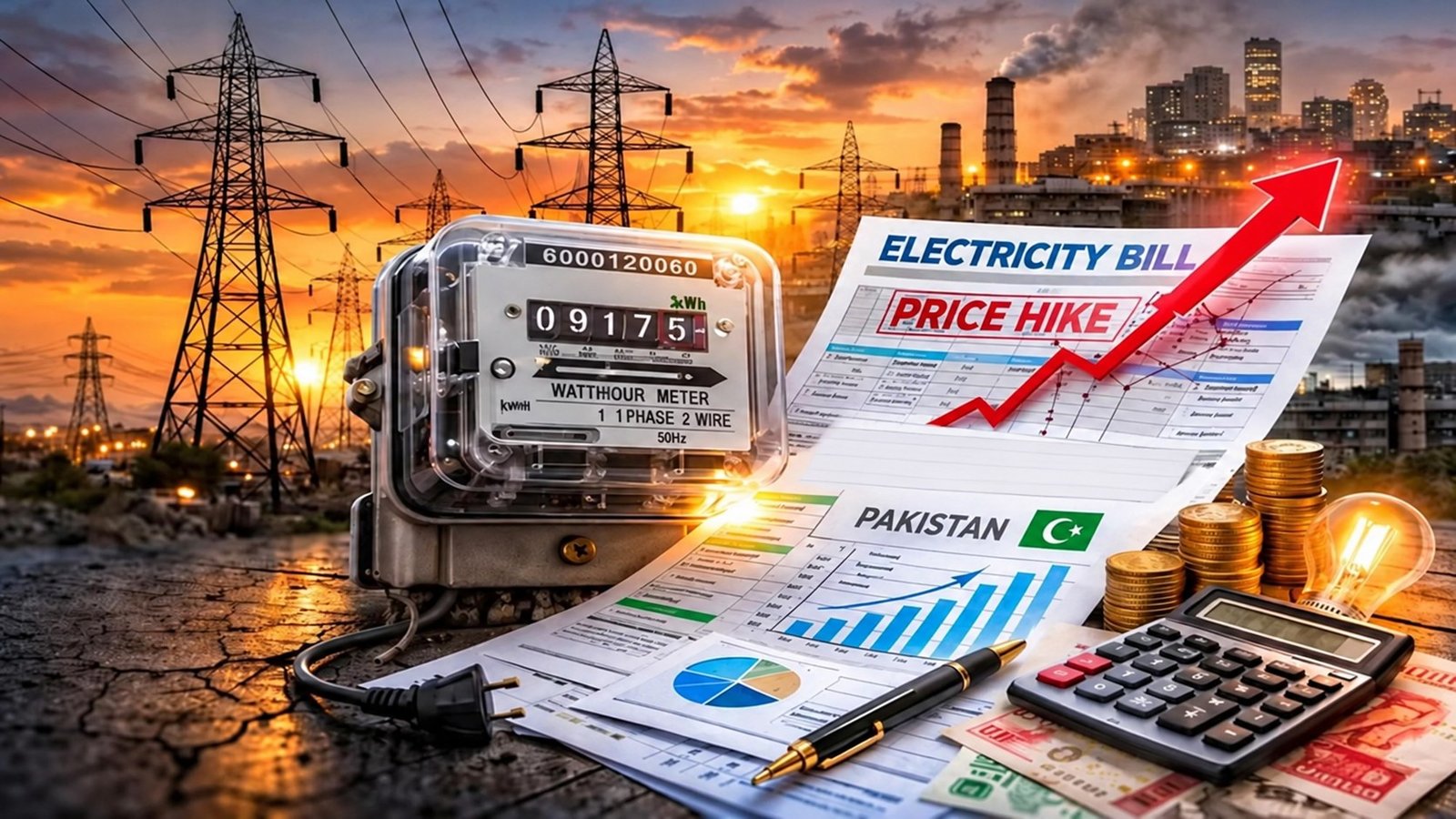

Electricity consumers in Pakistan may face an additional financial burden as the government seeks a uniform fuel cost adjustment of Rs3.04 per unit. The proposed increase will cover October to December 2026, with authorities aiming to spread higher fuel costs across three months.
The government has approached the National Electric Power Regulatory Authority (Nepra) to approve an equalised, forward-looking monthly fuel cost adjustment (FFCA). Meanwhile, Nepra has scheduled an emergency public hearing for December 2 to examine the proposal. If approved, the adjustment will appear in electricity bills issued from December.
Why Has the Government Proposed a Rs3.04 Adjustment?
The government wants to introduce a uniform adjustment to prevent sudden increases in electricity prices. Last week, it announced that the additional fuel cost adjustment would remain capped at 83 paisa per unit.
However, the Power Division clarified that this figure was compared with September’s fuel cost adjustment of Rs2.37 per unit.
In its public hearing notice, Nepra confirmed the government’s request. The ministry has proposed an FFCA of Rs3.04 per kilowatt-hour (kWh) for October, November and December 2026.
According to the petition, the individual monthly adjustments vary considerably. The government requested an additional Rs2.88 per unit for October against the reference rate already charged to consumers. Nepra has already completed a public hearing on that request.
Furthermore, the estimated adjustment for November stands at 92 paisa per unit. December’s projected adjustment is considerably higher at Rs5.13 per unit.
Consequently, the government calculated an average of Rs3.04 per unit for the entire three-month period. It wants Nepra to approve this equalised amount instead of applying significantly different monthly adjustments.
How Will the Proposed Fuel Adjustment Work?
The government calculated the proposed FFCA using available fuel prices and estimated energy supplies. These calculations also consider additional gas allocations and greater reliance on thermal fuels.
Therefore, the ministry has asked Nepra to begin the necessary regulatory proceedings. It wants the new mechanism incorporated into the existing monthly fuel cost adjustment system.
The proposal would take effect from the October 2026 adjustment and remain applicable through December.
Meanwhile, the federal cabinet has approved amendments to the existing monthly FCA mechanism through circulation. It has also issued policy guidelines directing Nepra to consider the proposed changes.
Why Are International Fuel Prices Increasing?
The government has linked the rising electricity generation costs to international fuel market pressures and supply disruptions.
According to the Power Division, the existing system recovers fuel cost adjustments with a two-month delay. However, fluctuations in international fuel prices and other economic factors increase electricity generation expenses.
Consequently, delayed recovery of these additional costs creates significant liquidity pressures across the power sector.
The recent regional conflict has further intensified these challenges. The closure of the Strait of Hormuz disrupted fuel supply chains and pushed international energy prices higher.
Brent crude oil prices subsequently crossed $120 per barrel. This represents a substantial increase from the benchmark price of approximately $70 per barrel used during the base tariff determination.
LNG and Coal Costs Add to Electricity Generation Pressures
Pakistan has also faced uncertainty surrounding liquefied natural gas (LNG) supplies. Following Qatar’s declaration of force majeure, the country has continued managing its re-gasified LNG (RLNG) requirements.
Authorities have relied on available contracted supplies and additional spot cargoes wherever necessary.
Similarly, international coal markets have experienced price increases and supply chain uncertainty. These developments have raised the cost of imported coal used for electricity generation.
The price of imported coal has reached $123 per tonne, compared with the benchmark of approximately $85 per tonne assumed during the base tariff determination.
This increase could further affect electricity generation costs from imported coal-fired power plants.
What Happens Next?
Nepra will consider the government’s request during its scheduled public hearing on December 2. The regulator will examine the proposed equalised adjustment under the applicable policy guidelines and regulatory framework.
If approved, the Rs3.04 per unit adjustment will apply across the October-December period. Consumers could therefore see the additional amount reflected in their electricity bills from December.
The proposal aims to manage rising fuel costs through a uniform adjustment rather than exposing consumers to sharply different monthly increases. However, its final implementation depends on Nepra’s decision.
For the latest updates, visit and follow The Truth International website (www.thetruthinternational.com) and subscribe to the YouTube Channel.

