

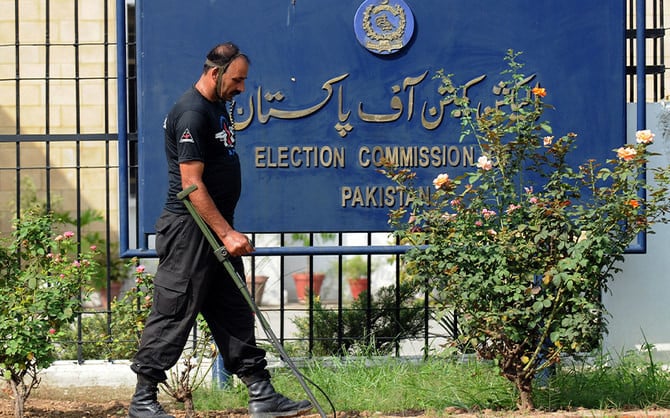

The Election Commission of Pakistan has embarked on the process of unveiling the names of triumphant candidates for reserved seats in both the Punjab and Sindh Assemblies, marking a crucial step in the post-election procedures. This meticulous announcement by the Commission is particularly significant as it brings to light the representation of women and minorities in the legislative bodies.
In Punjab, the comprehensive list delineates the inclusion of 42 women on reserved seats, reflecting a commitment to fostering gender diversity in the political landscape. Notably, the Pakistan Muslim League Nawaz emerges as the predominant beneficiary, securing a notable share with 36 of these reserved seats for women. This underscores the party’s standing and influence in the province. Furthermore, the distribution of reserved seats for women reveals a nuanced allocation, with the Pakistan Peoples Party obtaining three seats, PML-Q securing two, and the Istehkam-e-Pakistan Party receiving one.
The scenario for minority representation in Punjab is distinct, with all five announced seats being allocated to the Pakistan Muslim League Nawaz. This allocation underscores the party’s stance on inclusivity and minority rights, positioning itself as a key player in championing diverse representation.
Shifting the focus to Sindh, the Election Commission has unveiled the names of 27 successful candidates for reserved seats for women. The Pakistan Peoples Party dominates in this category, securing an impressive 20 seats. Meanwhile, the Muttahida Qaumi Movement claims six seats, showcasing its influence in the region. The Grand Democratic Alliance also features in the distribution, obtaining one reserved seat for women.
In addition to the seats for women, the Election Commission has disclosed the names of eight successful candidates for minority seats in Sindh. The Pakistan Peoples Party continues to assert its dominance in this sphere, securing six seats, while the Muttahida Qaumi Movement attains two seats. This multifaceted allocation reflects the diverse political landscape in Sindh, with multiple parties making strides in different segments of representation.
It is noteworthy that, amidst these announcements, the Pakistan Tehreek-e-Insaf, whose candidates were elected as independents, has not been awarded any reserved seats thus far. This dynamic underscores the nuanced nature of political negotiations and coalition-building that will likely unfold in the aftermath of the elections, as parties navigate the intricacies of securing representation across various constituencies.
