

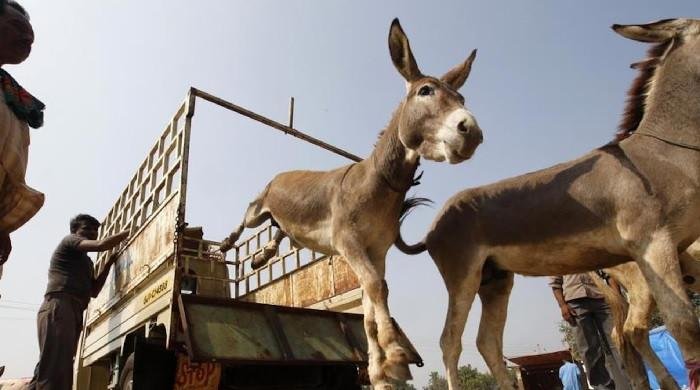

Donkey Population
Pakistan has witnessed a notable increase in its livestock population during the financial year 2023–24, with the number of donkeys surging by more than 109,000 over the past year, according to the latest data released by the Federal Census Authority.
The donkey population has now reached over 6,047,000, a rise from the previous year’s total of 5,938,000. This consistent year-on-year growth highlights the continued reliance on donkeys as a key means of transportation and labor in many parts of rural Pakistan.
The report also highlighted a slight yet steady increase in other working animals. The mule population saw an addition of 3,000, bringing the total to 227,000, while the number of horses increased by 1,000, reaching 383,000. These figures indicate a gradual but persistent rise in animal-assisted transport and agricultural support in the country.
Beyond working animals, the overall livestock sector showed robust growth. Pakistan’s total livestock population increased by over 2.17 million in just one year, climbing to a total of 59,711,000 animals.
A significant portion of this increase came from the buffalo population, which surged by 1,378,000—bringing the total number of buffaloes to 47,688,000. This is a considerable jump from last year’s count of 46,310,000, reflecting the rising demand for milk and dairy products.
In addition, the country’s goat population experienced the most substantial growth among all livestock categories. Goats increased by 2,358,000 during the current financial year, pushing the total to over 89.3 million. Last year, this figure stood at 87,035,000.
Sheep numbers also went up by 388,000, crossing the 33.1 million mark, while camel numbers rose by 14,000, reaching 1,177,000 compared to last year’s figure of 1,163,000.
This steady rise in livestock figures reflects the continuing importance of animal husbandry in Pakistan’s rural economy, not only for food security and transportation but also for employment and income generation in agriculture-dependent regions.
