

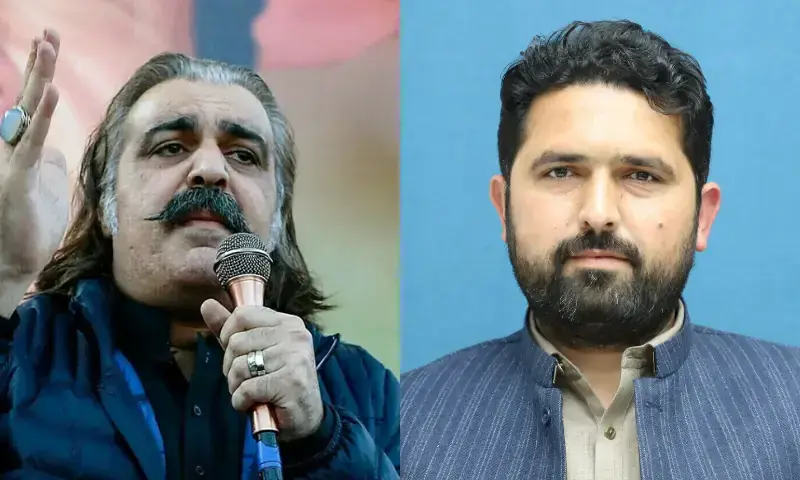

In a politically charged session of the Khyber Pakhtunkhwa Assembly, PTI’s Sohail Afridi was elected as the new chief minister amid protests and walkouts, raising questions about whether the outgoing CM, Ali Amin Gandapur, had officially vacated his position.
The opposition declared the process “unconstitutional,” while Speaker Babar Saleem Swati maintained that the election complied with Article 130 and was valid despite the disputed resignation.
Legal experts are divided on the issue. Lawyer Abdul Moiz Jaferii argued that Gandapur’s resignation is effective immediately, and the assembly’s vote decisively elects Afridi as the sole CM. “There is only one chief minister in Khyber Pakhtunkhwa, the one the majority voted for today,” he said, dismissing opposition objections as attempts to thwart democratic will.
Conversely, lawyer Mirza Moiz Baig described the scenario as a “constitutional anomaly,” questioning both the governor’s delay in accepting Gandapur’s resignation and the speaker’s haste in convening a session. Baig emphasized that the Constitution lacks a clear procedure for resignation acceptance, unlike dissolution, and suggested the process could face scrutiny.
Lawyer Ahmad Maudood Ausaf noted that while two CMs cannot exist simultaneously, ceremonial delays by the governor should not obstruct the assembly’s will. Lawyer Ayman Zafar highlighted a potential risk of constitutional overlap under Article 133, where the incumbent could remain in office until a successor is settled, suggesting judicial review might be necessary.
Other legal voices, including Zainab Shahid, asserted that once Gandapur resigned through multiple letters and publicly confirmed it, the assembly was free to elect Afridi. She emphasized that the democratic process is complete with Afridi’s 90 out of 145 votes, and all state institutions should respect this outcome.
Lawyer Basil Nabi Malik offered a nuanced view, explaining that Article 130 allows a CM to resign without requiring governor approval, while Article 133 enables the governor to ask the CM to continue. He suggested the assembly’s election aimed to appoint a successor rather than create dual CM positions, ensuring continuity in governance while filling the office legitimately.
Overall, while some legal experts point to procedural ambiguities, the election of Afridi is largely seen as constitutionally valid, with only one recognized chief minister in office.
