

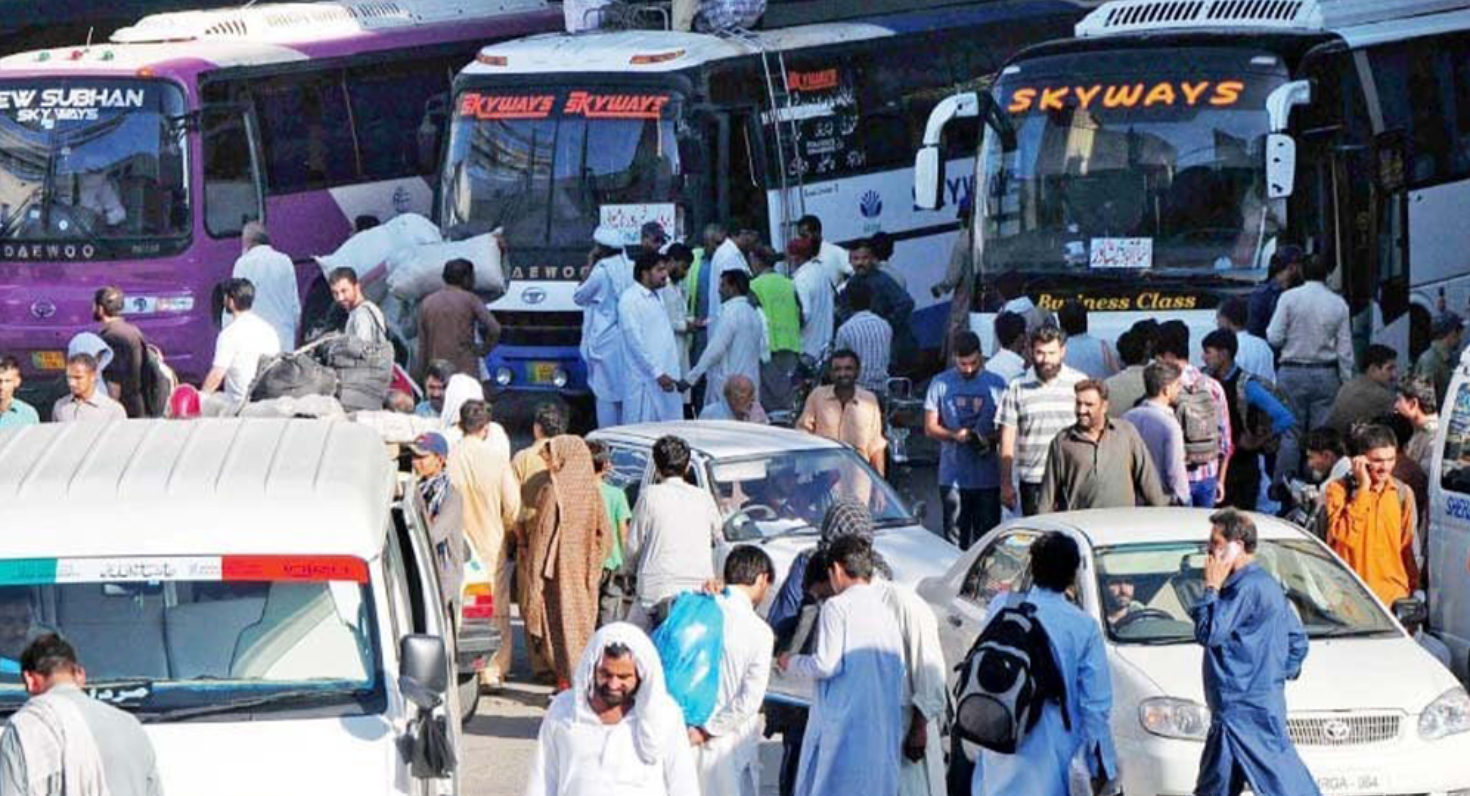

Transport fares have risen sharply after the latest increase in diesel prices, and passengers are now feeling the pressure. The sudden revision has affected several major intercity routes, pushing daily travel costs higher for thousands of commuters. Although operators argue that the hike was unavoidable, many travelers believe that the growing financial strain demands urgent action from authorities.
The fare adjustments began soon after the new diesel rate was announced. Bus companies at Lahore’s main terminals issued fresh fare lists, and the increases were applied without delay. Consequently, several well-frequented routes now cost noticeably more, which has frustrated regular passengers. However, operators insist that their operating expenses have grown too much to absorb the rise.
For example, the fare from Lahore to Bahawalpur has increased by 50 rupees. This rise may appear small, yet it matters for passengers who travel frequently. Moreover, those traveling from Lahore to Multan now pay 40 rupees more. Although the adjustment remains moderate, the cumulative impact on families and workers is significant. Additionally, the highest surge was recorded on the Lahore to Dera Ghazi Khan route, where fares jumped by 70 rupees. This change has drawn even stronger reactions, as the route is widely used by long-distance travelers.
Transporters claim that the diesel price increase has reduced their margins sharply. Therefore, they believe that fare revision was the only practical solution. Many operators state that fuel makes up a large part of their total expenses. As a result, any change in diesel pricing directly affects service sustainability. Although their position may be justified, public frustration remains strong.
Meanwhile, passengers are urging the government to consider measures that stabilize fuel prices. Many people argue that unpredictable price shifts disrupt budgets and make essential travel difficult. Moreover, they want stricter oversight on fare adjustments to prevent sudden increases. Because of this, the public debate around transport affordability has intensified.
The current fuel update kept petrol prices stable at 265.45 rupees per litre. However, the diesel price rose by 6 rupees per litre. This increase triggered the fare hikes that commuters are facing now. Since diesel is the primary fuel for most heavy vehicles, any rise directly affects transport costs nationwide.
Although the changes appear straightforward, the overall situation highlights deeper challenges. Rising travel costs influence workers, students, and families who depend on intercity transport. Consequently, many believe the government should explore long-term solutions that reduce price volatility. Furthermore, passengers want transparent mechanisms that justify fare adjustments, so the public can understand the reasoning behind every change.
In the coming days, the impact of these revised fares will become clearer. Until then, commuters must manage higher travel expenses, while operators monitor fuel trends closely. Although both sides face difficulties, balanced policies could ease the burden on passengers and maintain transport sector stability.
