

States Accuse Meta of Designing Facebook and Instagram to Keep Children Hooked
Meta is facing a landmark federal trial in the United States over allegations that Facebook and Instagram were deliberately designed to encourage addictive behaviour among children and teenagers.
Opening arguments began on August 18 in federal court in Oakland, California. A bipartisan coalition of 29 US states originally sued Meta in 2023, while California, Colorado, Kentucky and New Jersey are leading the current trial.
Prosecutors allege that Meta knowingly exploited the vulnerabilities of young users to increase engagement and advertising revenue.
California Deputy Attorney General Megan O’Neill told the court that Meta’s business strategy was built around attracting users, keeping them online and collecting their data.
She accused the company of exploiting the way children’s brains develop and then misleading the public about the risks associated with its platforms. Meta denies the allegations.
The states are seeking enormous financial penalties.
Reports indicate that the four states directly presenting the case are seeking close to $200 billion, alongside major changes to how Facebook and Instagram operate for younger users. Meta has argued that potential exposure across the broader litigation could be far higher.
The case has been compared with the historic lawsuits brought against tobacco companies because prosecutors are challenging Meta’s business practices rather than simply individual pieces of content.
Colorado Attorney General Phil Weiser said the states were acting where lawmakers had failed to adequately respond to concerns about children’s online safety.
Former Meta Engineer Says Safety Was Often an Afterthought
Former Meta engineering director Arturo Bejar emerged as an important witness as the trial began.
Bejar testified that during Facebook’s earlier years, teams focused heavily on getting products and features into users’ hands quickly.
He said safety and security could consequently become secondary considerations during product development.
Meta unsuccessfully attempted to prevent Bejar from testifying shortly before the trial, according to reports.
His testimony is expected to become an important part of the states’ effort to show what company employees knew internally about risks facing younger users.
Meta attorney Paul Schmidt rejected the central allegations against the company.
He acknowledged that some people have had negative experiences on Meta’s platforms but argued that the company has repeatedly developed tools intended to address safety concerns.
Meta has also said it has worked with parents, experts and law enforcement agencies to introduce protections for teenagers and children.
The states accuse Meta of wrongdoing in three major areas.
They allege that the company misled the public about risks to minors, deliberately incorporated engagement features that could encourage compulsive use and collected information from some children under 13 without parental consent.
The plaintiffs are also seeking changes to Meta’s products.
Proposals raised in the litigation include tighter restrictions for underage users, changes to engagement-driven features and limits on mechanisms such as infinite scrolling.
Zuckerberg Could Testify as Case Puts Social Media Industry Under Pressure
Meta CEO Mark Zuckerberg and Instagram chief Adam Mosseri are among the major witnesses expected to appear during the trial.
The proceedings are expected to continue for several weeks and could have consequences extending beyond Meta if the states succeed in forcing major changes to platform design.
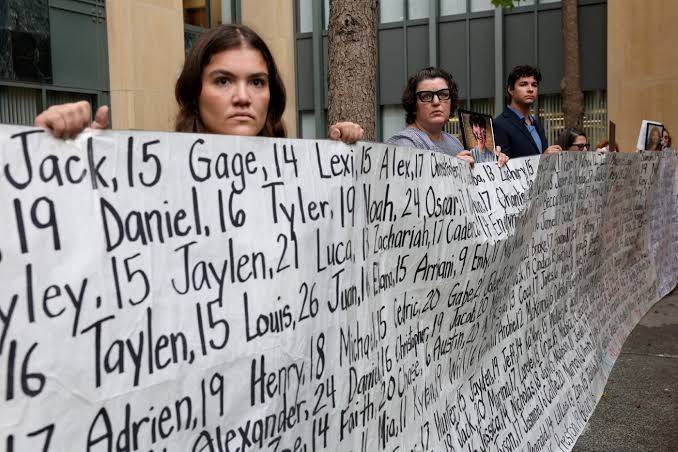
Parents and online-safety campaigners also gathered outside the Oakland courthouse as proceedings began.
Some families said their children suffered severe mental health consequences after harmful experiences involving social media.
Campaigners are calling for stronger accountability and greater protection for young internet users.
The Meta case is part of a much broader legal challenge facing the social media industry.
Families, school districts and governments across the United States have filed cases involving Meta and other major platforms, including TikTok, Snapchat and YouTube, over allegations concerning addictive product design and youth mental health.
Meta remains the sole defendant in this particular federal trial.
The company has denied deliberately designing Facebook or Instagram to harm children and argues that it has invested heavily in safety features and parental controls.
The outcome could become one of the most consequential legal decisions yet involving social media and young users.
Beyond potential financial penalties, a ruling against Meta could force significant changes to how Facebook and Instagram recommend content, collect data and design features for minors.

